| Risultati della ricerca nelle immagini - "Cassini" |

AA-Jupiter-PIA02666_modest.jpgJupiter from Cassini-Huygens147 visiteJupiter Data and Statistics
Mass (kg) = 1.900e+27
Mass (Earth = 1) = 3,1794e+02
Equatorial radius = 71.492 Km
Equatorial radius (Earth = 1) = 1,1209e+01
Mean density (gm/cm^3) = 1,33
Mean distance from the Sun = 778.330.000 Km
Mean distance from the Sun (Earth = 1) = 5,2028
Rotational period (days) = 0,41354
Orbital period (days) = 4332,71
Mean orbital velocity = 13,07 Km per second
Tilt of axis = 3,13°
Orbital inclination = 1,308°
Equatorial surface gravity (m/sec^2) = 22,88
Equatorial escape velocity = 59,56 Km per second
Magnitude (Vo) = - 2,70
Mean cloud temperature = - 121° C
Atmospheric pressure (bars) = 0,7
Atmospheric composition: Hydrogen 90%; Helium 10%
|
|

Carina-Calibration-PIA07773.jpgCarina Nebula, from Cassini77 visiteCassini briefly turned its gaze from Saturn and His Rings and Moons to marvel at the Carina Nebula, a brilliant region 8.000 LY from our Solar System and more than 200 LY across. Nearly every point of light in this image is a star in our galaxy, the Milky Way.
The nebula is a region of gas and dust made to glow by the ultraviolet light bursting from bright, hot and extremely massive young stars within. Darker regions in the scene are not devoid of stars; rather, they are areas where dense clouds of dust block the light from background stars.
This image and others like it are taken by the spacecraft from time to time for calibration purposes. Calibration images rarely contain such incredible sights. This one affirms Cassini's position as the farthest, working astronomical observatory ever established around our sun - our "eyes on the cosmos", a billion miles from Earth.
The image was taken using the Cassini wide-angle camera on May 14, 2005. The view is a 68-second, clear-filter exposure.
|
|
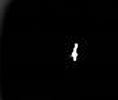
Hyperion-N00063147-2.jpgHyperion and a "Bright Companion" (2 - detail mgnf)85 visiteOsservate attentamente questo stretch estremo del frame precedente: l'effetto che osservate, a nostro avviso, è un effetto di oversaturazione, ossia un artefatto che emerge quando l'oggetto fotografato (o una sua parte) è/sono troppo luminoso/i.
Su Marte, in svariati casi (dalle immagini degli Heat-Shields, a quelle di alcune componenti dei Rover illuminate direttamente dal Sole), il risultato della saturazione si esprimeva nel cd. "effetto goccia". Qui, nello spazio di Saturno, l'effetto della saturazione ci sembra molto simile a quanto si vede su Marte. Anzi: forse esso è ancora più eclatante.
Domanda: che cosa sarà mai, dunque (ed ovviamente ammettendo che la nostra costruzione sia almeno in parte esatta), quell'oggetto semi-cancellato, ma in parte ancora visibile - ad ore 9 della traccia luminosa - che si trova ad una distanza imprecisata dalla Sonda Cassini, e nelle vicinanze di Hyperion?
|
|
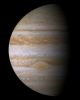
JUPITER from 10,1 MKM.jpgJupiter from 10,1 MKM98 visitePadre degli Dei e Signore incontrastato del Sistema Solare; troppo grande per essere solo un pianeta, ma troppo piccolo per diventare una stella. Con la sua luce giallo-arancio illumina i nostri cieli durante la notte ed è, assieme a Venere, uno dei primi astri ad essere visibile verso l'imbrunire ed è l'unico corpo celeste che può essere visto ad occhio nudo (sapendo dove guardare...) anche durante il giorno.
Questo è Giove.
|
|

JUPITER from 77,6 MKM.jpgJupiter from 77,6 MKM72 visiteDid you know that the "Planet With The Shortest Day" is Jupiter?
The planet Jupiter has the shortest day of all the nine major planets in the Solar System: it spins around on its axis once every 9 hrs 55 mins and 29,69 secs. Jupiter is about five times further from the Sun than the Earth and so it's years are much longer than Earth years: Jupiter completes one "year" in 4.332,6 Earth days. Jupiter is also one of the brightest objects in the night sky (jointly with the star Syrius and planet Venus in our Northern Hemisphere and with the Alpha and Beta Centauri star system in the Southern Hemisphere).
|
|

JUPITER from 81,3 MKM.jpgJupiter from 81,3 MKM68 visitenessun commento
|
|

JUPITER from 84,1 MKM.jpgJupiter from 84,1 MKM67 visitenessun commento
|
|

Jupiter, Europa & Callisto.jpgJupiter, Europa and Callistus69 visitenessun commento
|
|

Jupitercrescent_cassini_big.jpgJupiter from Cassini79 visiteLa "falce" di un Giove crescente, ripresa dalla Sonda Cassini mentre si avvicinava e si apprestava ad effettuare il "fly-by" del Gigante Gassoso.
Una splendida immagine che ci ricorda alcune sequenze del capolavoro di Stanley Kubrick, "2001 - A Space Odyssey" in cui Giove appariva agli occhi di Dave Bowman proprio come lo vediamo in questo frame.
|
|

M 45 - PIA08260.jpgM 45 - The "Seven Sisters", from Cassini64 visiteCaption NASA originale:"The stars of the Pleiades cluster, also known by the names "M 45" and "The Seven Sisters," shine brightly in this view from the Cassini spacecraft. The cluster is comprised of hundreds of stars, a few of which are visible to the unaided eye on Earth as a brilliant grouping in the constellation Taurus.
Some faint nebulous material is seen here. This reflection nebula is dust that reflects the light of the hot, blue stars in the cluster.
The monochrome view was made by combining 49 clear filter images of the Pleiades taken with the Cassini spacecraft wide-angle camera on Aug. 1, 2006. The images were taken as a part of a sequence designed to help calibrate the camera electronics".
|
|
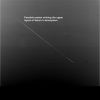
Saturn-N00063521-00.jpgIncredible "Meteor" (?) strikes the upper layers of Saturn's atmosphere (context image)91 visiteUn frame, questa volta davvero incredibile (inserire Saturn-N00063521-00) e, riteniamo, di straordinario valore, ci arriva - in data 7 Luglio 2006 - dallo Spazio di Saturno per mostrare un lungo "streak in the sky": una Scia Luminosa che attraversa quasi la totalità del campo visivo di una delle fotocamere poste a bordo della Sonda Cassini.
Circa due anni fa, avevamo già rilevato uno "streak" similare il quale, in due frames Cassini consecutivi, aveva attraversato una modesta porzione del campo visivo di una delle telecamere della Sonda (ben visibili, sullo sfondo dell'immagine ed oltre alla Striscia Luminosa, anche alcune stelle ed i segni del transito di qualche raggio cosmico.
Oggi, 7 Luglio 2006, lo streak è diverso: questa volta non si tratta di una luce fissa in (lento?) movimento nello spazio; adesso lo streak, come potrete meglio valutare Voi stessi nei detail magnifications di cui ai frames 2 e 3, appare diretto verso le profondità di Saturno - il frame Cassini originale, infatti, raffigura il lato notturno del Gigante Anellato.
Di che cosa si può trattare?
Questa volta, dopo aver esperito le analisi del caso, abbiamo una teoria.
|
|

Saturn-N00063521-01.jpgIncredible "Meteor" (?) strikes the upper layers of Saturn's atmosphere (detail mgnf-1)65 visiteL'immagine dell'oggetto, una volta sottoposta ad un sensibile (ma non eccessivo) stretching, evidenzia una sostanziale disomogeneità nella intensità luminosa (o, se preferite, nella "tessitura") della striscia.
Ed infatti, come questo ed il successivo dettaglio mostrano bene, essa alterna momenti di "brillamento" a cui fanno contrasto dei momenti in cui la luce dello streak pare indebolirsi sensibilmente.
Si tratta, come qualcuno avrà probabilmente già intuito, di alcuni segnali visuali caratteristici del passaggio di un "bolide": una meteora, insomma (una shooting star, o stella cadente).
Un corpo celeste vagante che, passato troppo vicino a Saturno, sta ora andando a dirigersi - viaggiando a grandissima velocità (ipotizziamo intorno ai 40/45.000 Km/h) verso le profondità dell'atmosfera del Gigante Anellato.
Profondità che, ovviamente, non verranno mai raggiunte, poichè la roccia vagante (o qualunque altra cosa essa fosse...) si sta già disintegrando negli strati superiori della densa atmosfera di Saturno e, nel farlo, sprigiona questa intensa luce che, nel volgere di 1 o 2" (il tempo di esposizione usato, riteniamo, dalla fotocamera di Cassini), ha già disegnato una splendida e luminosissima traccia bianca nell'oscurità.
|
|
| 19 immagini su 2 pagina(e) |
1 |
|








