| Risultati della ricerca nelle immagini - "Bonestell" |
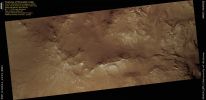
PSP_010012_2225_RED_abrowse-00.jpgDeep Rocks Unveiled at Bonestell Crater (ctx frame; natural colors; credits: Lunexit)85 visiteImpact craters are sometimes nicknamed “Mother Nature's drill holes” because, thanks to them, deep rock formations are exposed at the surface. Bonestell Crater is a good example.
This image depicts part of the floor of this relatively young impact crater located in the Northern Lowlands. The Northern Lowlands occupy most of the northern half of Mars. They are younger than the Southern Highlands, as shown by the lower number of impact craters, and well below the Planet’s Average Elevation. Their origin is still a mystery.
Bonestell is about 42 Km (approx. 26 miles) in diameter and about 1250 meters (4100 feet) deep. The rocky hills on the floor of this crater constitute its “Central Peak”.
Central peaks form due to elastic rebound of subsurface materials immediately after impact. The rocks in Bonestell's Central Peak may have been 4-to-8 Km below the surface before impact.MareKromium
|
|
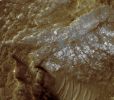
PSP_010012_2225_RED_abrowse-01.jpgDeep Rocks Unveiled at Bonestell Crater (edm; natural colors; credits: Lunexit)83 visiteThis edm (437x500 mt or 479x547 yards) of the HiRISE image shows a portion of Bonestell's Central Peak. HiRISE reveals details in the structure and color of these deep rocks that will help scientists decipher the origin and history of the Northern Lowlands.MareKromium
|
|
|
|
| 2 immagini su 1 pagina(e) |
|








