| Risultati della ricerca nelle immagini - "Basin" |
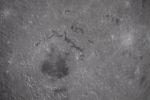
0017-The_Orientale_Basin.jpgThe Orientale Basin93 visiteart002e012090 (April 6, 2026) - In this view of the Moon, the Artemis II crew captured an intricate snapshot of the rings of the Orientale Basin, one of the Moon’s youngest and best-preserved large Impact Craters on his first shift during the Lunar Fly-By observation period.MareKromium
|
|
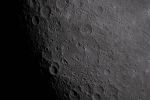
0018-Hertzprung_Basin_Rim.jpgVavilov Crater Along the Hertzsprung Basin Rim86 visiteart002e012093 (April 6, 2026) - Hertzsprung Basin comes into view with its distinctive two concentric rings of mountains, revealing the scale of this ancient impact structure.
Near the lower left, Vavilov crater — identified by its Central Peak — stands out, a feature often described by the Artemis II crew during their Lunar Fly-by.MareKromium
|
|

Argyre_Basin-20080213a-PCF-LXTT.jpgFeatures of Argyre Basin (Absolute Natural Colors; credits for the additional process. and color.: Dr Paolo C. Fienga - Lunexit Team)90 visitenessun commentoMareKromium
|
|

Channels-Hellas_Basin-20080415a-PCF-LXTT.jpgFeatures of Hellas Basin (Absolute Natural Colors; credits for the additional process. and color.: Dr Paolo C. Fienga - Lunexit Team)78 visitenessun commentoMareKromium
|
|

Craters-Unnamed_Crater-PCF-LXTT.jpgUnusually-looking Unnamed Crater (Saturated Natural Colors; credits for the additional process. and color.: Dr Paolo C. Fienga - Lunar Explorer Italia)63 visiteCaption NASA:"At one time the Floor of this Unnamed Crater located to the West of Hellas Basin, was completely filled with material from Rim to Rim. As this image shows, part of that fill material is being removed. The hole that is formed shows that the fill material was layered and a very rough surface is located at the bottom of the hole".MareKromium
|
|
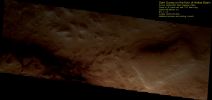
Dunes-Dunefield_in_Hellas_Basin-20080118a-PCF-LXTT.jpgDark Dunefield in Hellas Basin (Darkened Natural Colors; credits for the additional process. and color.: Dr Paolo C. Fienga - Lunexit Team)64 visitenessun commento
MareKromium
|
|
Gullies-ArgyrePlanitia-PIA12408.jpgDeep Gullies on the Western Rim of Argyre Basin (Natural Colors; credits: Dr Paolo C. Fienga - Lunexit Team)63 visiteThe Gullies seen in this VIS image are located on the Western Rim of the Argyre Basin.
Coord.: 47,6 ° South Latitude and 305,2° East Longitude
Resolution: approx. 40 meter/pixel.MareKromium
|
|

OrientaleBasin&SC~0.JPG027 - Earthshine and Solar Corona over the Orientale Basin78 visiteThis fantastic view of the Moon was acquired by the Attitude Determination Camera (Startracker) on board Clementine.
The Moon is illuminated only by Earthshine - that is, sunlight reflected from the Earth to the Moon.
The Sun is actually behind the Moon, though the outer portion of the Sun, the Solar Corona, is visible over the limb.
The ringed basin disappearing into the darkness is the Orientale Basin.
deep shadows cast by its steep walls give a dramatic emphasis to its classic multi-ring morphology.
|
|
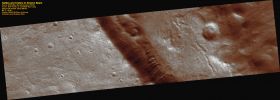
PSP_002620_1410_RED_browse-00.jpgGullies on the edge of Newton Basin (context image)64 visiteThis image shows a portion of two impact craters on the floor of Newton Basin where a smaller crater formed within a earlier larger one.
The larger crater's North rim can be seen diagonally (South-West/North-East) across the image and the smaller crater's north rim is near the right-side of the image.
Along the interior wall of the larger crater, several gullies have incised into the wall of the Crater. MareKromium
|
|
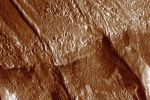
PSP_002620_1410_RED_browse-01.jpgGullies on the edge of Newton Basin (extra-detail mgnf)75 visiteThe gullies start near the top of the wall and can be traced across a break in slope partway down the wall (see here, 750 mt across). This break in slope occurs along the entire portion of the Crater wall in this image. The gullies appear shallower just above the break in slope, and deeper below the slope break.
This suggests that the fluid which eroded and carved out the wall materials forming the gullies, increased in velocity after the slope break, creating a deeper section of the gully.MareKromium
|
|
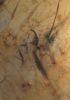
PSP_006477_1745_RED_abrowse-01.jpgDD Tracks in Southern Schiaparelli Basin (extra-detail mgnf - False Colors; credits: Lunexit)64 visiteThis observation shows a Region near the Martian Equator that is a perfect tablet for the scribblings of Dust-Devils. This Region is made up of dark bedrock that is thinly blanketed by bright dust.
Dark tracks form when Dust-Devils scour the surface, exposing the darker substrate. The tracks tend to cluster together, as Dust-Devils repeatedly form over terrain that has been previously scoured and is consequently darker and warmer than the surrounding surface.
Once lofted by a Dust-Devil, the fine dust can be transported great distances before it settles again onto the surface.MareKromium
|
|
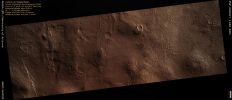
PSP_008427_1380_RED_abrowse-00.jpgAutumn in Hellas Basin (ctx frame - MULTISPECTRUM-2; credits: Lunexit)92 visiteIt is now fall in the Southern Hemisphere and in the giant impact crater known as Hellas Basin small boulders cast long shadows. The long shadows emphasize small scale topographic features and wind erosion is responsible for much of the morphology in this Region.
MareKromium
|
|
| 44 immagini su 4 pagina(e) |
1 |
 |
|





