| Risultati della ricerca nelle immagini - "Areas" |

Claritas_Fossae-1-029-290304-0068-6-co-02.jpgClaritas Fossae (1 - ESA/ DLR/ FU Berlin - G. Neukum)102 visiteCaption ESA originale:"These Mars Express images show Claritas Fossae, an ancient tectonic region on Mars, west of Solis Planum, a tectonic and volcanic area south-east of the Tharsis volcano group.
The images were taken by the High-Resolution Stereo Camera (HRSC) on Mars in orbit 68 from an altitude of 271 Km. The images are centred at 255,7° East and 30,9° North. North is on the left".
|
|

Claritas_Fossae-2-029-290304-0068-6-co-02.jpgClaritas Fossae (2 - ESA/ DLR/ FU Berlin - G. Neukum)83 visitevedi il commento al frame che precede
|
|

Claritas_Fossae-3-096-140904-0508-6-co-01-ClaritasFossae_hires.jpgClaritas Fossae (3 - ESA/ DLR/ FU Berlin - G. Neukum)89 visiteCaption ESA originale:"The displayed region is the eastern part of Claritas Fossae and the western part of Solis Planum at longitude 260° East and latitude of about 28° South.
The diffuse blue-white streaks in the northern parts of the scene (Sx di chi guarda) are clouds or aerosols. The Claritas Fossae (‘fossa’ is Latin for trough----->canale) region is characterised by systems of ‘grabens’ running mainly north-west to south-east. These can be traced several hundred kilometres up to the northern Tharsis shield volcanoes.
A "graben" forms when a block of the planet’s crust drops down between 2 faults, due to extension, or pulling, of the crust. A ‘horst and graben’ system can occur where there are several parallel faults.
Geographically, the grabens separate the eastern volcanic plains of the Solis Planum region from the western Daedalia Planum lava plains.
|
|

Claritas_Fossae-4-096-140904-0508-6-co-01-ClaritasFossae_hires.jpgClaritas Fossae (4 - ESA/ DLR/ FU Berlin - G. Neukum)81 visiteCaption ESA originale:"The lava blankets of the Solis Planum area cover the eastern parts of the older Claritas Fossae ridge and surround some of the higher ground. The geological history of this region can be reconstructed by analysing the layers of tectonic grabens, impact craters, volcanic features and even small valley networks. The complexity of Claritas Fossae Region suggests that some of the events took place at the same time. Furthermore, the detailed view of the large southern impact crater shows patches of dark material which are located near the central and marginal parts of the impact crater floor. This material may be of volcanic origin".
|
|

Claritas_Fossae-5-098-140904-0508-6-3d-01-ClaritasFossae_hires.jpgClaritas Fossae (5 - ESA/ DLR/ FU Berlin - G. Neukum)93 visitenessun commento
|
|

OPP-SOL772-2.jpgMartian Paving or Terrestrial Polygons? (1)106 visiteI Pavimenti Marziani - dalle forme poligonali che, per la loro (talora) incredibile regolarità, hanno appassionato ed incuriosito davvero tanti Lettori - sono una prerogativa del solo Pianeta Rosso?
Certamente no. Come ci dimostrano questi tre bellissimi frames inviati dal nostro Amico Lorenzo Leone (che ringraziamo per la costante assistenza e collaborazione), le strutture apparentemente artificiali che vediamo non sono altro che rilievi lavici - affascinanti ed incredibili - creati dalla Natura, nelle prossimità di un'area vulcanica.
Le somiglianze fra questi rilievi ed i Martian Paving ci sono, senza dubbi, ma ci sono anche le diversità: andiamo a vederle...
|
|
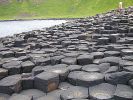
OPP-SOL772-3.jpgMartian Paving or Terrestrial Polygons? (2)118 visiteI Pavimenti di Marte sono straordinariamente "piatti", mentre i "pavimenti lavici terrestri" sono, come potete vedere, scalari e, se possiamo usare un paragone, ci ricordano le canne degli organi le quali, come sapete, si estendono verso l'alto in diverse lunghezze.
I Pavimenti di Marte hanno forme squadrate di tipologia mista: quadrati, rettangoli, pentagoni ed esagoni; i Pavimenti Terrestri sono (almeno in prevalenza) costuituiti da esagoni.
I Martian Paving - e questa pare essere proprio un quid unicum di Marte - sono, molto spesso, leggermente stratificati e, quasi sempre, ricoperti dalle solite "palline" che sembrano essere incastonate su di essi.
I Pavimenti Lavici Terrestri, invece, sono - fondamentalmente - lisci e privi di asperità superficiali (ma attenti: questa loro caratteristica potrebbe e dovrebbe essere il risultato dell'abbondante - e costante, nelle ere - weathering - ci riferiamo alle piogge in particolare - al quale essi sono sottoposti).
|
|

OPP-SOL772-4.jpgMartian Paving or Terrestrial Polygons? (3)104 visiteI Pavimenti Lavici Terrestri, infine (dobbiamo cercare di essere sintetici), sono una caratteristica propria delle aree vulcaniche, mentre nella Regione di Meridiani Planum - ed in particolare sull'area investigata da Opportunity - non ci sembra che esistano tracce di fornaci vulcaniche le quali possano aiutarci a sostenere una teoria - che comunque, in sè, resta accettabile - la quale suppone che, all'analogia (totale o parziale) dei processi geologici, generalmente fa seguito un'analogia dei rilievi.
Ciò detto - e quindi enfatizzate le diversità - dobbiamo comunque dire che le similitudini fra le due "Pavimentazioni", come potete constatare Voi stessi, esistono e sono evidenti. Che dire? Una prova in più del fatto che la Terra e Marte avevano (ed hanno) tanti punti di contatto, anche da un punto di vista squisitamente geo-morfologico.
Per dirVi di più, ora dovremmo andare a vedere come stanno le cose su Marte e dovremmo andarci personalmente ma, ahinoi!, questo non ci è (ancora) possibile farlo...
|
|
| 8 immagini su 1 pagina(e) |
|








