| Risultati della ricerca nelle immagini - "8" |
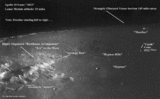
53-Apollo 10 frame AS 10-4822.gifApollo 10 - AS 10-4822: a VERY controversial frame (1)202 visiteA very famous Apollo 10 frame (which I'm offering you in its original, uncompressed version) that literally takes us halfway between science and science fiction.
A considerable number of anomalies have been identified (by several independent researchers) in this frame, and among them all, the one known as "The Castle" (the evocative name given to it by Professor Hoagland) stands out (on your right), which I'm offering you again as a magnified detail in the next frame.
Comments? Impossible: the frame is old and damaged (what is real in it, and what is just a photo-artifact?) and, unfortunately, I don't have any recent images of the same area available.
|
|

54-The Castle.jpgAS 10-4822181 visiteBellissima immagine e misteriosa oltre ogni misura ma...incommentabile.
|
|
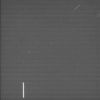
A Streak in the Saturn_s Space (1).jpgA "Streak" in the Sky of Saturn (1) - N00008770517 visiteEcco la prima delle due straordinarie immagini catturate dalla Sonda Cassini/Huygens mentre era impegnata a riprendere scorci dello Spazio di Saturno il giorno 4 Agosto 2004, ad una distanza di poco più di 8 milioni di km dal Pianeta Anellato.
Un oggetto luminoso (molto luminoso!) in movimento passa davanti all'obbiettivo della Sonda: gli altri corpi celesti che si vedono sullo sfondo dell'immagine (stelle) sono tutti puntiformi.
Proprio a giudicare dal quantitativo di stelle visibili sullo sfondo...
|
|

A Streak in the Saturn_s Space (2)~0.jpgA "Streak" in the Sky of Saturn (2) - N00008771436 visite...(poche) riteniamo che immagini come queste due abbiano richiesto un'esposizione decisamente breve. In ogni caso, preso atto della circostanza per cui è rimasta impressa una striscia di luce mentre le stelle sullo sfondo sono rimaste puntiformi, possiamo ragionevolmente ritenere che l'oggetto luminoso inquadrato ERA IN MOVIMENTO rispetto allo sfondo stellato il quale invece è - per definizione! - FISSO.
Questa striscia è peraltro identica a quella lasciata da un altro corpo luminoso in movimento...
|
|

AB-Another Streak in the Sky.jpgThe 2nd "Streak" in the Sky of Saturn - W00000828204 visiteMa ecco che, improvvisamente, accade qualcosa. La traccia luminosa che vediamo questa volta è assai meno brillante di quella del 4 Agosto, ma l'Anomalia è comunque del tutto evidente. Cosa è successo? E' successo che, ancora una volta, un oggetto luminoso in movimento lungo una traiettoria lineare è passato davanti ad uno degli "occhi elettronici" di Cassini/Huygens, facendosi "immortalare". Noi abbiamo battezzato questa seconda Anomalia con il nome di "Saturn PF2-08-2004". A quando la Terza?!?...
|
|

APOLLO 8 Re-Entry.jpgS69-15592 - The re-entry of Apollo 8102 visiteThe final sightings, both deliberate and accidental, of each mission would come during reentry over the Pacific. NASA added camera pods to the Apollo Range Instrumentation Aircraft (later --> Advanced Instrumentation Aircraft, ARIA) platforms, generating pictures such as S69-15592 of Apollo 8 (this one), originally found at "http://science.ksc.nasa.gov/mirrors/images/html/as8.htm"
Numerous bits of debris, presumably from the Service Module, appear as well as the fireball around the Command Module.
Additional pictures by airline passengers exist at least for Apollo 13.
|
|

APOLLO_08_AS_08-10074958.jpgAS 08 - 10074958 (NASA Archives' Serial) - The "Third Stage" is floating away (1)66 visite
|
|

APOLLO_08_AS_08-10074959.jpgAS 08 - 10074959 (NASA Archives' Serial) - The "Third Stage" is floating away (2)64 visite
|
|

APOLLO_08_AS_08-10074960.jpgAS 08 - 10074960 (NASA Archives' Serial) - The "Third Stage" is floating away (3)67 visite
|
|

Proteus2.jpgProteus (HR)64 visitenessun commento
|
|

SOL0738-1581_PIA25821-web.gif159 visiteNASA’s Perseverance Mars rover used one of its navigation cameras to take a series of images of drifting clouds just before sunrise on March 18, 2023, the 738th Martian day, or sol, of the mission.
Scientists on both the Perseverance mission and NASA's Curiosity rover mission are studying the formation process of Martian clouds.
A key objective for Perseverance's mission on Mars is astrobiology, including the search for signs of ancient microbial life. The rover will characterize the planet's geology and past climate, pave the way for human exploration of the Red Planet, and be the first mission to collect and cache Martian rock and regolith (broken rock and dust).
Subsequent NASA missions, in cooperation with ESA (European Space Agency), would send spacecraft to Mars to collect these sealed samples from the surface and return them to Earth for in-depth analysis.
The Mars 2020 Perseverance mission is part of NASA's Moon to Mars exploration approach, which includes Artemis missions to the Moon that will help prepare for human exploration of the Red Planet.MareKromium
|
|
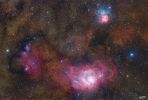
Sagittarius_M-8_and_M-20.jpgSagittarius Region140 visite"In order for Life to have appeared spontaneously on Earth, there first had to be hundreds of millions of protein molecules wandering in the Universe. The Ninth Configuration.
But given the size of the planet Earth, and the one of the Universe, do you know how long it would have taken for just one of these protein molecules to appear entirely by chance?
Roughly ten to the two hundred and forty-third power billions of years. And I find that far, far more fantastic than simply believing in God".MareKromium
|
|
| 15 immagini su 2 pagina(e) |
1 |
|








