| Risultati della ricerca nelle immagini - "&" |

APOLLO 11 AS 11-37-5481.jpgAS 11-37-5481 - The Field (2)204 visiteMa di quale "space trash" si stava parlando nel frame precedente? Semplice: cineprese, antenne, utensili vari, sismografi ed altri equipaggiamenti scientifici che, oggigiorno, avrebbero un valore (non solo intrinseco, ma anche - ed ovviamente - "storico") largamente superiore a qualche miliardo di dollari. Se qualcuno avesse intenzione di recuperare questi "gioielli" possiamo dire che si tratta, di "res derelictae" (cioè "cose abbandonate"). Ne diventa proprietario il primo che le trova e se le prende... Ma deve andare a passeggiare sulla Luna....
|
|

APOLLO 11 AS 11-40-5927.jpgAS 11-40-5927 - What happened to the horizon? (1)273 visitePassiamo ora ad analizzare una serie di immagini che hanno - letteralmente - fatto "scandalo" per la loro (forse solo apparente)artificiosità.
Allora: ricorderete certamente tutto quello che abbiamo detto a proposito del "punto di ripresa" dell'orizzonte quando ci muoviamo su una superficie NON totalmente pianeggiante (cfr. vedi AS 11-40-5907 e seguenti).
Abbiamo chiesto, anche per questo frame, delucidazioni al Curatore dell'Apollo Space Catalog il quale, con grande cortesia e solerzia...
|
|

APOLLO 12 AS 12-47-6980.jpgAS 12-47-6980 - The LM and other equipment (1)128 visiteClassiche immagini "cartolina" che ci fanno vedere quante cose sono state disposte (e poi abbandonate...) sulla Luna. Ricordate quando parlammo, a proposito di Apollo 11, del materiale lasciato sulla Luna, a "disposizione" (si fa per dire...) di chiunque? Ed allora ecco una parte del materiale lasciato dall'Apollo 12: e se parliamo del suo valore venale sommato al valore storico...Raggiungiamo le centinaia di miliardi ossìa il "costo" della Missione!
E poi, a parte le antipatiche (ancorchè scherzose)...
|
|

APOLLO 12 AS 12-47-6981.jpgAS 12-47-6981 - The LM and other equipment (2)105 visite...considerazioni economiche, non pensate pure Voi che varrebbe la pena, comunque, di tornare lassù per rispondere a delle domande che, altrimenti, sarebbero destinate a rimanere senza risposta (o con troppe risposte, il che è uguale...)?
Per ritornare ad "unire" l'Umanità sotto una sola Bandiera, come nel 1969 (e qui non parliamo più di "Stelle e Strisce", ma di Scienza, Tecnica e Progresso)?
Non varrebbe la pena, anzichè continuare ad "avanzare ipotesi", dalle più serie alle più assurde, di "andare...
|
|

APOLLO 14 AS 14 68-9405.jpgAS 14-68-9405 - Shepard and the MET121 visitenessun commento
|
|

APOLLO 14 AS 14 68-9486 HR.jpgAS 14-68-9486 (HR) - Lunar Module, Astronaut and boulders130 visitenessun commento
|
|

APOLLO_15_AS_15-86-11570.jpgAS 15-86-11570 - The "Lunar Pearls" of Station 2 Boulder (special processing by Lunexit)70 visiteUn frame bellissimo, suggestivo e - grazie al "silenzio della NASA" - incommentabile.MareKromium
|
|
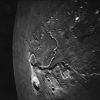
APOLLO_15_AS_15-M-R71-2611.jpgAS 15-M-R71-2611 - Aristarchus and Herodotus Crater (the NASA/Lunar & Planetary Institute Original Frame)63 visiteCoord.: 25,5° North Lat. and 50,5° West Long.
Lens Focal Length: 3"
Camera Tilt: 40°
Camera Azimuth: 180
Camera Altitude: 107 Km
Sun Elevation (on local horizon): 15°
|
|

Asteroids-Opportunity-041007163946.jpgThe path to immortality: an asteroid named "Opportunity"73 visiteL'immortalità (o quasi), in qualche modo, le Sonde Spirit ed Opportunity sono riuscite a guadagnarsela: il lavoro svolto dai due Rover, infatti, è stato (ed è tuttora) così prezioso e scientificamente significativo che si è pensato - ed è la prima volta in assoluto che accade una cosa simile - di dedicare ai due robot (e NON, quindi, ad un "essere umano"...) due asteroidi scoperti all'inizio degli anni '60, ma definitivamente riconosciuti e codificati - mediante l'assegnazione di un numero seriale ufficiale - solo nel 2002 (in questo caso, però, non si è trattato di inefficienza, bensì di ottemperanza alle rigide regole stabilite dalla IAU - International Astronomical Union - le quali "...require asteroids to be observed during 4 separate cycles around the Earth and Sun before they become eligible for numbering and naming...").
|
|

Asteroids-Spirit-041007163903.jpgThe path to immortality: an asteroid named "Spirit"70 visiteEd ora qualche dato NASA ufficiale relativamente ai due asteroidi: Spirit dovrebbe avere un diametro compreso fra i 4 ed i 9 Km mentre il diametro di Opportunity oscillerebbe fra i 3 ed i 7. Sia Spirit che Opportunity sono fisicamente posizionati ad una distanza intermedia fra Marte e Giove, all'interno di un piccolo Gruppo di asteroidi conosciuto come "Hilda" ed entrambi impiegano poco meno di 8 anni per compiere un'intera orbita attorno al Sole. Nessuno dei due corpi celesti si muove su una traiettoria tale da poterlo condurre ad incrociare l'orbita di altri Pianeti e nè Spirit, nè Opportunity, inoltre (ed in base ai dati in nostro possesso), dovrebbero mai risentire in maniera critica e decisiva dell'immensa influenza gravitazionale di Giove. Ed infine una curiosità: il Gruppo di asteroidi "Hilda" si caratterizza per avere un periodo di "risonanza orbitale", rispetto a Giove, di 3 a 2 (solo un modo difficile per dire che, per ogni 2 orbite complete di Giove attorno al Sole, il Gruppo "Hilda" ne compie 3).
|
|

Atlas_Pan-PIA08946.jpgBrothers in the Night: Atlas & Pan78 visiteCaption NASA:"Atlas and Pan emerge from the Far Side of Saturn.
Light passing through the upper reaches of the Planet's Atmosphere is refracted, or bent, distorting the image of the Rings beyond.
Pan (about 26 Km, or 16 miles across) is seen within the Encke Gap. Atlas (about 32 Km, or 20 miles across) orbits just beyond the outer edge of Saturn's A-Ring.
This view looks toward the unilluminated side of the Rings from about 12° above the Ring-Plane. Shadows cast by the Rings arc across the Planet toward the Cassini spacecraft.
The image was taken in visible light with the Cassini spacecraft narrow-angle camera on April 12, 2007 at a distance of approx. 1,6 MKM (about 1 MMs) from Saturn.
Image scale is roughly 10 Km (a little more than 6 miles) per pixel".MareKromium
|
|

BH-Black-Hole.jpgComputer simulation of a Black-Hole from start to finish126 visitePlasma is falling slowly toward the black hole in a (at the upper left). The plasma has a magnetic field, shown by the white lines. It picks up speed as it falls toward the hole in b (at the upper right), c (lower left) and d (lower right). However, the rotating black hole twists up space itself (and the magnetic field lines) and ejects electromagnetic power along the north and south poles above the black hole. The red and white color shows the immense electromagnetic power output, which eventually will pick up particles and form squirting jets.
|
|
| 120 immagini su 10 pagina(e) |
1 |
 |
|
|
|
|
|
|
|








