| |

| Ultimi arrivi - MOON |

Mare_Frigoris_-_Matt_Smith.jpgMare Frigoris (Credits: Matt Smith)133 visitenessun commentoMareKromiumOtt 25, 2020
|
|

APOLLO_11_AS_11-37-5455HR-2.jpgAS 11-37-5455 - Flare-like Light? (SDM)1119 visite...difficile dire che si tratti di un "macigno ad alta riflettenza (Albedo)"... Molto difficile.
E se qualcuno parlasse di image-artifact, allora vorrebbe dire che di immagini non capisce proprio nulla. Gli image-artifacts sono un'altra cosa. Gli image-artifacts sono semplici "difetti" (dell'immagine), ossia un qualcosa di profondamente differente da quanto vediamo qui. E ne abbiamo un lungo ed ampio Album ad essi relativo.
...It is very hard to say that we are looking at a "highly reflective boulder"... Really hard.
And if anybody would wish to talk about an image-artifact, then it would mean that such an individual understands really nothing. Nothing at all. The Image-artifacts are just "defects" (of the frame), and therefore something deeply different from what we are watching here. And we do have a huge Album which talks about - and shows many of - them.MareKromiumGen 25, 2020
|
|

APOLLO_11_AS_11-37-5455HR-0.jpgAS 11-37-5455 - Flare-like Light? (CTX Frame)127 visiteArgomento ed immagine già viste e riviste, ma sembra che non bastino mai le "spiegazioni".... Ed allora, per favore, leggete il commento al frame che segue.MareKromiumGen 17, 2020
|
|
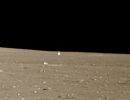
APOLLO_11_AS_11-37-5455HR-1.jpgAS 11-37-5455 - Flare-like Light? (EDM)161 visite..."Highly reflective boulder", venne definito da un Tecnico NSSDC da me interpellato, oltre 15 anni fa.
In altre parole: una "roccia ad alta riflettenza". Ok. Ma che emette un "fascio di Luce blu" e "sparisce" nel frame successivo, scattato a 3 secondi di distanza????
E poi, qualche imbecille, é pure venuto a dirmi - scrivermi, anonimamente, come ovvio... - che erano "cassiate cosmiche"....
Ma aprite gli occhi e guardate: questo è "il piccolo oggetto strano che sembra una fiaccola" descritto da Armstrong in "live from the Moon"! Poi, per carità, se vedete Paperino, Topolino o chissà cosa (probabilmente nulla), ci sta. Ma non venite a dirmi che é un image-artifact od un macigno che brilla al Sole, please....MareKromiumGen 17, 2020
|
|

APOLLO_12_-_AS_12-49-7281.jpgAS 12-49-7281 - Check the Visor! (credits for the add. process.: Dr Paolo C. Fienga - LXTT/IPF)144 visiteEd ecco qui l'Astronauta Alan Bean (malauguratamente defunto un paio di anni fa) così come venne ripreso dal Suo Collega Conrad nell'immagine controversa. Sole, giustamente, alla Sua Dx (Sx di Conrad).
Vedo un bizzarro riflesso anche nel Visore di Alan.
Coincidenza?
Certo. Naturalmente.....MareKromiumDic 26, 2019
|
|

APOLLO_12_-_AS_12-48-7071-00.jpgAS 12-48-7071 - Check the Visor! (Original; credits for the add. process.: Dr Paolo C. Fienga - LXTT/IPF)131 visiteNel visore dell'Astronauta (Conrad) si riflette qualcosa: in alto a Dx dell'Osservatore (Sx dell'Astronauta). Proviamo a guardare meglio se si tratta di un riflesso del Sole (che é effettivamente alla Sua Sx, ma una volta ingrandito e contrastato il dettaglio mi pare davvero difficile, MOLTO difficile, che lo sia...), del LM (NO! Leggete la caption ad AS 12-49-7281) o di "altro".....
Image Collection: 70mm Hasselblad
Mission: 12
Magazine: 48
Magazine Letter: X
Description: ASTRONAUT; CORE TUBE; LUNAR MODULE
Film Type: SO-267
Film Width: 70 mm
Caption NASA Originale: "Conrad is seen holding (a) core tube and snapping a photo of Bean (see AS 12-49-7281)"MareKromiumDic 26, 2019
|
|

APOLLO_12_-_AS_12-48-7071-02.jpgAS 12-48-7071 - Check the Visor! (E-EDM; credits for the add. process.: Dr Paolo C. Fienga - LXTT/IPF)167 visiteCi siamo: ecco l'oggetto (o il "riflesso", così non mi chiameranno "complottista" anche per questa....) assai ben visibile, ben contrastato e con svariati dettagli intriganti visibili.
E' un "riflesso" a Vostro parere?
E, se dite di "SI", Vi chiedo: ma di COSA?!?
Non scherziamo, per favore.
Non voglio convincere nessuno e non mi interessa portare avanti teorie strane. Ma quello che stiamo guardando NON é un riflesso. E' altro.
Per cui, o si tratta di un image-artifact (ultra-bizzarro) di qualche tipo, oppure.... Oppure no.
Mi fermo qui.MareKromiumDic 26, 2019
|
|

APOLLO_12_-_AS_12-48-7071-01.jpgAS 12-48-7071 - Check the Visor! (EDM; credits for the add. process.: Dr Paolo C. Fienga - LXTT/IPF)122 visiteIl Sole é a Sx di Conrad. Il LM é altrove. Guardate BENE!.....MareKromiumDic 26, 2019
|
|

APOLLO_13_AS_13-60-8622_ANOMALY-2~0.jpgAS 13-60-8622 - The Silver Sphere (NASA Original uncompressed frame, HR version, fully restored; EDM - credits: Dr Paolo C. Fienga) 147 visiteIncommentabile.MareKromiumDic 23, 2019
|
|

Moon-Lunar_Unnamed_Crater-f56dcf43b7768c6f7ecee39e14ad2696_XL.jpgUnnamed Crater174 visiteQui non si fa Politica, ma qualcosa occorre scriverla. Dato che l'India é arrivata sulla Luna e vorrebbe arrivare su Marte (come Cina ed USA), io mi chiedo, oggi.... - quote -
"Come sarebbe stato nascere in India? C’è chi la domanda se l’è posta davvero. E ha anche deciso di toccare con mano, di vedere come si vive in questo grande Paese.
È possibile dare una prima risposta: nascere in India significa, fin da piccoli, imparare a dover fare i conti con la povertà.
La povertà…
Si parla di povertà estrema quando una parte, più o meno consistente, di popolazione vive con meno di 1,90 dollari al giorno. Secondo i dati della Banca mondiale, nel 2015 l’India aveva una popolazione pari a un miliardo e trecento milioni di persone.
La percentuale di popolazione che vive con meno di 1,90 dollari al giorno è di circa il 21%. Fatto il calcolo, sono più di 270 milioni di persone.
…la fame…
Ci sono tre dati, la cui fonte è il Programma alimentare mondiale, che descrivono perfettamente la situazione:
• In India vive un quarto delle persone denutrite di tutto il mondo.
• Nove donne incinte su dieci soffrono di malnutrizione e anemia.
• Più della metà dei bambini sotto i cinque anni è malnutrita o soffre di nanismo.
Qui comincia un circolo vizioso. Chi non mangia abbastanza, non ha forze sufficienti per lavorare e guadagnare. Senza lavorare e guadagnare, non si ha la possibilità di comprare cibo. Un circolo vizioso fatto di fame e povertà. Un circolo difficile da spezzare.
…e gli altri problemi dell’India
Perché non ci sono “solo” la fame e la povertà. Il tasso di mortalità materna è tra i più alti del mondo: ogni anno, circa 120.000 donne non superano il parto o la gravidanza. La metà delle donne è analfabeta e i loro diritti fondamentali vengono negati sistematicamente. Anche il tasso di abbandono scolastico è molto alto e questo significa che i bambini sono costretti a lavorare".
Ed i Governanti di questo ricchissimo Inferno, anziché far qualcosa, vanno a guardare da vicino la Luna? L'India l'ho vista e vissuta, poco o tanto non conta. Ma son stato lì e non mi sono fermato ai telegiornali, quando ne parlano (e cioé quasi mai, salvo che per le "tensioni" politiche e militari con i "Vicini").
Non ho parole. Anzi si. Specie dopo aver visto, ieri, a Milano (Italia, la "Capitale del Nord", dicono, e NON Nuova Delhi, Calcutta, o qualche altra "Città della Gioia"....), un pò (un BEL pò!) di miseria e di degrado.
Che nausea.
Che vergogna.
Povera India.
E poveri noi......MareKromiumDic 08, 2019
|
|

LRO-Mare_Ingenii-M191830503LR-PCF-LXTT-IPF.jpgFeatures of Mare Ingenii (Absolute Natural Colors; credits for the additional process. and color.: Dr Paolo C. Fienga - Lunexit Team)137 visiteDear Friends, shall we go back to the Moon! The answer, of course, is "Yes", but...How? Well, since (apparently) there are no human missions planned in the very near Future (and for the time being), in order to do so (and possibly a little earlier than the AD 2025...), we decided to offer you, in Today's APOD, a really suggestive and impressive photographic panorama of the Lunar Mare Ingenii (such as the "Sea of Ingenuity") that was obtained by the NASA - Lunar Reconnaissance Orbiter.
Mare Ingenii is one of the few Lunar "Mare-like" Surface Features that is located in the so-called Far (or either "Dark") Side of the Moon. As a matter of fact, this Mare sits in the Ingenii Basin, whose material (according to some Planetary Scientists) can be related to the Pre-Nectarian Epoch or Period (note that the so-called Pre-Nectarian Period of the Lunar Geologic Timescale, runs from approx. 4,5 Billion Years ago - such as the time of the alleged formation of the Moon - to about 3,9 Billion Years ago, when the Nectaris Impact Basin formed after the occurrence of a large Meteor Strike); however, the Surface Material located in the Mare Ingenii itself, as well as in the Impact Craters which are immediately surrounding it, seems to relate, instead, to the Late Imbrian Epoch (remember that the Late Imbrian Epoch occurred, on the other hand, between approx. 3,8 to about 3,2 Billion Years ago and it is believed to be the Lunar Epoch during which the Mantle existing below the Major Lunar Impact Basins partially melted, and so filled them up with - mostly - Basalt).
The Dark Circular Surface Feature which dominates the Mare Ingenii is the Impact Crater named Thomson (a Crater that is approx. 112 Km in diameter). The Mare Ingenii also appears to be unevenly and thinly covered by a Layer of Lava (a fact, this one, which leads us to believe, once again, that the very distant past of the Moon was characterized by an almost continuous and, somehow, extraordinary violent Volcanic Activity, which was likely caused - if not entirely, at least for a very large part - by the occurrence of some powerful Tidal Stress which we believ that can be related to the action of the Earth itself). Furthermore, the Mare Ingenii contains one of the very few "Lunar (Collapse) Pits" which have so far been located on the Moon (but, anyway and for sake of clarity, just one of the VERY MANY Collapse Features located outside our Home Planet Earth).
The frame has been colorized in Absolute Natural Colors (such as the colors that a normal - meaning "in average" - human eye would actually perceive if someone were onboard the NASA - Lunar Reconnaissance Orbiter and then looked outside, towards the Surface of the Moon), by using an original technique created - and, in time, dramatically emproved - by the Lunar Explorer Italia Team.
MareKromiumGiu 23, 2012
|
|
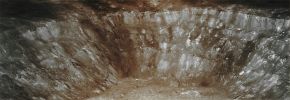
LRO-2500-Aristarchus_Crater_Wall-LROC_2000-PCF-LXTT.jpgFeatures of Aristarchus Crater (Absolute Natural Colors; credits for the additional process. and color.: Dr Paolo C. Fienga - Lunexit Team)156 visiteAristarchus is a prominent Lunar Impact Crater that lies in the North/Western portion of the Moon's Near Side. It is considered the brightest of the large formations on the Lunar Surface, with an Albedo that is nearly two times brighter that the one of most of the Lunar Features. In fact, Aristrachus is bright enough to be visible to the naked eye, and it becomes dazzling in a large telescope. It is also relatively easy to identify when most of the Lunar Surface is illuminated by the Earthshine.
This Crater lies at the South/Eastern Edge of the Aristarchus Plateau: an elevated rocky rise located within the Oceanus Procellarum and that contains a number of Volcanic Features and that is also well known for the occurrence of a large number of reported Transient Lunar Phenomena (or TLP), as well as for very recent emissions of Radon Gas (emission which were duly registered and measured by the Lunar Prospector Spacecraft). As additional reference points, we remind you that Aristarchus Crater is located just to the East of the Crater Herodotus and the Vallis Schröteri, and South of a system of narrow Sinuous Rilles named Rimae Aristarchus. Probably, the main reason for Aristarchus' brightness is that it is a (relatively, of course) young formation (such as approximately 450 Million Years old) and so the Solar Wind has not yet had enough time to darken the excavated material via the process known as "Space Weathering". The impact which created Aristarchus likely occurred after the creation of the Rayed Crater Copernicus, but some time before the appearance of the Crater Tycho.
Aristarchus was originally named after the Greek Astronomer Aristarchus of Samos, by the Italian map maker Giovanni Riccioli. His work "Almagestum Novum", published in 1651, gave to the, in that time known "spot-shaped telescopic features" (such as the Impact Craters) the eponyms of famous Astronomers and Philosophers. Although the name of Aristarchus Crater has always been widely accepted and adopted, it actually did not become "official" (from an International point of view), until the International Astronomical Union (IAU) so decided to name it, during a General Assembly that was taken in the AD 1935.
As we already wrote hereabove, the Region of the Aristarchus Plateau (and the Crater Aristarchus in particular) has been (and still is) the site of many reported Transient Lunar Phenomena, with a total of 122 reports by the AD 2007: the highest recorded for any Lunar Feature.
Such a TLPs include, among others, Temporary Obscurations and Colorations of the Surface; the appearence of Star-like Shinings (either fixed or slightly moving) as well as isolated Flashes of Red, Blue or even Green light. Official Catalogues mentioning these TLPs show that more than one-third of the most reliable observations came from Aristarchus Crater and its immediate surroundings.
In 1971, when the NASA Apollo 15 Spacecraft passed at about 110 Km from the Surface of the Aristarchus Plateau, a significant rise in Alpha Particles was detected and these particles are thought to be caused by the presence of huge amounts, in the area, of Radon-222: a radioactive and colorless Noble Gas that forms naturally during and as part of the normal Decay Chain of Uranium or Thorium; the Radon -222 possesses a so-called "half-life" of only 3,8 days.
The Lunar Prospector Mission later confirmed Radon-222 emissions from Aristarchus. Some of these fascinating (and still not totally understood) observations could be explained by the occurrence of discrete Explosive Events (Outgassings).MareKromiumMag 21, 2012
|
|
| 2195 immagini su 183 pagina(e) |
|
|
|
5 | |
|
|
|
|
|
|
|
|





