| Ultimi arrivi - MOON |

APOLLO_15_-_AS_15-P-9625-04.jpgAS 15-P-9625 (4) - The buried "Spacecraft" and the "Lunar Eel" (extra-detail mgnf - elab. Lunexit)400 visiteOsservate con attenzione: alla Vostra Dx, proprio davanti alla (presunta) Astronave sepolta, potete vedere il rilievo che abbiamo battezzato "Anguilla Lunare" il quale sembra che stia emergendo da una zona più scura (polverosa, molto probabilmente) e leggermente meno accidentata di quella su cui è stata rilevata la prima Anomalìa.
Osservando da grandi distanze ed operando elevate magnificazioni, come abbiamo detto tantissime volte, si rischia di prendere sviste "planetarie" e quindi la prudenza è necessaria.
Tuttavia, due cose le possiamo dire con convinzione: il rilievo battezzato "astronave sepolta" è effettivamente bizzarro e la sua natura, ad oggi, è indeterminabile. Forse (anzi, quasi sicuramente) NON si tratta di un'astronave infossata, ma che si tratti di un caso eclatante di Anomalìa di Superficie a noi pare evidente.
Seconda annotazione: il rilievo (da noi) battezzato "anguilla lunare" è, forse e per certi punti di vista, ancora più bizzarro della (presunta) "astronave". Esso, infatti, si manifesta ai nostri occhi come uno stranissimo "spuntone" (roccioso?!?) il quale emerge da un'area (relativamente) piatta e presenta una biforcazione all'altezza della sua porzione terminale superiore: una sorta di "bocca" che si apre e che pare voler "intimorire" l'altro rilievo che gli si trova proprio davanti.
La NASA, ufficialmente (e per quanto ne sappiamo), non ha mai commentato questo frame (nè il suo "compagno stereo"), ottenuto da 117 Km di altitudine, Coord.: 19,0° Sud e 117,5° Est.MareKromiumMag 16, 2007
|
|

APOLLO_15_-_AS_15-87-11729-00.jpgAS 15-87-11729-0 - Orbital Transient (possible Fast-Walker)366 visiteUn'immagine davvero spettacolare ed un'Anomalìa Orbitale di assoluto livello: grazie al Dr G. Barca (che è riuscito a cogliere un dettaglio posto davvero ai limiti della riconoscibilità "ad occhio nudo") Vi possiamo ora mostrare, dapprima nell'original context frame e quindi attraverso due detail mgnf, il transito - ad una distanza indeterminata (ma probabilmente inferiore ai 10 Km) dalla Nave Spaziale Americana e sulla verticale - o quasi - del magnifico Cratere Tsiolkovskyi - di un Oggetto Anomalo formato da due sfere che, dopo aver effettuato alcuni stretches del frame, sembrano formare un corpo unitario.
Da notare che la seconda sfera - quella più lontana dal punto di osservazione - potrebbe emanare una debole luminescenza color blu.
Commenti: non si tratta, nella maniera più assoluta, di un image-artifact. L'oggetto è reale e, con ogni probabilità, è in movimento (lo deduciamo da una leggera sfuocatura delle sue estremità alla quale non fa riscontro la sfocatura direzionalmente congrua di alcuni dettagli circostanti).
Ciò premesso, visti i "precedenti" Transients osservati anche durante altre Missioni e considerate le caratteristiche dell'oggetto (il quale NON sembra essere "Made in URSS" nè "Made in USA"...) noi riteniamo di poter tranquillamente parlare di OVNI.
Una probe non terrestre concepita per l'effettuazione di osservazioni in modalità remota, con ogni probabilità.MareKromiumApr 28, 2007
|
|
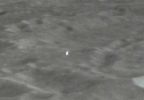
APOLLO_15_-_AS_15-87-11729-01.jpgAS 15-87-11729-1 - Orbital Transient (possible Fast-Walker)407 visiteLa forma a "Doppia-Sfera" della probe in questione è evidente, così come è evidente la leggera luminescenza azzurra che è (apparentemente) generata dalla sfera più lontana rispetto al punto di vista dell'Osservatore.
Caption NASA relativa al context frame originale:"Dave (Scott) took this picture of Tsiolkovsky on Rev. 14 from the LM when they were at an altitude of about 90 Km (from the Lunar Surface).
This is the last image on the magazine taken prior to the landing".MareKromiumApr 28, 2007
|
|

APOLLO_15_-_AS_15-87-11729-02.jpgAS 15-87-11729-2 - Orbital Transient (possible Fast-Walker)615 visiteNoi non siamo "Ufologi", lo sapete; ma negare l'alienità del dettaglio extra-magnificato, in un caso come questo, a noi pare l'espressione di una chiusura mentale del tutto inconcepibile e comunque
assolutamente inconciliabile con il Principio Ispiratore e Fondamentale della Ricerca (comunque effettuata) il quale si esprime nella "Volontà di giungere ad afferrare, in tutto e/od in parte, la Verità".
Se avete delle opinioni a riguardo, per favore vogliate dividerle con noi.
Grazie a tutti ed ancora complimenti vivissimi al Dr Gianluigi Barca!MareKromiumApr 28, 2007
|
|

APOLLO_11_AS_11-45-6714_HR.jpgAS 11-45-6714 - Hard Rock!98 visitenessun commentoMar 29, 2007
|
|

APOLLO_12_AS_12-57-8451_HR.jpgAS 12-57-8541 - The texture of the Moon57 visitenessun commentoMar 29, 2007
|
|

APOLLO_12_AS_12-57-8454_HR.jpgAS 12-57-8454 (HR) - Soil surface NOT greatly disturbed by the LM descent engine exhaust61 visitenessun commentoMar 29, 2007
|
|

APOLLO_12_AS_12-57-8455_HR.jpgAS 12-57-8455 (HR) - Soil surface NOT greatly disturbed by the LM descent engine exhaust61 visitenessun commentoMar 29, 2007
|
|

APOLLO_12_AS_12-57-8445_HR.jpgAS 12-57-8445 (HR) - Soil surface disturbed by the LM descent engine exhaust59 visitenessun commentoMar 29, 2007
|
|
APOLLO_12_AS_12-57-8448_HR.jpgAS 12-57-8448 (HR) - Soil surface disturbed by Astronauts' boots59 visitenessun commentoMar 29, 2007
|
|

APOLLO_12_AS_12-57-8452_HR.jpgAS 12-57-8452 (HR) - Metal-like rock and almost undisturbed soil59 visiteNota: un frammento di granito ricoperto di polvere sottilissima o una sorta di pirite lunare?Mar 29, 2007
|
|

36-Shackleton_Crater-AMI_EAE3_001775_00002_00020.jpgSchakleton Crater in natural colors62 visiteThe Advanced Moon Imaging Experiment Camera (AMIE) obtained this image on 13 January 2006 - close to the time of Lunar Southern Summer - from a distance of about 646 Km over the surface and with a ground resolution of 60 mt per pixel.
Shackleton crater lies at the Lunar South Pole (89,54° S. Lat. and 0° East Lng.) and has a diameter of approx. 19 Km.
SMART-1 monitored this area almost every orbit. This will allow to produce very high resolution maps of the area as well as illumination maps. The long shadows that surround the crater make it very hard to observe. The analysis of the data obtained allowed a very detailed map of its rim, surrounding ejectas and craters.
SMART-1 also made long repeated exposures to see inside the shadowed areas. The purpose was detecting the very weak reflected light from the crater rims, and therefore study the surface reflection properties (albedo) and its spectral variations (mineralogical composition). These properties could reveal patchy ice surface layers inside the crater.
On the 2-kilometre wide inner edge of the crater ridge, at times barely visible from Earth, astronomers using ground radio-telescopes have recently reported they were not able to detect a distinctive signature of thick deposits of ice in the area. Earlier measurements by NASA's Lunar Prospector reported of hydrogen enhancement over large shadowed areas.
"We still do not know if this hydrogen is due to enhanced trapping of solar wind, or to the water ice brought on the Moon by the bombardment of comets and asteroids," says Bernard Foing, ESA's SMART-1 Project Scientist. "These bodies may have deposited on the Moon patchy layers of ice filling about 1.5 percent of the areas in permanent shadow, down to one metre below the surface."
"We need to analyse all remote sensing data sets consistently. Future lander and rover missions to the Moon will help in the search and characterisation of lunar polar ice, both on the surface and below the subsurface," Foing continues. "In any case, one day we may even be able to simply combine the implanted hydrogen and the oxygen extracted from lunar rocks to produce clean water, like we do in laboratory experiments on Earth.”
The crater is named after Ernest Shackleton (1874-1922), an explorer famous for his Antartic expeditions.
MareKromiumGen 07, 2007
|
|
| 2195 immagini su 183 pagina(e) |
 |
|
|
|
|
34 | |
|
|
|
|





