| |

| Ultimi arrivi - MOON |
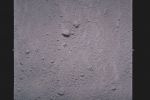
APOLLO_12_AS_12-57-8442_HR-a.jpgAS 12-57-8442 (a) - Soil surface disturbed by the LM descent engine exhaust (coloring: Lunexit)62 visitenessun commentoMareKromiumGen 15, 2008
|
|

APOLLO_12_AS_12-57-8442_HR-b.jpgAS 12-57-8442 (b) - Soil surface disturbed by the LM descent engine exhaust (coloring: NASA)60 visitenessun commentoMareKromiumGen 15, 2008
|
|
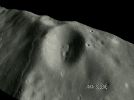
Kaguya-012-20071128_kaguya_tc02_03_l.jpgDyson Crater (1)77 visiteCaption JAXA:"The Terrain Camera (TC) can observe the Moon surface during the day-time of the Moon using 2 cameras that respectively face the slightly diagonal forelooking and afterlooking of the satellite. It can take 3-D (stereo) images of the Moon's globe with a world's first Super High Definition (SHD) of 10 meters.
3-D terrain images acquired by TC HighRes Stereo-Pair Cameras are important data to study the evolution process of the Moon's unique terrain.
With detailed investigation of the crater distribution, we can estimate more precisely when each area of the Moon has been formed and can study more details of when the Moon was born and how its inside and surface have been changing.
Furthermore, data acquired by the TC is expected to be useful for studying topographical characteristics and illumination map to determine the best location for a future Moon base and to consider manned activities on the Moon".MareKromiumDic 02, 2007
|
|

Kaguya-013-20071128_kaguya_tc02_04.jpgDyson Crater (2)73 visitenessun commentoMareKromiumDic 02, 2007
|
|
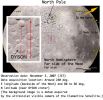
Kaguya-014-20071128_kaguya_tc04_01_e.jpgDyson Crater Region as to the North Pole of the Moon60 visitenessun commentoMareKromiumDic 02, 2007
|
|
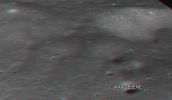
Kaguya-015-20071128_kaguya_tc03_04_l.jpgDyson Crater Region (3-D)59 visitenessun commentoMareKromiumDic 02, 2007
|
|

The_Moon-Aristarchus_Plateau.jpgAristarchus Plateau: the cradle of TLP's82 visiteCaption NASA:"Anchored in the vast lava flows of the Moon's Oceanus Procellarum lies the Aristarchus Plateau. The bright impact crater at the corner of the plateau is Aristarchus, a young crater 42 Km wide and 3 Km deep. Only slightly smaller, lava flooded Herodotus crater is above and to the left.
A valley (or rille) feature likely carved by rapidly flowing lava or a collapsed lava tunnel, Vallis Schroteri begins just to the right of Herodotus and winds across the plateau for about 160 Km, eventually turning toward the top of the picture.
Aristarchus Plateau itself is like a rectangular island about 200 km across, raised up to 2 kilometers or so above the smooth surface of the lunar Ocean of Storms.
Recorded from a backyard observatory in Buffalo, New York, the contrast of light-colored ejecta around Aristarchus with surrounding dark, smooth, lava flooded surfaces suggests more familiar snowy scenes of planet Earth".MareKromiumNov 30, 2007
|
|

APOLLO_10_AS_10-28-3988-89-90_GIF.gifTrash around the Moon? (GIF Movie; credits: Dr Alessio Feltri)128 visiteNel ringraziare il nostro Grande Amico e Collega, Dr Alessio Feltri, per questo GIF-Movie davvero MOLTO ben fatto (ottenuto dai frames Apollo 10 AS 10-28-3988/3989 e 3990), vorremmo ora spendere qualche parola su ciò che, a nostro parere, questa incredibile sequenza potrebbe rappresentare.
In realtà, un'opinione al riguardo l'avevamo già espressa in un articolo pubblicato da NEXUS nel Luglio 2005 ("Trash Around The Moon?"), ma abbiamo - di recente - letto dei commenti piuttosto sconcertanti al riguardo su un Forum USA (AboveTopSecret - http://www.abovetopsecret.com/forum/thread314256/pg3) ai quali vorremmo fare un riferimento.
Ebbene, pur rispettando al massimo le opinioni degli Amici Americani che partecipano a quel forum (due dei quali sono nostri Iscritti), gradiremmo precisare che:
1) l'ipotesi secondo cui l'oggetto ripreso in ben 3 frames sia un image-artifact determinato dalla pellicola danneggiata è un autentico insulto all'intelligenza ed al buon senso di chi studia queste immagini (anzi: un insulto all’intelligenza e basta);
2) l'ipotesi secondo cui l'oggetto potrebbe essere una porzione del CSM (e, per l'esattezza"...a mylar covering that got loose...": ossìa un robusto, ma flessibile, rivestimento in poliestere trasparente – simile al cellophane ed usato per proteggere e/o trasportare in sicurezza strumentazioni, cavi, cablaggi etc.) è smentita da due elementi:
a) l'oggetto in questione è compatto, rigido, opaco e "contiene" i resti di qualcosa (i rivestimenti in mylar, inoltre, funzionalmente “ricoprono” e NON “contengono” oggetti – precisazione non esattamente irrilevante);
b) il moto dell'oggetto è incoerente rispetto al moto del CSM (a meno che non si pensi che esso sia stato "sparato via" dal CSM stesso) – si faccia, al riguardo, un confronto tra il movimento della superficie Lunare così come appare nei tre frames – e che ci definisce il moto del CSM – ed il movimento del “relitto” spaziale.
In realtà, il frammento di mylar staccatosi dal CSM lo si può vedere, proprio all’atto del distacco, in un filmato NASA Originale Apollo 10 (che possediamo) e tra i due "frammenti" in movimento – filmato/frames – non c'è (davvero) alcuna somiglianza.
E allora, di che cosa si tratta? Ecco. Questo è il punto.
La Verità.
Ma la Verità – ahinoi!!! – NON LA CONOSCE (ancora) NESSUNO!
Noi di Lunexit, che facciamo il Lavoro di Divulgatori per passione e professione, cerchiamo – pur avendo enormi quantitativi di materiale ed una discreta esperienza – di essere sempre aperti, umili e possibilisti. Perché questo è l’approccio che, secondo noi, un giorno potrebbe portare a qualcosa.
Chi invece va a scrivere su Forum di Scienza, simil-Scienza, Fantascienza e stupidaggini pure (sia qui, in Italia, sia al di là dell'oceano...) sembra avere tutta la Scienza e la Conoscenza possibili e si sente assolutamente in diritto di esprimere pareri tanto formalmente autorevoli, quanto (alla prova dei fatti) arroganti, sgraziati e sballati, non solo sul Lavoro fatto da altri, ma pure in ordine a Materie sulle quali – e non ci vuole un genio per capirlo – la competenza tecnica posseduta è davvero (e tristemente) bassa.
Ok, va bene: questo atteggiamento (l'abbiamo capito) esprime il modus cogitandi et scribendi degli Anni '90 e 2000: d’accordo, ne prendiamo atto.
Ma lasciateci dire e scrivere, però, che questo "modus" è lo stesso che conduce all'incomprensione, alla chiusura reciproca, alla violenza verbale e, nel contempo, alla disinformazione ed alla divulgazione dell'ignoranza più gretta e più bieca.
Gli esempi che potremmo fare sono davvero tanti (moltissimi, purtroppo, di "casa nostra"), ma noi ci fermiamo qui – perché non abbiamo né tempo, né voglia di far gazzarra con persone tanto incompetenti quanto presuntuose –, rinnovando a tutti i nostri Amici il solito invito: se avete la Verità fra le mani, allora esprimetela e - nel contempo - fornite una adeguata prova di Essa a chi invece “brancola nel buio”.
Ma se non l'avete e volete comunque parlare e scrivere...cercate almeno di essere un pizzico saggi ed umili.
Farete una bella figura (in ogni caso) e, se non altro, avrete dato un contributo intelligente e costruttivo alla Causa della Ricerca della Verità.
Tutto qui.
E se ora avete dei commenti da fare sulla Natura di questo "oggetto", dovete solo iniziare a scrivere!...
MareKromiumNov 25, 2007
|
|

Kaguya-007-20071113.jpgThe rising "Blue Marble", from Lunar Orbit (Kaguya is near the Lunar North Pole)78 visiteCaption JAXA:"The Japan Aerospace Exploration Agency (JAXA) and NHK (Japan Broadcasting Corporation) have successfully performed the world's first high-definition image taking of an Earth-rise* by the Lunar Explorer "KAGUYA" (SELENE,) which was injected into a lunar orbit at an altitude of about 100 km on October 18, 2007 (Japan Standard Time. Following times and dates are all JST.)
The Apollo project was the first mission to take images of Earth rising over the Moon. The KAGUYA successfully shot high-definition images of the Earth-rise showing an impressive image of the blue Earth which was the only floating object in pitch-dark space.
These are the World's first high-definition earth images taken from about 380.000 Km away from the Earth in space.
The image taking was performed by the KAGUYA's onboard High Definition Television (HDTV) for space use developed by NHK. The moving image data acquired by the KAGUYA was received at the JAXA Usuda Deep Space Center, and processed by NHK.
The satellite was confirmed to be in good health through telemetry data received at the Usuda Station".
* Note: we use the expression "Earth-rise" in this press release, but the Earth-rise is a phenomenon seen only from satellites that travel around the Moon, such as the KAGUYA and the Apollo Class spaceships.
The Earth-rise cannot be observed by a person who is on the Moon as they can always see the Earth at the same position.
This still image was cut out from a moving image (wide shot) taken by the HDTV onboard the KAGUYA at 02:52 p.m. on November 7, 2007 (JST) then sent to the JAXA Usuda Deep Space Center.
In the image, the Moon's surface is near the North Pole, and the Arabian Peninsula and Indian Ocean can be observed on the Earth disc.MareKromiumNov 13, 2007
|
|

Kaguya-008-20071113.jpgThe setting "Blue Marble", from Lunar Orbit (Kaguya is near the Lunar South Pole)80 visiteCaption JAXA:"This still image was cut out from a moving image (tele shot) taken by the HDTV onboard the KAGUYA at 12:07 p.m. on November 7, 2007 (Japan Standard Time, JST,) then sent to the JAXA Usuda Deep Space Center.
In the image, the Moon's surface is near the South Pole, and we can see the Australian Continent (center left) and the Asian Continent (lower right) on the Earth.
(In this image, the upper side of the Earth is the Southern Hemisphere, thus the Australian Continent looks upside-down)".MareKromiumNov 13, 2007
|
|
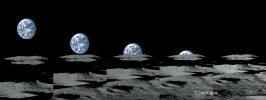
Kaguya-009-20071113.jpgThe setting "Blue Marble", from Lunar Orbit (full sequence - Kaguya is near the Lunar South Pole)77 visiteCaption JAXA:"These images are the Earth setting to the horizon near the Moon's South Pole.
It took about 70 seconds from the left image to the right image (complete setting)". MareKromiumNov 13, 2007
|
|

Kaguya-010-20071113.gifRelative locations of the KAGUYA Probe, the Moon, and the Earth70 visitenessun commentoMareKromiumNov 13, 2007
|
|
| 2195 immagini su 183 pagina(e) |
|
|
|
|
|
28 | |
|
|
|
|
|
|





