| Ultimi arrivi - MOON |

APOLLO_15_AS_15-87-11856-2.jpgfrom AS 15-87-11856 (HR)56 visiteL.F.MareKromiumAgo 31, 2008
|
|

Kaguya-029-Tycho-tc_012_a_l.jpgTycho: the Central Peak (perspective view - natural colors; credits: Lunexit)59 visiteCaption JAXA:"Tycho Crater, located on the Lunar Nearside in the Highlands of the Southern Hemisphere at about 43° South Lat. and 7° West Long. is a young crater formed by an impact about 100 Million Years ago. On nights when the Moon is fully lighted, you can see bright rays coming out from Tycho Crater.
The study of Tycho Crater contributed to the development of Lunar Science. The first data on the chemical composition of the Lunar Highlands were obtained by the analytical instrument onboard Surveyor 7, which soft-landed about 20 Km North of the Rim of Tycho, in 1968 (see Note n. 1).
Dr. J. A. Wood of the Smithsonian Astrophysical Laboratory discovered some tiny fragment of Anorthosite in the regolith (soil) samples collected by the Apollo 11 Astronauts. Because of the observation that the chemical composition of the fragments was similar to that of Tycho taken by the Surveyor, Dr. Wood inferred that these fragment were ejected from Tycho by the impact. He proposed the "Lunar Magma Ocean Hypothesis" (see Note n. 2) in order to account for his finding that the Lunar Highlands are composed of Anorthosite.
One of the major objectives of the subsequent Apollo Missions was to find a pristine Anorthosite rock in the Highlands.
The impact that created Tycho Crater ejected highland anorthositic crust all over the Near Side of the Moon. This impact by a small asteroidal body took place, as we said, about 100 MY ago, when the dinosaurs inhabited the Earth. It was, however, still a relatively recent event in Lunar History, and the effects of the impact event can still be seen.
Note 1) In preparation for the manned Lunar Missions of the Apollo Program, NASA developed soft-landing techniques with the Surveyor Program. Surveyor 7 was the final spacecraft of the series and landed near the north rim of Tycho Crater on 10 January 1968 (UT). During this mission, many photographs of the Lunar Highland landscape were taken and a geological survey was performed.
Note 2) “Lunar magma ocean hypothesis”: To explain the formation of Anorthosite that the Lunar Surface was once completely molten to a depth of about 200 Km, thus forming a “lunar magma ocean”. This hypothesis has contributed not only to Lunar Science but also to ideas about the formation of the Earth. MareKromiumAgo 31, 2008
|
|

Kaguya-030-Tycho-tc_012_c_l.jpgTycho: the Inner Rim (perspective view - natural colors; credits: Lunexit)59 visitenessun commentoMareKromiumAgo 31, 2008
|
|

Kaguya-031-Tycho-tc_012_d_l.jpgTycho: the Inner Rim (perspective view - natural colors; credits: Lunexit)58 visitenessun commentoMareKromiumAgo 31, 2008
|
|
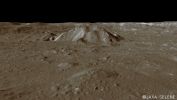
Kaguya-032-tc_012_e_l.jpgTycho: the Central Peak (perspective view - natural colors; credits: Lunexit)59 visitenessun commentoMareKromiumAgo 31, 2008
|
|

AS15-88-11905HR-2.jpgfrom AS 15-88-11905 (HR)56 visiteU.O.MareKromiumAgo 23, 2008
|
|

AS16-106-17256HR-2.jpgfrom AS 16-106-17256 (HR)57 visiteS.MareKromiumAgo 23, 2008
|
|
AS16-108-17726HR-2.jpgfrom AS 16-108-17726 (HR)56 visiteU.O.MareKromiumAgo 23, 2008
|
|

APOLLO_17_AS_17-134-20424-2.jpgfrom AS 17-134-20424 (HR)56 visiteU.O.MareKromiumAgo 23, 2008
|
|

AS12-47-7005HR-2.jpgfrom AS 12-47-7005 (HR)103 visiteU.O.MareKromiumAgo 23, 2008
|
|

0-AS12-47-7006HR-2.jpgfrom AS 12-47-7006 (HR)70 visiteQuesta nuova Galleria, curata dal Dr Gianluigi Barca, è dedicata - in un certo senso - ad una delle maggiori e più importanti "Fonti di Sviste": i "Photo-Artifacts" (anche noti come "Image-Artifacts").
Ma che cosa sono i Photo(graphic) Artifacts? Sono vizi "fisici" dei frames (derivanti, p.e., da errata conservazione e/o sviluppo delle pellicole originali; da errori occorsi durante la fase di digitalizzazione dei negativi originali - vizi di compressione inclusi - e/o da errori e vizi di trasmissione delle immagini "via satellite" - exx.: noise; dead-pixels; missing pixels; cosmic rays etc.) i quali, negli anni, hanno generato delle impressionanti sviste le quali, nel tempo (e con l'aiuto di tanta Fantasia) hanno creato un imprecisato - ma pure impressionante - numero di "favole & leggende" (Lunari, Marziani e dello Spazio Profondo).
Legenda: P.P.A. o P.I.A. (Plain Photo Artifact o Plain Image Artifact); D.O.F. (Damaged Original Film); S.I.I.A. (Super Imposed Image Artifact); S. (Scratch); H&D (Hair & Dust); L.F. (Lens Flare); D.L. (Damaged Lens); N (Noise); C.A. (Compression Artifact); D.P. o M.P. (Dead Pixel e Missing Pixel); C.R. (Cosmic Ray); U.O. (Unknown/Unidentified Origin).
Ed ora...Buona "caccia"! (e naturalmente i Vostri commenti saranno MOLTO apprezzati!)MareKromiumAgo 23, 2008
|
|

AS14-66-9236HR-2.jpgfrom AS 14-66-9236 (HR)61 visiteS.I.I.A.MareKromiumAgo 23, 2008
|
|
| 2195 immagini su 183 pagina(e) |
 |
|
|
|
|
22 | |
|
|
|
|





