| |

| Ultimi arrivi - THE LUNAR EXPLORER ARCHIVES |

W-APOLLO_15-2009712154321_ufo_luna-3.jpgA HUGE Fake! (Part III)185 visiteIl terzo passaggio é stato il più difficile: cos'era il presunto UFO? Agendo ad intuito (ed avendo un minimo di Esperienza - sono oltre 40 anni, ma non basta mai...), ho guardato l'immagine "incriminata" ed ho pensato: l'"UFO" non ha texture, sembra sdoppiato (mentre l'immagine sembra/é "ferma" su tutto il resto), é sostanzialmente "sfuocato" (un "classico" dei "fake") dunque potrebbe essere...Un riflesso!
A quel punto ho dovuto guardare tutti i rullini a colori della Missione Apollo 15, ed alla fine é saltata fuori l'immagine "trabocchetto": é il frame Apollo 15 - AS 15-91-12379.
Dati Tecnici:
Image Collection: 70mm Hasselblad
Mission: Apollo 15
Magazine: 91
Magazine Letter: M
Lens Focal Length: 250 mm
Film Type: SO-368
Film Width: 70 mm
Film Color: color
Index Map: http://www.lpi.usra.edu/resources/mapcatalog/apolloindex/apollo15/as15indexmap10/
Feature(s): O'DAY - SIERPINSKI
Nota: Sierpinski is an Impact Crater located on the Far (Dark) Side of the Moon. It lies to the South/East of the huge walled plain Gagarin, and to the North/West of another Impact Crater - named "O'Day" - and of the Mare Ingenii.MareKromiumDic 19, 2019
|
|

W-APOLLO_15-2009712154321_ufo_luna-2.jpgA HUGE Fake! (Part II)175 visiteIl secondo passaggio é stato facile: ho ritagliato (--> cropped) l'immagine, così come nel frame "falso", che vedremo alla fine.
L'oggetto (in realtà sono almeno 4, dunque: gli oggetti!) sfuocato/i che vedete leggermente sulla sinistra (Sx) in basso, é/sono (ritengo) una sorta di "sacchetto a rete" (un contenitore?) ed altri strumenti lasciati al suolo dagli Astronauti per effettuare l'esperimento sulle Onde Sismiche. Nella foto finale, li vedrete come una sorta di chiazza scura (che sembra un ragno...).
L'intento era quello di farlo passare per l'"ombra" del (falso) disco volante, ma un'eventuale ombra non sarebbe MAI potuta trovarsi lì (per giunta di quelle dimemsioni, fattezze e colori che vedrete), vista la posizione del Sole rispetto all'Astronauta che fotografava.
Il Sole, infatti, NON era allo Zenit (altissimo, insomma), ma piuttosto basso ed alle sue spalle.
Didascalia NASA Originale: "Station 8 ALSEP / central Station / panorama".
Nota: ALSEP = Apollo Lunar Surface Experiments PackageMareKromiumDic 19, 2019
|
|
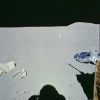
W-APOLLO_15-2009712154321_ufo_luna-1.jpgA HUGE Fake! (Part I)218 visiteL'abbiamo vista in tanti, troppi credo. Mi é stata segnalata da un Carissimo Amico di Lunexit per un parere ed io ho preso la cosa sul serio (come sempre del resto).
L'immagine, apparentemente un frame Apollo 15 Originale, avrebbe dovuto costituire una "Prova Decisiva" - o quasi - della prsenza di Intelligenze Aliene sulla Luna o nei suoi pressi.
Bene.
Una premessa é necessaria. Anzi: due.
Prima premessa: io (Dr Paolo C. Fienga) sono CONVINTO che Intelligenze Aliene si trovino sulla Luna o nei suoi pressi (come su Marte e su altri Corpi Celesti del nostro Sistema Solare), ed al pari credo che il "Progetto Apollo", in realtà, non si sia MAI fermato, anzi....
Seconda Premessa: l'immagine che mi é stata sottoposta - e che vedrete alla fine di questo "servizio" - é FALSA. Io credo che il "lavoro" svolto da innumerevoli "Ufologi" (Italiani, Americani, Russi ecc.), dagli Anni '60 ad oggi, sia stato un pessimo lavoro. Un business, fondamentalmente. Un lurido business che ha DEVASTATO la Ricerca Seria ed Oggettiva di Evidenze circa la presenza, nei Cieli Terrestri, sulla (o presso) la Luna, Marte e/od altrove, di "Visitatori".
L'immagine che mi ha spinto a svolgere quseto lavoretto é "affascinante" ma, per "occhi esperti", immediatamente individuabile come falsa. Ora capirete perché e vedrete come é stata ottenuta.
L'immagine in oggetto é stata ottenuta partendo da questo frame Apollo 15: il seriale (che gli "Ufologi" NON HANNO MAI RESO NOTO!) é AS 15-87-11843. Il frame, in seguito, é stato "croppato" (tagliato), ingrandito, sbiadito, sovra-illuminato e poi "unito" al dettaglio di un altro frame, che ho individuato agendo con calma e pazienza certosine.
Dedico questa "Ricerca" al Grande Amico che me l'ha ispirata, agli "Ufologi" della Domenica, a chi approfitta della credulità ed a chi ha insultato me e questa Fondazione (per me Sacra), più volte, negli anni.
Tranne l'Amico che mi ha sottoposto il problema, che si vergognino tutti: i falsificatori, i bugiardi, i saccenti e tutti gli orribili individui che, negli anni, ho incrociato nella Vita e sul Web.....
Comunque, torniamo a noi e dimentichiamo il resto. Questo é il frame iniziale.....e questi i Dati Ufficiali (Fonte: Lunar and Planetary Institute - Apollo Image Atlas):
Image Collection: 70mm Hasselblad
Mission: 15
Magazine: 87
Magazine Letter: KK
Lens Focal Length: 60 mm
Description: STA 8 (ALSEP); CENTRAL STATION; PASSIVE SEISMIC EXPERIMENT
Film Type: SO-168
Film Width: 70 mm
Film Color: color
Feature(s): HILL 305 - PAN MareKromiumDic 18, 2019
|
|

The_Rainbow-MF-LXTT-IPF.jpgThe Endless Rainbow (by Marco Faccin/LXTT/IPF)160 visiteOggi, esattamente venti anni fa, mi sposavo con la mia - compianta - Ginny, nella Casa Comunale di Bresso (MI). Venti anni sono passati, tra gioie e sofferenze, ma comunque lungo le vie di una Vita vissuta intensamente, e trascorsa nel volgere di quello che, oggi, sembra solo un soffio. Vorrei sviluppare qualche riflessione ulteriore e filosofeggiare un po', ma mi accorgo che non me la sento. Oggi è Giorno di Memoria, in attesa del Primo Anniversario della Sua Morte, che cadrà l'11 Luglio prossimo. Una Preghiera per Ginny, ed una per tutti i nostri Cari che sono passati. E che un Arcobaleno senza Fine splenda per loro. E per noi.
Amen.
Grazie. Paolo C. FiengaMareKromiumGiu 18, 2014
|
|

Valles_Marineris_with_Water_and_Vegetation.jpgThe Last Days of Mars: The Great Valles Marineris Region (Credits: Don Edwards and Paolo C. Fienga)137 visiteDear Friends of Lunar Explorer Italia and the Italian Planetary Foundation,
starting from yesterday, January, 13th, 2014, we have decided to submit to your careful attention and consideration, 5 (five) "Martian Fantasies" which, in our opinion, may give you an idea about how Mars could have looked like near the end of its "Life" (as we know it, of course). We imagined the existence of some residual Wet-Lands (for instance, a few Lakes with some small River nearby), and a little Vegetation, located just in their immediate proximities.
And then ... a boundless Desert. In other words, only a few "Oasis of Life", made of residual Waters and a minimal Local Vegetation, and both completely surrounded by the yellow and orange Sands of a Desert which, in a (we believe, relatively) short amount of time, would have covered the entire Planet, and turned it into what we can see today.
This "Computer-made Reconstruction" shows you a portion of the Great Valles Marineris Canyon System, when some Residual Waters and Vegetation were still inside and near (in the close proximities of) this extremely famous Martian Geological Feature.
Note: for a better understanding of what we have been trying to show you here, please consider that in the locations where the color of the Residual Waters tends towards the green and a very light blue, it means that said Residual Waters are already very shallow; on the other hand, the darker the color of the Residual Waters gets, then the greater is their actual depth.
Please, some feedback on your side will be deeply appreciated and, therefore, do not hesitate to write to us and let us know what you think of these "Fantasies" which we have decided to entitle "The Last Days of Mars".
Thanks and enjoy!
Dr Paolo C. Fienga (PhD) - E-mail: alphacentauri@intercom.itMareKromiumGen 25, 2014
|
|

Noctis_Labyrinthus_with_Water_and_Vegetation.jpgThe Last Days of Mars: Noctis Labyrinthus Region (Credits: Don Edwards and Paolo C. Fienga)130 visiteDear Friends of Lunar Explorer Italia and the Italian Planetary Foundation,
starting from January, 13th, 2014, we have decided to submit to your careful attention and consideration, 5 (five) "Martian Fantasies" which, in our opinion, may give you an idea about how Mars could have looked like near the end of its "Life" (as we know it, of course). We imagined the existence of some residual Wet-Lands (for instance, a few Lakes with some small River nearby), and a little Vegetation, located just in their immediate proximities.
And then ... a boundless Desert. In other words, only a few "Oasis of Life", made of residual Waters and a minimal Local Vegetation, and both completely surrounded by the yellow and orange Sands of a Desert which, in a (we believe, relatively) short amount of time, would have covered the entire Planet, and turned it into what we can see today.
This "Computer-made Reconstruction" shows you a portion of the Noctis Labyrinthus, in a time that, as you can see, was VERY close to the complete desertification of the entire Region.
Note: for a better understanding of what we have been trying to show you here, please consider that in the locations where the color of the Residual Waters tends towards the green and a very light blue, it means that said Residual Waters are already very shallow; on the other hand, the darker the color of the Residual Waters gets, then the greater is their actual depth.
Please, some feedback on your side will be deeply appreciated and, therefore, do not hesitate to write to us and let us know what you think of these "Fantasies" which we have decided to entitle "The Last Days of Mars".
Thanks and enjoy!
Dr Paolo C. Fienga (PhD) - E-mail: alphacentauri@intercom.itMareKromiumGen 25, 2014
|
|

Tempe_Terra-DE-PCF-LXTT-IPF.jpgThe Last Days of Mars: Tempe Terra Region (Credits: Don Edwards and Paolo C. Fienga)91 visiteDear Friends of Lunar Explorer Italia and the Italian Planetary Foundation,
starting from January, 13th, 2014, we have decided to submit to your careful attention and consideration, 5 (five) "Martian Fantasies" which, in our opinion, may give you an idea about how Mars could have looked like near the end of its "Life" (as we know it, of course). We imagined the existence of some residual Wet-Lands (for instance, a few Lakes with some small River nearby), and a little Vegetation, located just in their immediate proximities.
And then ... a boundless Desert. In other words, only a few "Oasis of Life", made of residual Waters and a minimal Local Vegetation, and both completely surrounded by the yellow and orange Sands of a Desert which, in a (we believe, relatively) short amount of time, would have covered the entire Planet, and turned it into what we can see today.
This "Computer-made Reconstruction" shows you a portion of Tempe Terra, in a time that, as you can see, was VERY close to the complete desertification of the entire Region.
Note: for a better understanding of what we have been trying to show you here, please consider that in the locations where the color of the Residual Waters tends towards the green and a very light blue, it means that said Residual Waters are already very shallow; on the other hand, the darker the color of the Residual Waters gets, then the greater is their actual depth.
Please, some feedback on your side will be deeply appreciated and, therefore, do not hesitate to write to us and let us know what you think of these "Fantasies" which we have decided to entitle "The Last Days of Mars".
Thanks and enjoy!
Dr Paolo C. Fienga (PhD) - E-mail: alphacentauri@intercom.itMareKromiumGen 25, 2014
|
|

Tharsis_Region-PCF-LXTT-IPF-1.jpgThe Last Days of Mars: Tharsis Region (Credits: Don Edwards and Paolo C. Fienga)89 visiteDear Friends of Lunar Explorer Italia and the Italian Planetary Foundation,
starting from January, 13th, 2014, we have decided to submit to your careful attention and consideration, 5 (five) "Martian Fantasies" which, in our opinion, may give you an idea about how Mars could have looked like near the end of its "Life" (as we know it, of course). We imagined the existence of some residual Wet-Lands (for instance, a few Lakes with some small River nearby), and a little Vegetation, located just in their immediate proximities.
And then ... a boundless Desert. In other words, only a few "Oasis of Life", made of residual Waters and a minimal Local Vegetation, and both completely surrounded by the yellow and orange Sands of a Desert which, in a (we believe, relatively) short amount of time, would have covered the entire Planet, and turned it into what we can see today.
This "Computer-made Reconstruction" shows you a portion of the Tharsis Region, and - precisely - an area located to the South of the huge Shield-Volcano known as Olympus Mons.
Note: for a better understanding of what we have been trying to show you here, please consider that in the locations where the color of the Residual Waters tends towards the green and a very light blue, it means that said Residual Waters are already very shallow; on the other hand, the darker the color of the Residual Waters gets, then the greater is their actual depth.
Please, some feedback on your side will be deeply appreciated and, therefore, do not hesitate to write to us and let us know what you think of these "Fantasies" which we have decided to entitle "The Last Days of Mars".
Thanks and enjoy!
Dr Paolo C. Fienga (PhD) - E-mail: alphacentauri@intercom.itMareKromiumGen 25, 2014
|
|

The_Face_on_Mars_-_0-RAW_Frame.gifThe "Face" of Cydonia Mensae (CTX View - RAW Frame n. V1-035A72)133 visitenessun commentoMareKromiumOtt 23, 2013
|
|
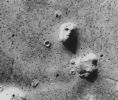
The_Face_on_Mars_-_1-RAW_Frame.jpgThe "Face" of Cydonia Mensae (EDM - RAW Frame n. V1-035A72)168 visitenessun commentoMareKromiumOtt 23, 2013
|
|

The_Face_on_Mars_-_2-PCF-LXTT-IPF.jpgThe "Face" of Cydonia Mensae (CTX View - Absolute Natural Colors; credits for the additional process. and color.: Dr Paolo C. Fienga/Lunar Explorer Italia/Italian Planetary Foundation)119 visitenessun commentoMareKromiumOtt 23, 2013
|
|

The_Face_on_Mars_-_3-PCF-LXTT-IPF.jpgThe "Face" of Cydonia Mensae (EDM - Absolute Natural Colors; credits for the additional process. and color.: Dr Paolo C. Fienga/Lunar Explorer Italia/Italian Planetary Foundation)127 visitenessun commentoMareKromiumOtt 23, 2013
|
|
| 3220 immagini su 269 pagina(e) |
|
|
|
|
|
14 | |
|
|
|
|
|
|





