| |
| Ultimi arrivi |

Titan-PIA14626-PCF-LXTT-IPF.jpgAt Titan's Poles (Absolute Natural Colors; credits for the additional process. and color.: Dr Paolo C. Fienga - Lunar Explorer Italia/Italian Planetary Foundation) 73 visiteTitan's South Polar Vortex seems to "float" above the moon's South Pole in this NASA - Cassini Spacecraft view. The Vortex, which is a mass of gases swirling around the South Pole, high in the moon's Atmosphere, can be easily seen in the lower right of this view. On the other hand, Titan's Northern "Hood" is also well visible, since it covers almost all the Northern Regions of this always mysterious and fascinating Saturnian moon. This view looks toward the Leading Hemisphere of Titan (which is approx. 3200 miles, or about 5150 kilometers across). North on Titan is up and rotated 25° to the left.
The image was taken with the NASA - Cassini Spacecraft Narrow-Angle Camera on July 6, 2012, using a Spectral Filter sensitive to wavelengths of Near-InfraRed light, centered at 889 nanometers. The view was acquired at a distance of approximately 1,7 Million Miles (such as about 2,8 Million Kilometers) from Titan and at a Sun-Titan-Spacecraft, or Phase, Angle of 86°. Scale in the original image was about 11 miles (such as approx. 17 Km) per pixel. Afterwards, the image has been contrast enhanced and magnified, so to improve the visibility of the most interesting Features existing in the Titanian Atmosphere.
This picture (which is an Original NASA - Cassini Spacecraft frame published on the NASA - Planetary Photojournal with the ID n. PIA 14626) has been additionally processed and then colorized, according to an informed speculation carried out by Dr Paolo C. Fienga (LXTT-IPF), in Absolute Natural Colors (such as the colors that a human eye would actually perceive if someone were onboard the NASA - Cassini Spacecraft and then looked outside, towards the Saturnian moon Titan), by using an original technique created - and, in time, dramatically improved - by the Lunar Explorer Italia Team. Different colors, as well as different shades of the same color, mean, among others, the existence of different Elements present in the Atmosphere of Titan, each having a different Albedo (---> Reflectivity) and Chemical Composition.MareKromiumOtt 24, 2012
|
|

SOL0061-ML0315000082M0_DXXX-0061ML0315000239M0_DXXX-GB-LXTT-IPF.gifGood Vibrations... - Sol 61 (a GIF-Movie by Dr Gianluigi Barca/Lunar Explorer Italia/Italian Planetary Foundation)77 visitenessun commentoMareKromiumOtt 24, 2012
|
|

ZZ-Mercury-Craters-Rustaveli_Crater-PIA16359-PCF-LXTT-IPF.jpgRustaveli Crater (Absolute Natural Colors; credits for the additional process. and color.: Dr Paolo C. Fienga/Lunar Explorer Italia/Italian Planetary Foundation)82 visiteThis Absolute Natural Color Image-Mosaic shows the Rustaveli Crater, a newly named Impact Basin located in the Northern Hemisphere of Mercury. The Basin has a smooth, filled Floor with little weathering and a Peak-ring Structure. Shota Rustaveli was a Georgian poet who lived from 1172-1216. He is well known for writing the Georgian National Epic Poem, "The Knight in the Panther's Skin". He is also the namesake of the coveted Shota Rustaveli State Prize, the highest honor a Georgian artist or writer can achieve.
Date acquired: July 18, 2011
Image Mission Elapsed Time (MET): 219478808, 219478804, 219478800
Image ID: 519956, 519955, 519954
Instrument: Wide Angle Camera (WAC) of the Mercury Dual Imaging System (MDIS)
WAC filters: 9, 7, 6 (996, 748, 433 nanometers) in red, green, and blue
Center Latitude: 52,40° North
Center Longitude: 81,79° East
Resolution: 187 meters/pixel
Scale: the diameter of Rustaveli basin is roughly 180 Km (such as approx. 112 miles).
Solar Incidence Angle: 59,8° (meaning that the Sun was about 30,2° above the imaged Local Horizon at the time that the picturs were taken)
Emission Angle: 30,6°
Sun-Mercury-MESSENGER (or "Phase") Angle: 90,4°MareKromiumOtt 15, 2012
|
|

ZZ-Mercury-Craters-Soseki-PIA16356-PCF-LXTT-IPF.jpgFeatures of Soseki Crater (Absolute Natural Colors; credits for the additional process. and color.: Dr Paolo C. Fienga/Lunar Explorer Italia/Italian Planetary Foundation)84 visiteThis Image-Mosaic shows part of the Mercurian Crater Soseki, in the North/West. A deep Scarp cuts through several Impact Craters visible on the right side of the image, though it does not stand out in this high-Sun view. The bright band crossing from upper right to lower left, is a Ray coming from the Crater Hokusai, which is located far away, to the North/East. Hokusai's Rays overprint older Impact Craters and cover a large portion of the whole Planet.
This image was acquired as a High-Resolution Targeted Color Observation. Targeted Color Observations are images of a small area on Mercury's Surface at resolutions higher than the 1-kilometer per pixel "Color Base Map". During MESSENGER's one-year Primary Mission, hundreds of Targeted Color Observations were obtained. During MESSENGER's extended mission, HR Targeted Color Observations are more rare, as the Color Base Map is covering Mercury's Northern Hemisphere with the highest-resolution color images that are possible.
Date acquired: April 09, 2011
Image Mission Elapsed Time (MET): 210807763, 210807759, 210807755
Image ID: 108194, 108193, 108192
Instrument: Wide Angle Camera (WAC) of the Mercury Dual Imaging System (MDIS)
WAC filters: 9, 7, 6 (996, 748, 433 nanometers) in red, green, and blue
Center Latitude: 36,39° North
Center Longitude: 323,5° East
Resolution: 302 meters/pixel
Scale: the Unnamed Impact Crater with the bright Floor (visible in the upper left corner of the frame) is about 32 Km in diameter (such as approx. 20 miles)
Solar Incidence Angle: 37,5° (meaning that the Sun was about 52,5° above the imaged Local Horizon at the time that the pictures were taken)
Emission Angle: 11,2°
Sun-Mercury-MESSENGER (or "Phase") Angle: 48,7°MareKromiumOtt 15, 2012
|
|
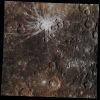
ZZ-Mercury-Craters-Mena_and_Cezanne_Crater-PIA16341-PCF-LXTT-IPF.jpgMena and Cezanne Crater (Absolute Natural Colors; credits for the additional process. and color.: Dr Paolo C. Fienga/Lunar Explorer Italia/Italian Planetary Foundation)70 visiteIn this Image-Mosaic, the Bright Rays of Mena Crater and the distinctive color difference of Cezanne Crater (with the surrounding area) are well highlighted. These two distinctive Impact Features provide beautiful contrast to this Absolute Natural Color image, giving the viewer more insight into reflectance variations (---> Albedoes) on Mercury's Surface. Also note the extremely old, degraded and larger, infilled Unnamed Crater visible on the center right of the frame, which is crossed by at least three major Crater Chains.
Date acquired: June 04, 2012
Image Mission Elapsed Time (MET): 247336883, 247336875, 247336879
Image ID: 1955368, 1955366, 1955367
Instrument: Wide Angle Camera (WAC) of the Mercury Dual Imaging System (MDIS)
WAC filters: 9, 7, 6 (996, 748, 433 nanometers) in red, green, and blue
Center Latitude: 3,78° South
Center Longitude: 235,8° East
Resolution: 552 meters/pixel
Scale: Cezanne Crater, such as the Crater in the bottom center, is about 67 km (approx. 41 miles) in diameter.
Solar Incidence Angle: 55,6° (meaning that the Sun was about 34,4° above the imaged Local Horizon at the time the pictures were taken)
Emission Angle: 0,0° (meaning that the MESSENGER Spacecraft, at the time that the pictures were taken, was absolutely perpendicular to the Mercurian Surface visible in the center of the frame)
Sun-Mercury-MESSENGER (or "Phase") Angle: 55,6°MareKromiumOtt 15, 2012
|
|

Chaotic_Terrain-Aram_Chaos-R2200155-03.jpgThe "Many Faces" of Aram Chaos (4 - EDM n. 3 - Enhanced and Darkened Absolute Natural Colors; credits for the additional process. and color.: Dr Paolo C. Fienga/Lunar Explorer Italia/Italian Planetary Foundation)89 visitenessun commentoMareKromiumOtt 15, 2012
|
|

SOL0063-PIA16194-PCF-LXTT-IPF.jpgAnother "Scoop" at Gale - Sol 63 (Absolute Natural Colors; credits for the additional process. and color.: Dr Paolo C. Fienga/Lunar Explorer Italia/Italian Planetary Foundation)106 visiteCaption NASA:"In this image, the Scoop on NASA's Curiosity Mars Exploration Rover shows the larger Soil Particles that were too big to filter through a sample-processing "Sieve" that is porous only to Particles less than 0,006" (i.e.: about 150 microns) across. After a full-scoop sample had been vibrated over the Sieve, this held-back portion was returned to the Scoop to be accessible for inspection by the Rover's Mast Camera. The image is part of the first "decontamination" exercise by the Collection and Handling for "In-Situ" Martian Rock Analysis (CHIMRA) tool on the end of the Rover's Robotic Arm, which includes the Scoop, the Sieve and other minor components.
The decontamination exercise involved scooping some Soil, shaking it thoroughly inside the Sample-processing Chambers to scrub the internal surfaces, putting it through a Sieve, dividing it into the appropriate portions and then discarding the sample. This process will be repeated 3 (three) times. The rinse-and-discard cycles serve a quality-assurance purpose similar to a common practice in geochemical laboratory analysis on Earth.
This image was taken by Curiosity's right Mast Camera (Mastcam-100) on October, 10, 2012, such as the 64th Sol, or Martian Day, of operations".MareKromiumOtt 15, 2012
|
|

SOL0058-PIA16193-PCF-LXTT-IPF.jpgHigh-Resolution View of a Cross-Section through a Martian Ripple - Sol 58 (Absolute Natural Colors; credits for the additional process. and color.: Dr Paolo C. Fienga - Lunar Explorer Italia - Italian Planetary Foundation)88 visiteCaption NASA:"This image shows the wall of a "scuffmark" made by the NASA - MER Curiosity in a Windblown Ripple of Martian Sand, by using one of its wheels. The upper half of the image shows a small portion of the side wall of the scuff and a little bit of the floor of the scuff (bottom of this image). The prominent depression with raised rims at the bottom center of the image was formed by one of the treads on Curiosity's front right wheel.
The largest Grains of Sand in this image are about 0,04 to 0,08" (such as about 1 to 2 millimeters) in size. Those large Grains were on top of the Windblown Ripple and fell down to this location when the scuff was made. The bulk of the Sand in the Ripple is smaller, in the range below 0,002 to 0,008" (i.e.: 50 to 200 microns). The full scuffmark is about 20" (such as approx. 50 centimeters) wide which is, by the way, the same width of Curiosity's wheel.
This image from the Mars Hand Lens Imager (MAHLI) is the product of merging 8 (eight) images acquired at 8 (eight) slightly different focus settings to bring out details on the wall, slopes, and floor of the wheel scuff. The merge was performed onboard the MAHLI instrument to reduce downlinked data volume.
The image was acquired by MAHLI with the lens about 4,7" (approx. 12 centimeters) from the target. The pixel scale is about 0,002" (such as approx. 50 microns) per pixel. The image covers an area, roughly 3 by 2" (such as about 8 by 6 centimeters). The image was obtained on October, 4, 2012 - such as the 58th Sol, or Martian Day, of operations of the MER Curiosity on the Surface of Gale Crater".MareKromiumOtt 15, 2012
|
|

SOL0052-PIA16204-PCF-LXTT-IPF.jpg"Rocknest" Site - Sol 52 (Absolute Natural Colors; credits for the additional process. and color.: Dr Paolo C. Fienga - Lunar Explorer Italia/Italian Planetary Foundation)103 visiteCaption NASA:"This patch of windblown Sand and Dust downhill from a cluster of Dark Rocks is the so-called "Rocknest" Site, which has been selected as the likely location for first use of the scoop on the Robotic Arm of NASA's Mars Exploration Rover Curiosity. This view is a mosaic of images taken by the telephoto right-eye camera of the Mast Camera (Mastcam) during the 52nd Martian Day, or Sol, of the mission (such as September, 28, 2012). Just 4 (four) Soles before, the Rover arrived at Rocknest. The "Rocknest" patch is about 8 by 16 feet (such as approx. 1,5 by 5 meters)".MareKromiumOtt 15, 2012
|
|

SOL0061-PIA16226-PCF-LXTT-IPF.jpgFirst "Scoop" at Gale - Sol 61 (Absolute Natural Colors; credits for the additional process. and color.: Dr Paolo C. Fienga/Lunar Explorer Italia/Italian Planetary Foundation)121 visiteCaption NASA:"This pairing illustrates the first time that the NASA's Mars Exploration Rover Curiosity collected a scoop of Soil on Mars. It combines two raw images taken on the mission's 61st Martian Day, or Sol (such as October, 7, 2012) by the right camera of the Rover's two-camera Mast Camera (Mastcam) instrument. The right Mastcam, or Mastcam-100, has a telephoto, 100-millimeter-focal-length lens.
The image on the left shows the Ground at the location "Rocknest" after the scoop of Sand and Dust had been removed. The image on the right shows the Sandy and Dusty Material inside the Rover's Scoop, which is 1,8" (inches - such as approx. 4,5 centimeters) wide, and 2.8" (about 7 centimeters) long".MareKromiumOtt 15, 2012
|
|
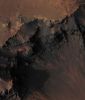
ESP_028962_1645-PCF-LXTT-IPF.jpgFeatures of Coprates Chasma (Absolute Natural Colors; credits for the additional process. and color.: Dr Paolo C. Fienga/Lunar Explorer Italia/Italian Planetary Foundation)106 visiteMars Local Time: 15:39 (Middle Afternoon)
Coord. (centered): 15,450° South Lat. and 303,273° East Long.
Spacecraft altitude: 260,5 Km (such as about 162,8 miles)
Original image scale range: 52,1 cm/pixel (with 2 x 2 binning) so objects ~ 1 mt and 56 cm across are resolved
Map projected scale: 50 cm/pixel
Map projection: EQUIRECTANGULAR
Emission Angle: 5,5°
Phase Angle: 61,5°
Solar Incidence Angle: 56° (meaning that the Sun was about 34° above the Local Horizon of the imaged Region, at the time that the picture was taken)
Solar Longitude: 180,3° (Northern Autumn - Southern Spring)
Credits: NASA/JPL/University of Arizona
Additional process. and coloring: Lunar Explorer ItaliaMareKromiumOtt 14, 2012
|
|

ZZ-Mercury-Terninator_Line-PIA16360-PCF-LXTT-IPF.jpgMercurian Terminator (Absolute Natural Colors; credits for the additional process. and color.: Dr Paolo C. Fienga/Lunar Explorer Italia/Italian Planetary Foundation)98 visiteThis striking image shows the progression of Daylight across the Surface of Mercury and the line separating the night from the day is called "Terminator". Scientists have studied interesting phenomena occurring near the Terminator of the Moon for years. Such occurrences involve the interaction between Lunar Dust and Charged Solar Particles (---> the Ions making the Solar Wind). Because Mercury's Regolith is exposed to almost ten times as many Charged Particles as the Moon, it is an excellent place to study the effects of Solar Radiation on Surface Materials. In this unprojected image, North is to the right.
This image was acquired as part of MDIS's campaign to monitor the South Polar Region of Mercury. By imaging the Polar Regions approximately every 4 (four) MESSENGER orbits as illumination conditions change, the Surface Features that were in the shadows on earlier orbits, can be discerned and any permanently shadowed areas can also be identified after repeated imaging over One Solar Day. During MESSENGER's one-year primary mission, MDIS's WAC was used to monitor the South Polar Regions for the first Mercury Solar Day (which corresponds to 176 Earth Days), and MDIS's NAC made repeated images of the South Polar Regions during the second Mercury Solar Day.
Date acquired: August 01, 2011
Image Mission Elapsed Time (MET): 220726567
Image ID: 579208
Instrument: Wide Angle Camera (WAC) of the Mercury Dual Imaging System (MDIS)
WAC filter: 7 (748 nanometers)
Center Latitude: 84.97° South Lat.
Center Longitude: 75,81° East Long.
Resolution: 1500 meters/pixel
Scale: the large crater at the bottom center is approx. 155 km (such as about 96 miles) in diameter.
Solar Incidence Angle: 84,9° (meaning that the Sun, at the picture was taken, was about 5,1° above the Imaged Local Horizon)
Emission Angle: 23,8°
Sun-Mercury-MESSENGER (or "Phase") Angle: 97,0°MareKromiumOtt 14, 2012
|
|
| 25353 immagini su 2113 pagina(e) |
 |
|
|
|
|
96 | |
|
|
|
|
|
|





