| |
| Ultimi arrivi |
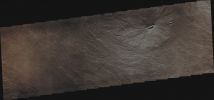
Volcanic_Features-Vent_in_Tharsis_Region-PIA16330-PCF-LXTT-IPF.jpgSmall Volcanic Vent in Tharsis (Absolute Natural Colors; credits for the additional process. and color.: Dr Paolo C. Fienga/Lunar Explorer Italia/Italian Planetary Foundation)73 visiteOrbit Number: 47329
Latitude: 5,10435° South
Longitude: 247,335° East
Instrument: VIS
Captured: August, 15, 2012MareKromiumOtt 26, 2012
|
|
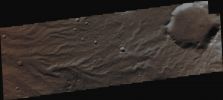
Channels-Unnamed_Channels_near_Huygens_Crater-PIA16322-PCF-LXTT-IPF.jpgUnnamed Channel near Huygens Crater (Absolute Natural Colors; credits for the additional process. and color.: Dr Paolo C. Fienga/Lunar Explorer Italia/Italian Planetary Foundation)79 visiteOrbit Number: 47248
Latitude: 16,8887° South
Longitude: 61,3382° East
Instrument: VIS
Captured: August, 8, 2012MareKromiumOtt 26, 2012
|
|
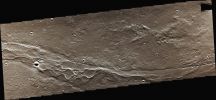
Channels-Enipeus_Vallis-PIA16332-PCF-LXTT-IPF.jpgFeatures of Enipeus Vallis (Absolute Natural Colors; credits for the additional process. and color.: Dr Paolo C. Fienga/Lunar Explorer Italia/Italian Planetary Foundation)80 visiteOrbit Number: 47340
Latitude: 36,0802° North
Longitude: 267,124° East
Instrument: VIS
Captured: August, 16, 2012MareKromiumOtt 26, 2012
|
|

Fractures-Nili_Fossae-PIA16328-PCF-LXTT-IPF.jpgFeatures of Nili Fossae (Absolute Natural Colors; credits for the additional process. and color.: Dr Paolo C. Fienga/Lunar Explorer Italia/Italian Planetary Foundation)70 visiteOrbit Number: 47309
Latitude: 22,6009° North
Longitude: 78,9741° East
Instrument: VIS
Captured: August, 13, 2012MareKromiumOtt 26, 2012
|
|
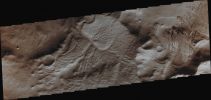
Aeolian_Features-Erosional_Features-PIA16326-PCF-LXTT-IPF.jpgErosional Surface Features (Absolute Natural Colors; credits for the additional process. and color.: Dr Paolo C. Fienga/Lunexit Team/Italian Planetary Foundation)89 visiteOrbit Number: 47269
Latitude: 12,9541° South
Longitude: 176,39° East
Instrument: VIS
Captured: August, 10, 2012MareKromiumOtt 26, 2012
|
|
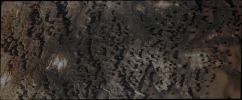
North_Polar_Regions-Olympia_Undae-PIA16320-PCF-LXTT-IPF.jpgFeatures of Olympia Undae (Absolute Natural Colors; credits for the additional process. and color.: Dr Paolo C. Fienga/Lunar Explorer Italia/Italian Planetary Foundation)92 visiteThis NASA - Mars Odyssey Orbiter "VIS" image shows a portion of Olympia Undae, the largest Dunefield near the North Polar Cap. In this Region, the Dunes are spaced far enough apart so to allow us to see the details of the Surface that they are moving across.
Orbit Number: 47095
Latitude: 79,6934° North
Longitude: 149,575° East
Instrument: VIS
Captured: July, 26, 2012MareKromiumOtt 26, 2012
|
|

SOL504-2P171106290EFFAAIIP2681L4M1-PCF-LXTT-00.jpgLunch Time at Gusev - Sol 504 (Absolute Natural Colors; credits for the additional process. and color.: Dr Paolo C. Fienga/Lunar Explorer Italia/Italian Planetary Foundation)115 visiteLeft Panoramic Camera (PanCam) Non-linearized Full frame EDR acquired on Sol 504 of Spirit's Mission to Gusev Crater at approximately 12:51:57 Mars Local Solar Time, camera commanded to use Filter 4 (601 nm).MareKromiumOtt 24, 2012
|
|

M-031~3.jpgNGC 206 and the Star Clouds of Andromeda (Credits: Bob and Janice Fera - Fera Photography) 126 visite"...Quando comincia una Guerra,
La Prima Vittima
E' sempre la Verità.
Quando la Guerra finisce,
Le bugie dei Vinti
Sono smascherate,
Quelle dei Vincitori
Diventano Storia..."
("A una ragazza del '43" - Arrigo Petacco)MareKromiumOtt 24, 2012
|
|

Dione-PIA14628-PCF-LXTT-IPF.jpgLarge Rayed Crater on Dione (Absolute Natural Colors; credits for the additional process. and color.: Dr Paolo C. Fienga/Lunar Explorer Italia/Italian Planetary Foundation)93 visiteThe NASA - Cassini Spacecraft looks at an example of a Rayed Crater located on the Leading Hemisphere of the Saturnian moon Dione. The Rayed Crater is in the upper-left of the image and its Rays (made by Ejecta ---> such as by Rocky Material, belonging to Dione, that was lifted up and thrown away in every direction at the time of the Impact) show up as brighter material ("brighter" if compared to the Albedo of the Surface that surrounds it) which emanates from the Crater itself.
This view, as we said hereabove, looks toward the Leading Hemisphere of Dione (which is approx. 700 miles, such as about 1125 kilometers across). North on Dione is up and rotated 12 degrees to the left. The image was taken in Visible Light with the NASA - Cassini Spacecraft Narrow-Angle Camera on July 23, 2012. The view was acquired at a distance of approximately 260.000 miles (such as about 418.000 kilometers) from Dione and at a Sun-Dione-Spacecraft (or Phase) Angle of 5°. Image scale is about 2 miles (such as a little more than 3 kilometers) per pixel.
This frame (which is an Original NASA - Cassini Spacecraft image published on the NASA - Planetary Photojournal with the ID n. PIA 14628) has been additionally processed and then colorized in Absolute Natural Colors (such as the colors that a human eye would actually perceive if someone were onboard the NASA - Cassini Spacecraft and then looked outside, towards the Saturnian moon Dione), by using an original technique created - and, in time, dramatically improved - by the Lunar Explorer Italia Team. Different colors, as well as different shades of the same color, mean, among others, the existence of different Elements present on the Surface of Dione, each having a different Albedo (---> Reflectivity) and Chemical Composition.MareKromiumOtt 24, 2012
|
|

ZZ-Mercury-Craters-Eitoku_Crater-PIA16361-PCF-LXTT.jpgEitoku Crater (Absolute Natural Colors; credits for the additional process. and color.: Dr Paolo C. Fienga/Lunar Explorer Italia/Italian Planetary Foundation)72 visiteThe main and really impressive Impact Crater visible in this NASA - MESSENGER Spacecraft image, Eitoku (which has a diameter of approx. 100 Km - such as about 62 miles) , displays several (almost) Central Peaks that appear especially prominent due to the high Solar Incidence Angle (meaning that the Sun was setting onto the imaged Local Horizon at the time that this picture was taken - and therefore the shadows of each and every Mercurian relief resulted way more visible - i.e.: longer - and suggestive) as well as to the fact that this frame has not been Map Projected. Note that Central (and/or almost Central, like in this case) Peaks are a relatively common Feature in Mercury's larger Impact Craters. Note, also, that the smaller Impact Craters visible on the Floor and Rim (which, on its side, appears quite degraded) of Eitoku Crater indicate/suggest that we are actually looking at an old Impact Feature.
Date acquired: July, 3rd, 2012
Image Mission Elapsed Time (MET): 249790754
Image ID: 2129670
Instrument: Narrow Angle Camera (NAC) of the Mercury Dual Imaging System (MDIS)
Center Latitude: 21,77° South
Center Longitude: 202,6° East
Resolution: 120 meters/pixel
Solar Incidence Angle: 83,4° (meaning that the Sun, at the time that the picture was taken, was about 6,6° above the imaged Local Mercurian Horizon)
Emission Angle: 59,9°
Sun-Mercury-Messenger (or "Phase") Angle: 134,5°
This picture (which is an Original NASA - MESSENGER Spacecraft color frame published on the NASA - Planetary Photojournal with the ID n. PIA 16361) has been additionally processed and then colorized in Absolute Natural Colors (such as the colors that a human eye would actually perceive if someone were onboard the NASA - MESSENGER Spacecraft and then looked down, towards the Surface of Mercury), by using an original technique created - and, in time, dramatically improved - by the Lunar Explorer Italia Team. Different colors, as well as different shades of the same color, mean, among other things, the existence of different Elements (Minerals) present on the Surface of Mercury, each having a different Albedo (---> Reflectivity) and Chemical Composition.MareKromiumOtt 24, 2012
|
|

SOL0066-EB-MF-LXTT-IPF.jpgDigging at Rocknest - Sol 66 (Natural Colors; credits for the additional process. and color.: Elisabetta Bonora and Marco Faccin/Lunar Explorer Italia/Italian Planetary Foundation)115 visitenessun commentoMareKromiumOtt 24, 2012
|
|

SOL0069-EB-MF-LXTT-IPF.jpgBright Soil Particle at Rocknest - Sol 69 (an Image-Mosaic in Natural Colors; credits for the additional process. and color.: Elisabetta Bonora and Marco Faccin/Lunar Explorer Italia/Italian Planetary Foundation)95 visiteThese four (4) images show an interesting detail found in a small Pit (or "Bite") created when the NASA - Mars Exploration Rover and Laboratory "Curiosity" collected its second scoop of Martian Soil at a Sandy Patch nicknmaed "Rocknest." The bright Soil Particle visible in the center of each of the four images - which is basically very similar to other particles located elsewhere in the Pit itself, but not visible here - caused a certain and immediate concern because a small, light-toned shred of Debris from the Spacecraft had already been observed just a few Soles before, in a nearby location. However, in this case, the Mission's Science Team assessed that this bright Soil Particle which has ben exposed and scooped in the Pit, is to be considered as Native Martian Material, rather than another Debris coming from the Spacecraft.
These four images were all taken by the Mars Hand Lens Imager (MAHLI) Camera that is positioned on Curiosity's Robotic Arm during the 69th Martian Day, or Sol, of its Mission (such as October, 15, 2012) at Gale Crater, and about a week after the Scoop dug this little hole. The view here covers an area of ground which is less than half a centimeter across.
These four images, which are all NASA - Mars Exploration Rover and Laboratory "Curiosity" b/w frames (identified by the serial n. visible in the lower left side of each picture) have been additionally processed and then colorized in Natural Colors (such as the colors that a perfect human eye - or an Electronic Eye - would actually perceive if someone were on the Surface of Gale Crater - Mars -, near the NASA - Mars Exploration Rover and Laboratory "Curiosity", and then looked down, towards the little Pit excavated on the Surface, by using an original technique created - and, in time, dramatically improved - by the Lunar Explorer Italia Team.MareKromiumOtt 24, 2012
|
|
| 25353 immagini su 2113 pagina(e) |
 |
|
|
|
|
95 | |
|
|
|
|
|
|





