| |
| Ultimi arrivi |

Channels-Maja_Valles-PIA16339-PCF-LXTT-IPF.jpgMaja Valles (Absolute Natural Colors; credits for the additional process. and color.: Dr Paolo C. Fienga/Lunar Explorer Italia/Italian Planetary Foundation)74 visiteOrbit Number: 47426
Latitude: 16,552° North
Longitude: 304,341° East
Instrument: VIS
Captured: August, 3rd, 2012MareKromiumNov 24, 2012
|
|

ZZ-Mercury-Volcanic_Regions-Plains-PIA16428-PCF-LXTT-IPF.jpgVolcanic Region (Absolute Natural Colors; credits for the additional process. and color.: Dr Paolo C. Fienga/Lunar Explorer Italia/Italian Planetary Foundation)73 visiteMany Regions of Mercury's Surface show a relatively smooth and dark brown/reddish-colored Terrain (with almost black patches near and around the Rims of the major Impact Craters) that, in a way, appears to have "flooded" (---> quickly covered, either in whole or in part) low-lying Areas and, at the same time, which has also partially filled (and/or, here and there, almost completely buried) what seem to be the oldest Impact Craters existing on the Surface. Said that, we can reasonably speculate that these smooth Plains could have formed, in a very distant past of the Innermost Planet of the Solar System, as a consequence of the occurrence of some powerful Volcanic Activity which, in fact, ended up by - litterally - "drowning" these Regions with - and in - extremely voluminous amounts of, most likely, low-viscosity Basaltic Lavas.
Notice that the beautiful colors of the Mercurian Surface, as well as all the details of the Terrain seen here, all appear to be extremely clear, sharp and well visible, (also) thanks to to fact that the Sun, at the time that the picture was taken, was relatively high in the Sky (59,2° on the Local Horizon, to be exact).
Date acquired: July, 21st, 2012
Images Mission Elapsed Time (MET): 251402330, 251402350, and 251402334
Images ID: 2244264, 2244269, and 2244265
Instrument: Wide Angle Camera (WAC) of the Mercury Dual Imaging System (MDIS)
Center Latitude: 8,27° South
Center Longitude: 113,1° East
Scale: this scene is approx. 475 Km across
This picture (which is an Original NASA - MESSENGER Spacecraft color frame published on the NASA - Planetary Photojournal with the ID n. PIA 16428) has been additionally processed and then re-colorized in Absolute Natural Colors (such as the colors that a human eye would actually perceive if someone were onboard the NASA - MESSENGER Spacecraft and then looked down, towards the Surface of Mercury), by using an original technique created - and, in time, dramatically improved - by the Lunar Explorer Italia Team. Different colors, as well as different shades of the same color, mean, among other things, the existence of different Elements (Minerals) present on the Surface of Mercury, each having a different Albedo (---> Reflectivity) and Chemical Composition.MareKromiumNov 24, 2012
|
|

Venus-PIA10124-PCF-LXTT-IPF.jpgApproaching Venus (Absolute Natural Colors; credits for the additional process. and color.: Dr Paolo C. Fienga/Lunar Explorer Italia/Italian Planetary Foundation)83 visiteCaption NASA:"The Planet Venus is enshrouded by a Global Layer of Clouds that obscures its surface to the MESSENGER Dual Imaging System (MDIS) cameras. This single frame is part of a color sequence taken to help the MESSENGER team calibrate the camera in preparation for the spacecraft's first flyby of Mercury on January 14, 2008. Over the next several months the camera team will pore over the 614 images taken during this Venus encounter to ascertain color sensitivity and other optical properties of the instrument. These tasks address two key goals for the camera at Mercury: understanding surface color variations and their relation to compositional variations in the Crust, and ensuring accurate cartographic placement of features on Mercury's Surface.
Preliminary analysis of the Venus Fly-By images indicates that the cameras are healthy and will be ready for next January's close encounter with Mercury".
Nota Lunexit: questo NASA - MESSENGER color-frame è stato prima riportato sulla Scala dei Grigi, poi ingrandito, riprocessato e poi ricolorizzato in Colori Naturali Assoluti. Il risultato è un pò bizzarro, probabilmente poco realistico, ma sen'altro suggestivo. Giudicate Voi!MareKromiumNov 24, 2012
|
|

vl2-Utopia_Planitia-Horizon-22a036_IR-1-2-3-EB-MF-LXTT-IPF.jpgRocky Panorama with Dark Sky over Utopia Planitia (Frame Viking Lander 2 n. 22a036 - RAW Natural Colors; credits for the additional process. and color.: Elisabetta Bonora and Marco Faccin/Lunar Explorer Italia/Italian Planetary Foundation)146 visitenessun commentoMareKromiumNov 18, 2012
|
|

vl2-22h155-The_Lander-Antenna_Dish_and_Horizon-EB-MF-LXTT-IPF.jpgOrange-Brown Reflection (Frame Viking Lander 2 n. 22h155 - RAW Natural Colors; credits for the additional process. and color.: Elisabetta Bonora and Marco Faccin/Lunar Explorer Italia/Italian Planetary Foundation)136 visitenessun commentoMareKromiumNov 18, 2012
|
|

vl2-Utopia_Planitia-Horizon_and_Lander-21a084b-RGB-EB-MF-LXTT-IPF.jpgThin and Linear Water-Ice Clouds over Utopia Planitia (Frame Viking Lander 2 n. 21a084b - RAW Natural Colors; credits for the additional process. and color.: Elisabetta Bonora and Marco Faccin/Lunar Explorer Italia/Italian Planetary Foundation)112 visitenessun commentoMareKromiumNov 18, 2012
|
|

vl2_p21841-4-RGB-bb3-bb2-EB-MF-LXTT-IPF.jpgFrost over Utopia Planitia (Frame Viking Lander 2 n. p21841 - RAW Natural Colors; credits for the additional process. and color.: Elisabetta Bonora and Marco Faccin/Lunar Explorer Italia/Italian Planetary Foundation)107 visitenessun commentoMareKromiumNov 18, 2012
|
|

ZZ-Mercury-Limb-PIA16299-PCF-LXTT-IPF-1.jpgOn the Limb... (Absolute Natural Colors; credits for the additional process. and color. Dr Paolo C. Fienga/Lunar Explorer Italia/Italian Planetary Foundation)64 visiteEven though quite a few Impact Craters are visible in this Absolute Natural Color view of Mercury's Limb, the Crater Degas (whose diameter is approx. 55 Km) gets easily noticed. Located near the center of the image, the distinctive gray color of the Low-Reflectance (---> Albedo) Material associated with Degas Crater (Material that covers most of the Floor, the Inner and Outer Rim, as well as a little bit of the Surface located in close proximity with the Crater itself) makes a clear contrast with the surrounding Terrain and neighboring Craters.
This image was acquired as a Targeted Observation that occurred simultaneously with a measurement carried out by the Mercury Atmospheric and Surface Composition Spectrometer (MASCS). Targeted Observations that involve both MDIS and MASCS, once the data from both instruments are combined, facilitate a better understanding of the color and reflectance of small-scale Geologic Features which are present on the Surface of Mercury.
Date acquired: October, 6th, 2012
Images Mission Elapsed Time (MET): 258052701, 258052721, 258052705
Images ID: 2717216, 2717221, 2717217
Instrument: Wide Angle Camera (WAC) of the Mercury Dual Imaging System (MDIS)
Center Latitude: 35,98° North
Center Longitude: 231,2° East
Center Resolution: 533 meters/pixel
This picture (which is an Original NASA - MESSENGER Spacecraft color frame published on the NASA - Planetary Photojournal with the ID n. PIA 16299) has been additionally processed and then re-colorized in Absolute Natural Colors (such as the colors that a human eye would actually perceive if someone were onboard the NASA - MESSENGER Spacecraft and then looked down, towards the Surface of Mercury), by using an original technique created - and, in time, dramatically improved - by the Lunar Explorer Italia Team. Different colors, as well as different shades of the same color, mean, among other things, the existence of different Elements (Minerals) present on the Surface of Mercury, each having a different Albedo (---> Reflectivity) and Chemical Composition.MareKromiumNov 18, 2012
|
|

ZZ-Mercury-Craters-Geddes_Crater-PIA16302-PCF-LXTT-IPF-2.jpgCollapse Pit inside Geddes Crater (Absolute Natural Colors; credits for the additional process. and color.: Dr Paolo C. Fienga/Lunar Explorer Italia/Italian Planetary Foundation)82 visiteGeddes Crater (so named, in March 2010, in honor of Wilhelmina Geddes (1887 - 1955), an Irish stained glass and graphic artist) is well known to be a Mercurian extremely geologically interesting Impact Feature. As you know, the Ridge of Antoniadi Dorsum bisects the Crater, and in the center of the Crater's Floor there is a large Depression with a distinctive orangish hue: a color similar to the one seen in other areas (still on Mercury and elsewhere in the Solar System, such as, for instance, on our Moon) which are (better yet: were) associated with Explosive Volcanism or other phenomena of (perhaps Sulphurous-rich) Outgassing. This recently acquired image reveals new, High-Resolution detail of such a potentially Volcanic Depression (---> a Volcanic - in origin - Collapse Pit, to be more specific, which might have formed as a consequenc of the progressive withdrawal of Subsurface Magma), including the presence of many Hollows (a Surface Feature that, as we know now, is extremely common and that can be found all over the Surface of Mercury and which do not seem to be only related, in our opinion, as IPF, to the verification of Impact Events).
Date acquired: October, 11th, 2012
Image Mission Elapsed Time (MET): 258458455
Image ID: 2745982
Instrument: Narrow Angle Camera (NAC) of the Mercury Dual Imaging System (MDIS)
Center Latitude: 27,15° North
Center Longitude: 330,4° East
Resolution: 28 meters/pixel
Solar Incidence Angle: 74,1° (meaning that the Sun, at the time that the picture was taken, was about 15,9° above the imaged Local Mercurian Horizon)
Emission Angle: 33,2°
Sun-Mercury-Messenger (or "Phase") Angle: 107,3°
This picture (which is an Original NASA - MESSENGER Spacecraft b/w frame published on the NASA - Planetary Photojournal with the ID n. PIA 16302) has been additionally processed and then colorized in Absolute Natural Colors (such as the colors that a human eye would actually perceive if someone were onboard the NASA - MESSENGER Spacecraft and then looked down, towards the Surface of Mercury), by using an original technique created - and, in time, dramatically improved - by the Lunar Explorer Italia Team. Different colors, as well as different shades of the same color, mean, among other things, the existence of different Elements (Minerals) present on the Surface of Mercury, each having a different Albedo (---> Reflectivity) and Chemical Composition.MareKromiumNov 18, 2012
|
|

Titan-PIA14634-PCF-LXTT-IPF.jpgSeasonal or Permanent? (Absolute Natural Colors; credits for the additional process. and color.: Dr Gianluigi Barca/Lunar Explorer Italia/Italian Planetary Foundation)82 visiteEven though it is still nighttime at the South Pole, the Vortex, which swirls high in the Sky of Titan, is already illuminated by the Sunlight and stands out (relatively) brightly against the other - and possible Water-Ice - Clouds that can be seen to the left of the Terminator (still near the South Polar Regions of Titan, but on the daytime side of this complex and fascinating Saturnian moon). The NASA - Cassini Spacecraft, as you have noticed, keeps monitoring very carefully the development of this South Polar Vortex (a true Titanian Oddity anyway), so to help Scientists and Researchers from all over the World to better understand the (perhaps just) seasonal changes that occur in the Atmosphere of Titan.
This outstanding view looks toward the Trailing Hemisphere of Titan; North is up and rotated 9° to the left. The image was taken with the NASA - Cassini Spacecraft Narrow-Angle Camera on Aug. 31, 2012, using a Spectral Filter sensitive to Wavelengths of Near-InfraRed Light, centered at 938 nanometers. The view was acquired at a distance of approximately 750.000 miles (such as about 1,2 Million KiloMeters - MKM) from Titan and at a Sun-Titan-Spacecraft, or Phase, Angle of 74°. Image scale is about 4 miles (such as approx. 6,4 Km) per pixel.
This picture (which is an Original NASA - Cassini Spacecraft b/w frame published on the NASA - Planetary Photojournal with the ID n. PIA 14634) has been additionally processed and then colorized, according to an informed speculation carried out by Dr Paolo C. Fienga (LXTT-IPF), in Absolute Natural Colors (such as the colors that a human eye would actually perceive if someone were onboard the NASA - Cassini Spacecraft and then looked outside, towards the Saturnian moon Titan), by using an original technique created - and, in time, dramatically improved - by the Lunar Explorer Italia Team. Different colors, as well as different shades of the same color, mean, among others, the existence of different Elements present in the Atmosphere of Titan, each having a different Albedo (---> Reflectivity) and Chemical Composition.MareKromiumNov 18, 2012
|
|

Aeolian_Features-DD_Tracks-AP-PIA16473-PCF-LXTT-IPF.jpgDust Devils' Tracks in Arcadia Planitia (Absolute Natural Colors; credits for the additional process. and color.: Dr Paolo C. Fienga/Lunar Explorer Italia/Italian Planetary Foundation)83 visiteOrbit Number: 47093
Latitude: 62,264° North
Longitude: 194,781° East
Instrument: VIS
Captured: July, 26th, 2012MareKromiumNov 18, 2012
|
|
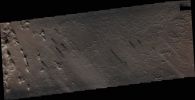
Aeolian_Features-Windstreaks-PIA16495-PCF-LXTT-IPF.jpgWindstreaks near Lycus Sulci (Absolute Natural Colors; credits for the additional process. and color.: Dr Paolo C. Fienga/Lunar Explorer Italia/IPF)61 visiteOrbit Number: 47254
Latitude: 32,905° North
Longitude: 226,441° East
Instrument: VIS
Captured: August, 9th, 2012MareKromiumNov 18, 2012
|
|
| 25353 immagini su 2113 pagina(e) |
 |
|
|
|
|
93 | |
|
|
|
|
|
|





