| Ultimi arrivi |

SOL0105-NLA_406810035EDR_S0050388NCAM00535M-PCF-LXTT-IPF.jpgLost in the Fog... - Sol 105 (Absolute Natural Colors; credits for the additional process. and color.: Dr Paolo C. Fienga/Lunar Explorer Italia/Italian Planetary Foundation)134 visitenessun commentoMareKromiumNov 26, 2012
|
|

SOL0101-NLA_406456425EDR_F0050178NCAM00528M-PCF-LXTT-IPF.jpgHorizon and Sky at Gale - Sol 101 (Absolute Natural Colors; credits for the additional process. and color.: Dr Paolo C. Fienga/Lunar Explorer Italia/Italian Planetary Foundation) 109 visitenessun commentoMareKromiumNov 26, 2012
|
|
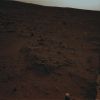
SOL0103-NRA_406648023EDR_F0050388NCAM07754M-PCF-LXTT-IPF.jpgTwilights over Gale Crater - Sol 103 (Absolute Natural Colors; credits for the additional process. and color.: Dr Paolo C. Fienga/Lunar Explorer Italia/Italian Planetary Foundation)94 visitenessun commentoMareKromiumNov 26, 2012
|
|

SOL0103-NRA_406647988EDR_F0050388NCAM07754M-PCF-LXTT-IPF.jpgTwilights over Gale Crater - Sol 103 (Absolute Natural Colors; credits for the additional process. and color.: Dr Paolo C. Fienga/Lunar Explorer Italia/Italian Planetary Foundation)91 visitenessun commentoMareKromiumNov 26, 2012
|
|

SOL0107-NLA_406989232EDR_D0050388NCAM00522M-PCF-LXTT-IPF.jpgRocky Panorama - Sol 107 (RAW Natural Colors; credits for the additional process. and color.: Dr Paolo C. Fienga/Lunar Explorer Italia/Italian Planetary Foundation)104 visitenessun commentoMareKromiumNov 26, 2012
|
|
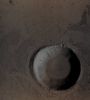
ESP_028321_1785_RED_NOMAP_browse-PCF-LXTT-IPF.jpgUnnamed Crater with "Lava-carved Gullies" (Absolute Natural Colors; credits for the additional process. and color.: Dr Paolo C. Fienga/Lunar Explorer Italia/Italian Planetary Foundation)131 visiteMars Local Time: 15:33 (Middle Afternoon)
Coord. (centered): 1,258° South Lat. and 161,856° East Long.
Spacecraft altitude: 270,3 Km (such as about 168,9 miles)
Original image scale range: 27,0 cm/pixel (with 1 x 1 binning) so objects ~ 81 cm across are resolved
Map projected scale: 25 cm/pixel
Map projection: EQUIRECTANGULAR
Emission Angle: 3,6°
Sun-Mars-MRO (or "Phase") Angle: 51,0°
Solar Incidence Angle: 54° (meaning that the Sun was about 36° above the Local Horizon of the imaged Region, at the time that the picture was taken)
Solar Longitude: 153,3° (Northern Summer- Southern Winter)
Credits: NASA/JPL/University of Arizona
Additional process. and coloring: Lunar Explorer ItaliaMareKromiumNov 25, 2012
|
|
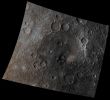
ZZ-Mercury-Craters-Raffaello_Crater-PIA16307-PCF-LXTT-IPF-1.jpgRaffaello Crater (Absolute Natural Colors; credits for the additional process. and color.: Dr Paolo C. Fienga/Lunar Explorer Italia/Italian Planetary Foundation)84 visiteThis beautiful Absolute Natural Color image-mosaic of the huge Impact Basin Raffaello (named after the Italian Renaissance painter and having a diameter of approx. 343 Km), taken in the past month of October 2012 by the NASA - MESSENGER Spacecraft, shows us a wide diversity of colors (which, as you know, represent a wide variety of Mineral Compositions) that exist and can be easily identified within the Volcanic Plains that, eons ago, flooded the Raffaello Basin's Floor. Furthermore, many white-colored Hollows appear to be in process of being formed along most of the Rim and the Northern portion of the Floor - and, in both cases, they are forming in the so-called Low Reflectance Material (or LRM for short) - of a smaller - roughly 40-Kilometer (such as approx. 25-miles) diameter -, Unnamed and Highly Complex Impact Crater that is located just South of the center of the giant Raffaello Basin.
Date acquired: October, 19th, 2012
Images Mission Elapsed Time (MET): 259122560, 259122580, 259122564
Images ID: 2793045, 2793050, 2793046
Instrument: Wide Angle Camera (WAC) of the Mercury Dual Imaging System (MDIS)
Center Latitude: 20,39° South
Center Longitude: 283,6° East
Resolution: 599 meters/pixel
Solar Incidence Angle: 53,4° (meaning that the Sun, at the time that the pictures were taken, was about 36,6° above the imaged Local Mercurian Horizon)
Emission Angle: 27,0°
Sun-Mercury-Messenger (or "Phase") Angle: 80,3°
This picture (which is an Original NASA - MESSENGER Spacecraft color frame published on the NASA - Planetary Photojournal with the ID n. PIA 16307) has been additionally processed and then re-colorized in Absolute Natural Colors (such as the colors that a human eye would actually perceive if someone were onboard the NASA - MESSENGER Spacecraft and then looked down, towards the Surface of Mercury), by using an original technique created - and, in time, dramatically improved - by the Lunar Explorer Italia Team. Different colors, as well as different shades of the same color, mean, among other things, the existence of different Elements (Minerals) present on the Surface of Mercury, each having a different Albedo (---> Reflectivity) and Chemical Composition.MareKromiumNov 25, 2012
|
|

SOL526-2P173055204EFFAC00P2629L6M1.jpgHorizon (Absolute Natural Colors; credits for the additional process. and color.: Dr Paolo C. Fienga - Lunar Explorer Italia/Italian Planetary Foundation) 138 visitenessun commentoMareKromiumNov 24, 2012
|
|

SOL0084-MF-LXTT-IPF-1.jpgH E L L O! (High-Def-3D; credits for the additional process. and color.: Marco Faccin/Lunar Explorer Italia/Italian Planetary Foundation)113 visiteOur personal and "tri-dimensional" Tribute, as IPF, to the NASA - Mars Exploration Rover and Mars Laboratory "Curiosity". We hope that you may like it and, of course, if you really want to enjoy this work, do not forget to wear your red and blue glasses!...MareKromiumNov 24, 2012
|
|
SOL0059-NLA_400158041EDR_D0040000NCAM00508M-PCF-LXTT-IPF-01.jpgThe "Foggy" Inner Rim of Gale Crater - Sol 59 (Calibrated Absolute Natural Colors; credits for the additional process. and color.: Dr Paolo C. Fienga - Lunar Explorer Italia - Italian Planetary Foundation)213 visiteFrame taken at 12:15:15 Mars Local Solar TimeMareKromiumNov 24, 2012
|
|
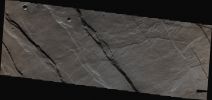
Volcanic_Features-Fractures-AM-PIA16499-PCF-LXTT-IPF.jpgFractures near and around Alba Mons (Absolute Natural Colors; credits for the additional process. and color.: Dr Paolo C. Fienga - Lunar Explorer Italia - Italian Planetary Foundation)80 visiteIn addition to its great size (consider that its Lava Flow Fields extend from over than 1400 Km from the Summit) and relatively low relief (the Summit of the Volcano reaches an elevation of "only" 6,8 Km as to the surrounding Lava Plains), Alba Mons possesses a number of other very distinguishing features. For instance, the central portion of the Volcano is surrounded by an incomplete Ring of Faults (---> Graben) and Fractures (like the ones that we see in today's APOD), called Alba Fossae (the ones located on the Volcano's Western Flank), and Tantalus Fossae (which are found on its Eastern Flank).
Alba Mons also has very long and well preserved Lava Flows that form a Radiating Pattern, starting from its Central Region. The enormous lengths of some individual Flow (something more than 300 Km - such as about 190 miles) implies that the Lavas which formed them were not only very fluid (---> meaning that they possessed very Low Viscosity) at the time of the eruption, but that they also must have been erupted in an extremely high volume (---> quantity). Many of the Flows have distinctive morphologies, consisting of long, sinuous Ridges with discontinuous Central Lava Channels. The low areas between the Ridges (and particularly along the Alba's Northern Flank) show a branching pattern of shallow Gullies and Channels (---> Valley Networks) that likely formed by water runoff. Last, but not least, Alba Mons shows, among other things, some of the oldest, and most extensively exposed Deposits that can be found in the whole Volcanic District of Tharsis.
Orbit Number: 47503
Latitude: 45,2558° North
Longitude: 248,587° East
Instrument: VIS
Captured: August, 29th, 2012
This frame (which is an Original Mars Odyssey Orbiter b/w frame published on the NASA - Planetary Photojournal with the ID n. PIA 16499) has been additionally processed and then colorized in Absolute Natural Colors (such as the colors that a human eye would actually perceive if someone were onboard the NASA - Mars Odyssey Orbiter and then looked down, towards the Surface of Mars), by using an original technique created - and, in time, dramatically improved - by the Lunar Explorer Italia Team.MareKromiumNov 24, 2012
|
|

Aeolian_Features-DD_Tracks-PIA16316-PCF-LXTT-IPF.jpgDust Devils Tracks in Utopia Planitia (Absolute Natural Colors; credits for the additional process. and color.: Dr Paolo C. Fienga/Lunar Explorer Italia/IPF)75 visiteOrbit Number: 47084
Latitude: 52,1033° North
Longitude: 91,7234° East
Instrument: VIS
Captured: July, 26th, 2012MareKromiumNov 24, 2012
|
|
| 25353 immagini su 2113 pagina(e) |
 |
|
|
|
|
92 | |
|
|
|
|





