| Ultimi arrivi |

Titan-Senkyo_Region-PIA11636-PCF-LXTT-IPF.jpgThrough the Fog: Senkyo (Absolute Natural Colors; credits for the additional process. and color.: Dr Paolo C. Fienga/Lunar Explorer Italia/Italian Planetary Foundation)111 visiteThe very low Albedo Feature (---> Region) known as Senkyo, is slightly visible here, through the haze of Titan's Atmosphere. Prominent dark areas found in Titan's Equatorial Region appear to contain vast and continuous Dunefields, discovered by the Cassini Radar Experiment and likely composed of Dust Particles that drop from Titan's unique, smoggy Atmosphere. The almost circular Feature visible to the left of the image center appears to belong to the Surface of Titan, but it could also be the result of either a peculiar configuration of some low Clouds, or a bizarre-looking image artifact. This view looks toward Saturn-facing Side of Titan and is centered on Terrain at about 1° South Latitude and 345° West Longitude. North on Titan is up, and rotated 10° to the right.
The image was taken with the NASA - Cassini Spacecraft Narrow-Angle Camera on October 12, 2009, using a spectral filter sensitive to Wavelengths of Near-InfraRed Light centered at 938 nanometers. The view was acquired at a distance of approximately 296.000 Km (such as about 184.000 miles) from Titan and at a Sun-Titan-Cassini Spacecraft, or Phase, Angle of 11°. Image scale is roughly 2 Km (such as a little more than 1 mile) per pixel.
This picture (which is an Original NASA - Cassini Spacecraft b/w frame published on the NASA - Planetary Photojournal and identified by the n. PIA 11636) has been additionally processed and then colorized, according to an informed speculation carried out by Dr Paolo C. Fienga (LXTT-IPF), in Absolute Natural Colors (such as the colors that a human eye would actually perceive if someone were onboard the NASA - Cassini Spacecraft and then looked outside, towards the Saturnian moon Titan), by using an original technique created - and, in time, dramatically improved - by the Lunar Explorer Italia Team. Different colors, as well as different shades of the same color, mean, among others, the existence of different Elements present in the Atmosphere and on the Surface of Titan, each having a different Albedo (---> Reflectivity) and Chemical Composition.
Note: it is possible (but we, as IPF, have no way to be one-hundred-percent sure of such a circumstance), that the actual luminosity of the Albedo Feature seen in this frame would appear, to an average human eye, way lower than it has been shown (better yet: interpreted) here.MareKromiumDic 10, 2012
|
|

Titan-Senkyo_Region-PIA11577-PCF-LXTT-IPF.jpgThrough the Fog: Senkyo (Absolute Natural Colors; credits for the additional process. and color.: Dr Paolo C. Fienga/Lunar Explorer Italia/Italian Planetary Foundation)107 visiteThe NASA - Cassini Spacecraft peers through the hazy Atmosphere of Titan for a close view of light and dark Terrain on Saturn's largest moon. This view, that is centered at 28° South Latitude and 334° West Longitude, shows us a small part of the Albedo Feature named Senkyo (actually it is a very large Region that the Planetary Scientists consider like a true Continent) which is located on the Trailing Hemisphere of Titan.
The image was taken with the NASA - Cassini Spacecraft Narrow-Angle Camera on July 9, 2009, using a spectral filter sensitive to Wavelengths of Near-InfraRed Light centered at 938 nanometers. The view was obtained at a distance of approximately 251.000 Km (such as about 156.000 miles) from Titan and at a Sun-Titan-Cassini Spacecraft, or Phase, Angle of 27°. Image scale is about 1 Km (such as 3281 feet) per pixel.
This picture (which is an Original NASA - Cassini Spacecraft b/w frame published on the NASA - Planetary Photojournal and identified by the n. PIA 11577) has been additionally processed and then colorized, according to an informed speculation carried out by Dr Paolo C. Fienga (LXTT-IPF), in Absolute Natural Colors (such as the colors that a human eye would actually perceive if someone were onboard the NASA - Cassini Spacecraft and then looked outside, towards the Saturnian moon Titan), by using an original technique created - and, in time, dramatically improved - by the Lunar Explorer Italia Team. Different colors, as well as different shades of the same color, mean, among others, the existence of different Elements present in the Atmosphere and on the Surface of Titan, each having a different Albedo (---> Reflectivity) and Chemical Composition.
Note: it is possible (but we, as IPF, have no way to be one-hundred-percent sure of such a circumstance), that the actual luminosity of the Albedo Feature seen in this frame would appear, to an average human eye, way lower than it has been shown (better yet: interpreted) here.MareKromiumDic 10, 2012
|
|

Titan-Shangri_La_Region-PIA08971-PCF-LXTT-IPF.jpgThrough the Fog: Shangri-la (Absolute Natural Colors; credits for the additional process. and color.: Dr Paolo C. Fienga/Lunar Explorer Italia/Italian Planetary Foundation)110 visiteThis view of Titan's Surface highlights a small portion of the North-Western Region known as Shangri-la: a large, Equatorial, Dark Region that radar observations revealed to be covered by Longitudinal Dunefields. The bright, Circular Feature visible right of center is a potential Impact Crater (one of the very few Impact Craters that have been spotted on Titan so far).
North on Titan is up and rotated about 15° to the right. This view was created by combining multiple images taken using a combination of spectral filters sensitive to Wavelengths of InfraRed Light centered at 938 and 619 nanometers. The images were taken with the NASA - Cassini Spacecraft Narrow-Angle Camera on May 13, 2007, at a distance of approximately 125.000 Km (such as about 77.000 miles) from Titan. Image scale is roughly 1 Km (such as approx. 0,6 miles) per pixel. Due to scattering of light by Titan's hazy Atmosphere, the size of the Surface Features that can be resolved is a few times larger than the actual pixel scale.
This picture (which is an Original NASA - Cassini Spacecraft b/w image-mosaic published on the NASA - Planetary Photojournal and identified by the n. PIA 08971) has been additionally processed and then colorized, according to an informed speculation carried out by Dr Paolo C. Fienga (LXTT-IPF), in Absolute Natural Colors (such as the colors that a human eye would actually perceive if someone were onboard the NASA - Cassini Spacecraft and then looked outside, towards the Saturnian moon Titan), by using an original technique created - and, in time, dramatically improved - by the Lunar Explorer Italia Team. Different colors, as well as different shades of the same color, mean, among others, the existence of different Elements present in the Atmosphere and on the Surface of Titan, each having a different Albedo (---> Reflectivity) and Chemical Composition.
Note: it is possible (but we, as IPF, have no way to be one-hundred-percent sure of such a circumstance), that the actual luminosity of the Albedo Feature seen in this frame would appear, to an average human eye, way lower than it has been shown (better yet: interpreted) here.MareKromiumDic 10, 2012
|
|
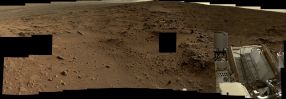
SOL0118-GB-LXTT-IPF-01.jpgCuriosity, the Surface and the Distant Horizon of Gale Crater - Sol 118 (An Image-Mosaic in Calibrated Natural Colors; credits for the additional process. and color.: Dr Gianluigi Barca/Lunar Explorer Italia/Italian Planetary Foundation) 138 visitenessun commentoMareKromiumDic 10, 2012
|
|
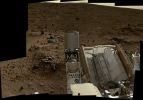
SOL0118-GB-LXTT-IPF-02.jpgCuriosity and the Distant Horizon of Gale Crater - Sol 118 (An Image-Mosaic in Calibrated Natural Colors; credits for the additional process. and color.: Dr Gianluigi Barca/Lunar Explorer Italia/Italian Planetary Foundation) 103 visitenessun commentoMareKromiumDic 10, 2012
|
|
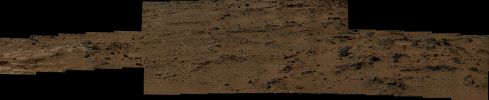
SOL0110-GB-LXTT-IPF-00.jpgThe Surface of Gale Crater - Sol 110 (An Image-Mosaic in Calibrated Natural Colors; credits for the additional process. and color.: Dr Gianluigi Barca/Lunar Explorer Italia/Italian Planetary Foundation) 92 visitenessun commentoMareKromiumDic 10, 2012
|
|
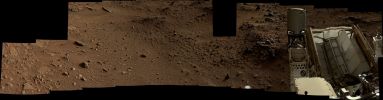
SOL0118-GB-LXTT-IPF-03.jpgCuriosity and the Surface of Gale Crater - Sol 118 (An Image-Mosaic in Calibrated Natural Colors; credits for the additional process. and color.: Dr Gianluigi Barca/Lunar Explorer Italia/Italian Planetary Foundation) 94 visitenessun commentoMareKromiumDic 10, 2012
|
|

SOL0107-0109-MF-LXTT-IPF.jpgMount Sharp - Soles 107 and 109 (An Image-Mosaic in Calibrated Natural Colors; credits for the additional process. and color.: Elisabetta Bonora and Marco Faccin/Lunar Explorer Italia/Italian Planetary Foundation)152 visitenessun commentoMareKromiumDic 09, 2012
|
|
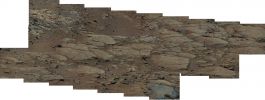
SOL0104-MF-LXTT-IPF.jpgThe Surface of Gale Crater - Sol 104 (An Image-Mosaic in RAW Natural Colors; credits for the additional process. and color.: Elisabetta Bonora and Marco Faccin/Lunar Explorer Italia/Italian Planetary Foundation) 98 visitenessun commentoMareKromiumDic 09, 2012
|
|

OPP-SOL187-PCF-LXTT-IPF-2.jpgSinuous Dunes inside Endurance Crater - Sol 187 (Absolute Natural Colors; credits for the additional process. and color.: Dr Paolo C. Fienga/Lunar Explorer Italia/Italian Planetary Foundation)113 visitenessun commentoMareKromiumDic 09, 2012
|
|

Saturn-North_Pole-Vortex-Cassini-EB-MF-LXTT-IPF.gifPeering into the Storm (a GIF-Movie by Elisabetta Bonora and Marco Faccin/Lunar Explorer Italia/Italian Planetary Foundation)83 visite...Splendido e Affascinante...MareKromiumDic 09, 2012
|
|

SOL0107-GB-LXTT-IPF-5.jpgThe Inner Rim and Sky above Gale Crater - Sol 107 (An Image-Mosaic in Calibrated Natural Colors; credits for the additional process. and color.: Dr Gianluigi Barca/Lunar Explorer Italia/Italian Planetary Foundation) 107 visitenessun commentoMareKromiumDic 09, 2012
|
|
| 25353 immagini su 2113 pagina(e) |
 |
|
|
|
|
90 | |
|
|
|
|





