| |
| Ultimi arrivi |

ZZ-Mercury-Craters-Basho_Crater-PIA16625-PCF-LXTT-IPF.jpgBasho Crater (Absolute Natural Colors; credts for the additional process. and color.: Dr Paolo C. Fienga/Lunar Explorer Italia/Italian Planetary Foundation)117 visiteToday's APOD (obtained by the NASA - MESSENGER Spacecraft during the past month of November) provides us with the best look yet at Basho Crater (approximately 75 Km - such as about 47 miles - in diameter): a (relatively) young Impact Crater located in the Southern Hemisphere of the Planet Mercury. Basho Crater features some of the most striking Albedo (---> Reflectivity) contrasts that can be found on the whole Surface of the Innermost Planet of the Solar System, with both Low-Reflectance Ejecta and High-Reflectance Deposits (probably the most "famous", common and yet highly controversial - as far as its origin is concerned -Mercurian Surface Feature ever discovered: the so-called Hollows).
Date acquired: November, 6th, 2012
Image Mission Elapsed Time (MET): 260649832
Image ID: 2901613
Instrument: Narrow Angle Camera (NAC) of the Mercury Dual Imaging System (MDIS)
Center Latitude: 32,47° South
Center Longitude: 189,2° East
Resolution: 103 meters/pixel
Solar Incidence Angle: 32,4° (meaning that the Sun, at the time that the pictures were taken, was about 57,6° above the imaged Local Mercurian Horizon)
Emission Angle: 4,9°
Sun-Mercury-Messenger (or "Phase") Angle: 32,6°
This picture (which is an Original NASA - MESSENGER Spacecraft color frame published on the NASA - Planetary Photojournal with the ID n. PIA 16625) has been additionally processed and then re-colorized in Absolute Natural Colors (such as the colors that a human eye would actually perceive if someone were onboard the NASA - MESSENGER Spacecraft and then looked down, towards the Surface of Mercury), by using an original technique created - and, in time, dramatically improved - by the Lunar Explorer Italia Team. Different colors, as well as different shades of the same color, mean, among other things, the existence of different Elements (Minerals) present on the Surface of Mercury, each having a different Albedo (---> Reflectivity) and Chemical Composition.MareKromiumDic 20, 2012
|
|

OPP-SOL3163-PIA16555-PCF-LXTT-IPF.jpgOnaping - Sol 3163 (Absolute Natural Colors; credits for the additional process. and color. Dr Paolo C. Fienga/Lunar Explorer Italia/Italian Planetary Foundation)78 visiteCaption NASA:"This image from the Front Hazard-Avoidance Camera (HazCam) located on the NASA - Mars Exploration Rover (MER) Opportunity, shows the Rover's Robotic Arm (RA) extended for examination of a target called "Onaping", at the base of a Rocky Outcrop called "Copper Cliff", in the Matijevic Hill area of the West Rim of Endeavour Crater".MareKromiumDic 20, 2012
|
|
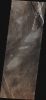
Aeolian_Features-Windstreaks-AM-PIA16513-PCF-LXTT-IPF.jpgWindstreaks on the S/W Flank of Alba Mons (Absolute Natural Colors; credits for the additional process. and color.: Dr Paolo C. Fienga/Lunar Explorer Italia/IPF)70 visiteOrbit Number: 47653
Latitude (centered): 34,8278° North
Longitude (East): 241,838°
Instrument: VIS
Captured: September, 9th, 2012MareKromiumDic 20, 2012
|
|
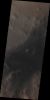
Craters-Lyot_Crater-PIA16512-PCF-LXTT-IPF.jpgThe Dunefield inside Lyot Crater (Absolute Natural Colors; credits for the additional process. and color.: Dr Paolo C. Fienga/Lunar Explorer Italia/Italian Planetary Foundation)74 visiteOrbit Number: 47648
Latitude (centered): 50,2217° North
Longitude (East): 28,7883°
Instrument: VIS
Captured: September, 10th, 2012MareKromiumDic 20, 2012
|
|
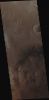
Craters-Trouvelot_Crater-PIA16641-PCF-LXTT-IPF.jpgThe Dunefield inside Trouvelot Crater (Absolute Natural Colors; credits for the additional process. and color.: Dr Paolo C. Fienga/Lunar Explorer Italia/Italian Planetary Foundation)70 visiteOrbit Number: 47874
Latitude (centered): 16,1118° North
Longitude (East): 346,733°
Instrument: VIS
Captured: September, 29th, 2012MareKromiumDic 20, 2012
|
|

Io-Zamama_Patera-PIA03531-PCF-LXTT-IPF.jpgZamama (Absolute Natural Colors; credits for the additional process. and color.: Dr Paolo C. Fienga/Lunar Explorer Italia/Italian Planetary Foundation)107 visiteThe source area of what had been a towering Volcanic Plume in the middle of August of the AD 2001, lies in the far-right frame of this Image-Mosaic (of pictures taken by the NASA - Galileo Spacecraft on October, 16th, 2001) which shows us a portion of the Northern Latitudes of the Jovian "Volcanic" moon, Io. The Region showed in this Image-Mosaic includes the Zamama Lava Flow-Field, which emanates from the Northernmost of 2 (two) small Volcanoes visible in the far left frame. These Lava Flows were not present in any of the NASA - Voyager 1 Probe's images of Io, so it is logic to assume that they must have formed sometime between the NASA - Voyager 1 Fly-By (that occurred in the AD 1979) and the early observations of Io made by the NASA - Galileo Spacecraft and which took place in the AD 1996 (in addition to that, it has to be said that the NASA - Galileo Spacecraft also observed the Zamama Lava Flow-Field during the Io encounters that occurred in the AD 1999: a time when some NASA scientists identified narrow, long, dark Lava Flows which they thought to be relatively similar to other Lava Flows found on Planet Earth and, to be precise, in the Hawaii Islands).
Moving North/East, the second and third frames of this mosaic show a number of Lava Flow-Fields and several Unnamed Volcanic Depressions, known as "Paterae". It is still unclear whether the broad, shield-like features (or "Plateaux") on which the Paterae rest were created by Eruptions from the Paterae themselves, or if they were just preexisting Volcanic Features. Furthermore, some Fractures and Dark Lines suggest that the Crust of Io, in a few places of this Region, is breaking up, thus creating Cracks that Magma can use to rise up to the Surface. Finally, the far-right frame of this mosaic shows dark Lava Flows and bright "Spots". The bright "Spots" are probably Sulphur-bearing Plume Deposits, which are thought to be associated with the source of a Plume Eruption approx. 500 Km (such as about 310 miles) high, that was observed by the Galileo Spacecraft in August, 2001 (a Plume Eruption that actually was the largest one ever observed on Io).
This Image-Mosaic (which is an NASA - Original Galileo Spacecraft b/w Image-Mosaic published on May, 28th, 2002, on the NASA - Planetary Photojournal and identified by the serial n. PIA 03531) has been additionally processed and then colorized in Absolute Natural Colors (such as the colors that a human eye would actually perceive if someone were onboard the NASA - Galileo Spacecraft and then looked ahead, towards the Jovian moon Io), by using an original technique created - and, in time, dramatically improved - by the Lunar Explorer Italia Team.MareKromiumDic 19, 2012
|
|

Titan-River-PIA16197-PCF-LXTT-IPF.jpgTitanian River (Absolute Natural Colors; credits for the additional process. and color.: Dr Paolo C. Fienga/Lunar Explorer Italia/Italian Planetary Foundation)96 visiteThis image, taken by the NASA - Cassini Spacecraft on September 26, 2012, during its 87th close Fly-By of Titan, shows a vast River System located in the High Northern Regions of this always more intriguing and fascinating Saturnian moon. As a matter of fact, this is the first time that an image coming from Outer Space has revealed what appears to be a true River System that is so vast and structured, anywhere other than on our Home Planet Earth. The River Valley crosses Titan's North Polar Regions and runs directly into the Ligeia Mare: one of the 3 (three) Great Seas that have been so far discovered in the High Northern Latitudes of Titan. This River (still unnamed, but, in a way, very similar to the famous Terrestrial River known as Nile) stretches for more than 200 miles (such as approx. 322 Km).
Scientists have deduced that the River should be filled with actual liquid substances, because (among other things) it appears very dark along its entire extent in this High-Resolution Radar Image: a data, this one, that is indicative of the fact that we are in presence of a smooth Surface. These liquid substances are, presumably, Ethane mixed with Methane, the former having been already positively identified in the AD 2008 by Cassini's Visual and InfraRed Mapping Spectrometer at the Lake known as Ontario Lacus (this one, however, located in Titan's Southern Hemisphere). Even though some short, local Meander (---> a bend in a sinuous watercourse), is visible, the relative straightness of the River Valley suggests that it follows the trace of at least one Fault-line, just like other large Rivers running into the Southern Margin of Ligeia Mare do. Such Faults may lead to the opening of Basins and, perhaps (and in the end), to the formation of the Giant Seas themselves. North is toward the top of the image.
This frame (which is an Original NASA - CASSINI Spacecraft Radio-Image published on the NASA - Planetary Photojournal with the n. PIA 16197), since it is just a Radio-Image of the Titanian Surface and NOT a real view of it, has been colorized, according to an informed speculation carried out by Dr Paolo C. Fienga (LXTT-IPF), in what they could reasonably be its possible Absolute Natural Colors (such as the colors that a human eye would perceive if someone were onboard the NASA - CASSINI Spacecraft and, once the thick layer of Titanian Hazes and Fogs shall have been completely overcome, looked down, towards the Surface of Titan itself), by using an original technique created - and, in time, dramatically improved - by the Lunar Explorer Italia Team.MareKromiumDic 19, 2012
|
|

ESP_029516_1730-PCF-LXTT-IPF-2.jpgFeatures of Hydrae Chasma (Absolute Natural Colors; credits for the additional process. and color.: Dr Paolo C. Fienga/Lunar Explorer Italia/Italian Planetary Foundation)85 visiteHydrae Chasma is a deep, almost Circular Depression approximately 50 Km across, situated between Juventae Chasma (to the North) and the large Canyon System known as Valles Marineris (to the South). This Chasma (---> Abyss) has steep Walls, flanked by numerous Landslides and a massive Scarp along its Southern Boundary, just where the Surface has collapsed into the Depression.
The EDM shows us an isolated flat-topped and small Mountain (known as a "Mesa") rising out of a Sea of Dunes located in the center of Hydrae Chasma. Darker-toned Dunes, likely composed of Basaltic Sands, form an Apron along the base of the Mesa's Northern Margin. The Western Side of the Mesa is gently sloping and is composed of a highly fractured light-toned Rubbly Base. It is overlaid by alternating light and dark Layered Cliff-forming Units and is covered by a Sediment Cap containing still more Dunes.
The Layered Sequences are present only in the Interior Deposits and not in the Walls of the Chasma. Similar Deposits can also be found on the Floor of the Valles Marineris Canyon System, as well as in other Chasmata (like Juventae, for instance), and may represent the Sedimentary Remnants of ancient (relatively) deep and quiet (---> with probably minimal Internal Streams) Martian Lakes that formed, eons ago, within all these Canyon and Depression Systems and which, in (a, likely, extremely long) time, slowly disappeared (---> evaporated, sublimed or just froze).
Mars Local Time: 15:39 (Middle Afternoon)
Coord. (centered): 6,825° South Lat. and 297,987° East Long.
Spacecraft altitude: 268,4 Km (such as about 167,8 miles)
Original image scale range: 26,9 cm/pixel (with 1 x 1 binning) so objects ~ 81 cm across are resolved
Map projected scale: 25 cm/pixel
Map projection: EQUIRECTANGULAR
Emission Angle: 8,5°
Phase Angle: 45,9°
Solar Incidence Angle: 54° (meaning that the Sun was about 36° above the Local Horizon at the time the picture was taken)
Solar Longitude: 205,5° (Northern Autumn - Southern Spring)
Credits: NASA/JPL/University of Arizona
Additional process. and coloring: Lunar Explorer Italia
These two pictures (which are a NASA - Original Mars Reconnaissance Orbiter CTX b/w frame and an EDM color frame, both identified by the serial n. ESP_029516_1730) have been additionally processed and then colorized and re-colorized (as far as the EDM is concerned), respectively, in Absolute Natural Colors (such as the colors that a human eye would actually perceive if someone were onboard the NASA - Mars Reconnaissance Orbiter and then looked down, towards the Surface of Mars), by using an original technique created - and, in time, dramatically improved - by the Lunar Explorer Italia Team.MareKromiumDic 19, 2012
|
|
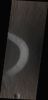
Volcanoes-Ceraunius_Tholus-Summit-PIA16595-PCF-LXTT-IPF.jpgThe Eastern Side of Ceraunius Tholus' Summit Caldera (Absolute Natural Colors; credits for the additional process. and color.: Dr Paolo C. Fienga/Lunar Explorer Italia/Italian Planetary Foundation)73 visiteThis image (taken by the NASA - Mars Odyssey Orbiter during its 47827th orbit around the Red Planet) shows us the Eastern Side of the Summit Caldera of a Volcano known as Ceraunius Tholus (which is part, jointly with Uranius Mons and Uranius Tholus, of the so-called "Uranius Group of Volcanoes"). Ceraunius Tholus is approx. 130 Km across and approx. 5,5 Km high; it was so named after a Classical Albedo Feature and it is located in the Tharsis Quadrangle of Mars. Ceraunius Tholus is generally believed to be a Basaltic Shield-Volcano with the lower part buried beneath the lava-formed Plains forming. Earlier interpretations suggested also that it may be a "Stratovolcano". The Slopes on Ceraunius Tholus are quite steep with an average slope of 8° and with many Radial Erosional Channels and Pitted Valleys extending from just below the Rim of the Caldera, toward the base of the Volcano. The current view, however, is that the Valleys were eroded by Water. Interesting features that characterize Ceraunius Tholus are 3 (three) large Canyons located on the North/Western Flank of the Volcano and which are up to approx. 2,5 km wide and 300 meters deep. The biggest of these 3 (three) Canyons also appears to be the youngest one; it protrudes from the lowest point of the Volcanic Summit Caldera and it ends at the interesting Rahe Crater (an oblique Impact Crater with measures of about 35 × 18 Km), just North from the Volcano, where it formed a Depositional Fan. Its origin is (let us say, "obviously") still debatable and there are at least 3 (three) Main Models proposed to explain it: Creation by way of Fluvial Action, Volcanic (---> Lava) Flows or a combination of both of them. The Caldera of Ceranius Tholus is also dotted with many Collapse Pits (NOT visible in this frame), which, as you should know, are distinct from Impact Craters since they have no Rim and vary in abundance all across the Caldera. Some scientists believe that Glaciers may have existed on many of the Volcanoes located in the District of Tharsis, including Olympus Mons, Ascraeus Mons, and Pavonis Mons. Ceraunius Tholus, on uts side, may also have had its Glaciers Melt to form some temporary Lakes in the past. In fact, the smoothness and flatness of the Ceraunius Tholus' Summit Caldera Floor strongly suggests that, in a far and distant past, some meltwater might actually have accumulated over there, thus forming a so-called (and just temporary, as we said before) "Caldera Lake".
Latitude (centered): 24,0691° North
Longitude: 263,105° East
Instrument: VIS
Captured: September, 25th, 2012
This frame (which is an Original Mars Odyssey Orbiter b/w frame published on the NASA - Planetary Photojournal with the ID n. PIA 16595) has been additionally processed and then colorized in Absolute Natural Colors (such as the colors that a human eye would actually perceive if someone were onboard the NASA - Mars Odyssey Orbiter and then looked down, towards the Surface of Mars), by using an original technique created - and, in time, dramatically improved - by the Lunar Explorer Italia Team.MareKromiumDic 19, 2012
|
|

ESP_029660_1350-PCF-LXTT-IPF-2.jpgAsymmetrical Dune (Absolute Natural Colors; credits for the additional process. and color.: Dr Paolo C. Fienga/Lunar Explorer Italia/Italian Planetary Foundation)99 visiteMars Local Time: 15:44 (Middle Afternoon)
Coord. (centered): 44,715° South Lat. and 331,100° East Long.
Spacecraft altitude: 255,8 Km (such as about 159,9 miles)
Map projection: EQUIRECTANGULAR
Emission Angle: 1,1°
Phase Angle: 56,1°
Solar Incidence Angle: 57° (meaning that the Sun was about 33° above the Local Horizon of the imaged Region, at the time that the picture was taken)
Solar Longitude: 212,3° (Northern Autumn - Southern Spring)
Credits: NASA/JPL/University of Arizona
Additional process. and coloring: Lunar Explorer Italia MareKromiumDic 13, 2012
|
|

SOL0107-0109-PCF-LXTT-IPF.jpgMount Sharp - Soles 107 and 109 (An Image-Mosaic in Absolute Natural Colors; credits for the additional process. and color.: Elisabetta Bonora, Marco Faccin and Paolo C. Fienga/Lunar Explorer Italia/Italian Planetary Foundation)139 visitenessun commentoMareKromiumDic 10, 2012
|
|

Titan-Regions-Adiri-PIA12621-PCF-LXTT-IPF.jpgThrough the Fog: Adiri (Absolute Natural Colors; credits for the additional process. and color.: Dr Paolo C. Fienga/Lunar Explorer Italia/Italian Planetary Foundation)116 visiteThe NASA - Cassini Spacecraft peers through the Dark and Hazy Atmosphere of Titan, this time looking at a Region called Adiri, and located to the West of the Landing Site of the ESA - Huygens Probe, on the Anti-Saturn Side of the moon. This view is centered on Terrain at 22° South Latitude and 209° West Longitude. North on Titan is up and rotated 36° to the right. The dark Circular Feature visible slightly on to the right of the image center, at about 2 o'clock (and that looks like a well preserved Impact Crater seen from atop), could actually be an Image-Artifact.
The image was taken with the NASA - Cassini Spacecraft Narrow-Angle Camera on December 12, 2009, using a spectral filter sensitive to Wavelengths of Near-InfraRed Light centered at 938 nanometers. The view was obtained at a distance of approximately 130.000 Km (such as about 81.000 miles) from Titan. Image scale is 766 meters (such as 2513 feet) per pixel.
This picture (which is an Original NASA - Cassini Spacecraft b/w frame published on the NASA - Planetary Photojournal and identified by the n. PIA 12621) has been additionally processed and then colorized, according to an informed speculation carried out by Dr Paolo C. Fienga (LXTT-IPF), in Absolute Natural Colors (such as the colors that a human eye would actually perceive if someone were onboard the NASA - Cassini Spacecraft and then looked outside, towards the Saturnian moon Titan), by using an original technique created - and, in time, dramatically improved - by the Lunar Explorer Italia Team. Different colors, as well as different shades of the same color, mean, among others, the existence of different Elements present in the Atmosphere and on the Surface of Titan, each having a different Albedo (---> Reflectivity) and Chemical Composition.
Note: it is possible (but we, as IPF, have no way to be one-hundred-percent sure of such a circumstance), that the actual luminosity of the Albedo Feature seen in this frame would appear, to an average human eye, way lower than it has been shown (better yet: interpreted) here.MareKromiumDic 10, 2012
|
|
| 25353 immagini su 2113 pagina(e) |
 |
|
|
|
|
89 | |
|
|
|
|
|
|





