| Ultimi arrivi |
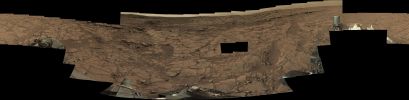
SOL0137-4-GB-LXTT-IPF.jpgLooking at Yellowknife Bay - Sol 127 (an Image-Mosaic in Calibrated Natural Colors; credits for the additional process. and color.: Dr Gianluigi Barca/Lunar Explorer Italia/Italian Planetary Foundation)57 visitenessun commentoMareKromiumGen 11, 2013
|
|
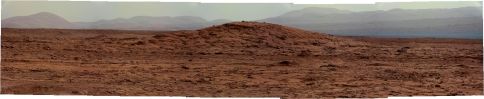
SOL0141-EB-MF-LXTT-IPF.jpgFeatures of Yellowknife Bay - Sol 127 (an Image-Mosaic in RAW Natural Colors; credits for the additional process. and color.: Elisabetta Bonora and Marco Faccin/Lunar Explorer Italia/Italian Planetary Foundation)90 visitenessun commentoMareKromiumGen 11, 2013
|
|

SOL0141-2-GB-LXTT-IPF.jpgFeatures of Yellowknife Bay - Sol 141 (an Image-Mosaic in Calibrated Natural Colors; credits for the additional process. and color.: Dr Gianluigi Barca/Lunar Explorer Italia/Italian Planetary Foundation)62 visitenessun commentoMareKromiumGen 11, 2013
|
|

Titan-PIA16635-PCF-LXTT-IPF-1.jpgTitanian Northern Lakes (Absolute Natural Colors; credits for the additional process. and color.: Dr Paolo C. Fienga/Lunar Explorer Italia/Italian Planetary Foundation)72 visiteThe Lakes existing on the Saturnian moon Titan, reflect Radio Waves in varying ways, as it can be noticed in this Radio-Image obtained by the the NASA - Cassini Spacecraft. Scientists think the variations in Reflectivity, or Brightness, have to be related with the smoothness (such as the so-called "texture") of the imaged Surface. However, if a Lake is fully liquid, it always looks VERY dark (actually black); but if it is only partially liquid, then it looks a lot brighter. In this frame, taken from Titan's High Northern Latitudes (such as at approx. 79° North Latitude and 58° West Longitude) on May, 22, 2012, the Lakes located on on the left (Sx) side of it are full of Liquid Hydrocarbons, while the ones - barely visible - located on the top right (Dx) of the picture are only partially filled - it has to be said, however, that what can be seen on the right side of the frame, could even be the representation of simple Saturated Ground (---> a Surface Feature - or, better yet, a Surface "Condition" - known as "Mudflat" ---> Mudflats or Mud Flats, also known as Tidal Flats, are Coastal Wetlands that form when huge quantities of Mud are deposited by the action of Oceanic Tides or particularly fast-flowing Rivers).
The Lakes visible in this image are each about 35 to 45 Km (such as approx. 22 to 30 miles) across, or about the size of Lake Tahoe, on the California-Nevada Border. Some of the differences in Reflectivity could also be explained by the presence, in the Lakes, of floating blocks of Hydrocarbon Ice. The image was obtained by the Cassini Radar Mapper at a scale of about 350 meters (1100 feet) per pixel.
This frame (which is a crop obtained by an Original NASA - CASSINI Spacecraft Radio-Image published on the NASA - Planetary Photojournal with the n. PIA 16635), since it is just a Radio-Image of the Titanian Surface and NOT a real view of it, has been colorized, according to an educated guess, by Dr Paolo C. Fienga (LXTT-IPF), in what they could reasonably be its possible Absolute Natural Colors (such as the colors that a human eye would perceive if someone were onboard the NASA - CASSINI Spacecraft and, once the thick layer of Titanian Hazes and Fogs shall have been completely overcome, looked down, towards the Surface of Titan itself), by using an original technique created - and, in time, dramatically improved - by the Lunar Explorer Italia Team.MareKromiumGen 11, 2013
|
|

Titan-PIA16634-Fantasy.jpgOn the Surface of Titan...100 visiteCaption NASA:"This artist's concept envisions what Hydrocarbon Ice forming on a liquid Hydrocarbon Sea of Saturn's moon Titan might look like. A new model from scientists on NASA's Cassini mission suggests that clumps of Methane-and-Ethane-rich ice -- shown here as the lighter-colored clusters -- could float under some conditions".MareKromiumGen 11, 2013
|
|

Nereidum_Montes-Dunefield-ESP_029608_1390-PCF-LXTT-IPF-1.jpgDunefield in Nereidum Nontes (CTX Frame - Absolute Natural Colors; credits for the additional process. and color.: Dr Paolo C. Fienga/Lunar Explorer Italia/IPF)60 visiteMars Local Time: 15:43 (Middle Afternoon)
Coord. (centered): 40,495° North Lat. and 309,939° East Long.
Spacecraft altitude: 254,8 Km (such as about 159,3 miles)
Original image scale range: 25,5 cm/pixel (with 1 x 1 binning) so objects ~ 76 cm across are resolved
Map projected scale: 25 cm/pixel
Map projection: EQUIRECTANGULAR
Emission Angle: 1,0°
Phase Angle: 57,3°
Solar Incidence Angle: 56° (meaning that the Sun was about 34° above the Local Horizon at the time the picture was taken)
Solar Longitude: 209,9° (Northern Autumn - Southern Spring)
Credits: NASA/JPL/University of Arizona
Additional process. and coloring: Lunar Explorer ItaliaMareKromiumGen 11, 2013
|
|

Nereidum_Montes-Dunefield-ESP_029608_1390-PCF-LXTT-IPF-2.jpgDunefield in Nereidum Nontes (EDM - Absolute Natural Colors; credits for the additional process. and color.: Dr Paolo C. Fienga/Lunar Explorer Italia/IPF)60 visiteMars Local Time: 15:43 (Middle Afternoon)
Coord. (centered): 40,495° North Lat. and 309,939° East Long.
Spacecraft altitude: 254,8 Km (such as about 159,3 miles)
Original image scale range: 25,5 cm/pixel (with 1 x 1 binning) so objects ~ 76 cm across are resolved
Map projected scale: 25 cm/pixel
Map projection: EQUIRECTANGULAR
Emission Angle: 1,0°
Phase Angle: 57,3°
Solar Incidence Angle: 56° (meaning that the Sun was about 34° above the Local Horizon at the time the picture was taken)
Solar Longitude: 209,9° (Northern Autumn - Southern Spring)
Credits: NASA/JPL/University of Arizona
Additional process. and coloring: Lunar Explorer ItaliaMareKromiumGen 11, 2013
|
|

Saturn-Vortex-EB-MF-LXTT-IPF-1.jpgNorth Polar Vortex (CTX Frame: Calibrated Natural Colors; credits for the additional process. and color.: Elisabetta Bonora and Marco Faccin/Lunar Explorer Italia/Italian Planetary Foundation; EDM: Absolute Natural Colors; credits: Dr Paolo C. Fienga)89 visiteThe NASA - Cassini Spacecraft has recently been travelling the Saturnian System in a set of inclined (or "tilted"), orbits that were fit to give to the Mission Scientists a vertigo-inducing view of Saturn's North Polar Regions. This (kind of "new") perspective has brought to light quite a few images of roiling Storm Clouds and a swirling Vortex, located at the center of Saturn's famed North Polar "Hexagon" (being tha latter an Atmospherical Feature whose origin and visual configuration are still a mistery).
These North Polar Phenomena, however, basically mimic what Cassini found at Saturn's South Pole, a number of years ago. As a matter of fact, the NASA - Cassini Spacecraft had also seen several Storms circling the North Polar Regions of Saturn in the past, but the vision had come only in InfraRed Wavelengths, since the North Pole of the Ringed Gas-Giant Planet was in complete darkness. Now, with the change of the Saturnian Season, the Sun has once again begun to creep over the North Pole of Saturn, and this frame (that was obtained in Visible Light) shows us what Cassini has actually seen...
This picture (which is an Original NASA - Cassini Spacecraft b/w frame) was taken on November, 27th, 2012, with the Cassini's Wide-Angle Imaging Camera. The Camera, at the time that the picture was taken, was pointing at the North Polar Regions of Saturn from approx. 233.742 miles (such as about 376.170 Km) away.
The resulting frame (in its CTX Version) has been additionally processed and then colorized in Natural Colors (such as the colors that a perfect human eye - or an Electronic Eye - would have perceived while looking at Saturn from Cassini's vantage point); the EDM Version (in the upper right corner of the image), on the other hand, has been obtained by re-processing and then re-colorizing the picture - according to an informed speculation carried out by Dr Paolo C. Fienga (LXTT-IPF) - in Absolute Natural Colors (such as the colors that a normal - meaning: in the average - human eye would have actually caught if someone would have been onboard the NASA - Cassini Spacecraft and then had looked outside, towards the North Pole of Saturn), by using an original technique created - and, in time, dramatically improved - by the Lunar Explorer Italia Team. Different colors, as well as different shades of the same color, mean, among others, the existence of different Elements present in the Atmosphere of Saturn, each having a different Albedo (---> Reflectivity) and Chemical Composition.MareKromiumGen 01, 2013
|
|

SOL0132-EB-MF-LXTT-IPF-2.jpgYellowknife's Rocks... - Sol 132 (an Image-Mosaic in Calibrated Natural Colors; credits for the additional process. and color.: Elisabetta Bonora and Marco Faccin/Lunar Explorer Italia/Italian Planetary Foundation)79 visitenessun commentoMareKromiumGen 01, 2013
|
|

SOL0121-1-GB-LXTT-IPF.jpgProximities of Yellowknife Bay - Sol 121 (an Image-Mosaic in Calibrated Natural Colors; credits for the additional process. and color.: Dr Gianluigi Barca/Lunar Explorer Italia/Italian Planetary Foundation)75 visitenessun commentoMareKromiumGen 01, 2013
|
|

SOL0126-2-GB-LXTT-IPF.jpgFeatures of Yellowknife Bay - Sol 127 (an Image-Mosaic in RAW Natural Colors; credits for the additional process. and color.: Dr Gianluigi Barca/Lunar Explorer Italia/Italian Planetary Foundation)83 visitenessun commentoMareKromiumGen 01, 2013
|
|

SOL0126-1-GB-LXTT-IPF.jpgFeatures of Yellowknife Bay - Sol 127 (an Image-Mosaic in RAW Natural Colors; credits for the additional process. and color.: Dr Gianluigi Barca/Lunar Explorer Italia/Italian Planetary Foundation)74 visitenessun commentoMareKromiumGen 01, 2013
|
|
| 25353 immagini su 2113 pagina(e) |
 |
|
|
|
|
87 | |
|
|
|
|





