| |
| Ultimi arrivi |

SOL055-THE_RAT2-2N131246299EFF1147P1940R0M1.jpgThe "Rat" is back!748 visiteSi, certo: NON è un "Topo".
Ma questa Surface Feature, ripresa dal Rover Spirit durante l'ormai lontano Sol 55 della sua Missione Marziana all'interno del Cratere Gusev, assomiglia in maniera, a parere di chi scrive, "incredibile", ad un tipico roditore terrestre. Il frame originale è stato leggermente ingrandito ed i contrasti sono stati pure leggermente esaltati, così da enfatizzare il profilo della Feature.
Quello che si vede ("topo" o "non topo") è semplice, e credo sia difficile dimostrare il contrario: abbiamo una roccia con una vasta crepa latitudinale che "guarda" verso il Rover. Da questa crepa, sembra che "qualcosa" si stia sporgendo verso l'esterno, e questo "qualcosa" è reale, dato che la sua "porzione frontale" (il "muso", se volete) proietta anche una netta ombra sul bordo della roccia da cui esso pare fuoriuscire.
Se osservate la Feature con ESTREMA ATTENZIONE, noterete che dei leggeri dettagli superficiali sono chiaramente visibili e sembrano essere degli "occhi", delle piccole "orecchie" ed una parvenza di "naso", con un leggero rigonfiamento all'altezza di quelle che potremmo chiamare "guance". Il resto del "corpo" della Feature, è immerso nell'ombra.
Non è un "topo", certo: lo so e lo sappiamo BENISSIMO! Ma è una Feature veramente inusuale che, a parere di chi scrive, può tranquillamente essere definita come "Anomalia di Superficie". E' una "stranezza", una ennesima (ancorchè vecchiotta, ormai...) "Martian Oddity". E chiunque ritenga di essere in grado di spiegare con un ragionevole margine di certezza di che cosa si tratta, non deve fare altro che scrivere o commentare...MareKromiumGen 31, 2013
|
|

Europa-Craters-Mannann_an_Crater-PIA01402-PCF-LXTT-IPF.jpgFeatures of Mannann'an Crater (Absolute Natural Colors; credits for the additional process. and color.: Dr Paolo C. Fienga/Lunar Explorer Italia/Italian Planetary Foundation)157 visiteThis composite view taken by the NASA - Galileo Spacecraft, shows a portion of the Rim and the Interior of the Impact Crater known as Mannann'an, which is located on Jupiter's moon, Europa. A high resolution image (20 meters per picture element) was combined with a lower resolution one (80 meters per picture element), to produce this composite picture. The color data here can be used to distinguish between Regions where the Ice located on the Surface of Europa is purer (---> cleaner) from other areas where the Ice itself, instead, is more contaminated (---> dirty; mixed with other elements); the reddish/brown Surface Material visible to the West (Left side - Sx) of the frame is thought to be "dirty" Ice, while the white/bluish areas visible inside the Crater should be made of "cleaner" Ice. The Rim of Mannann'an is (barely visible) on the left of the composite, approx. at the boundary between the area with the higher concentration of reddish/brown Surface Material and the area where the white Surface Material is dominant. The high resolution data show several small Surface Features inside this Impact Crater, including Concentric Fractures and a Spider-like set of Fractures near the right (East) edge of the image.
North is to the top of the picture and the Sun illuminates the scene from the East (right - Dx). The image, which is centered at 3° North Latitude and 240° West Longitude, covers an area of approximately 18 by 4 Km (such as about 11,12 by 2,48 miles). The finest details that can be discerned in this picture are about 40 meters (44 yards) across. The images were taken by the Solid State Imaging Camera onboard Galileo, when the Spacecraft flew by Europa on March 29th, 1998, at a distance of 1934 Km (such aapprox. 1201 miles) from its Surface.
This frame (which is an Original NASA - Galileo Spacecraft false colors image composite published on the NASA - Planetary Photojournal with the ID n. PIA 01402) has been additionally processed and then re-colorized, according to an educated guess carried out by Dr Paolo C. Fienga (LXTT-IPF), in Absolute Natural Colors (such as the colors that a human eye would actually perceive if someone were onboard the NASA - Galileo Spacecraft and then looked outside, towards the Surface of the Jovian moon Europa), by using an original technique created - and, in time, dramatically improved - by the Lunar Explorer Italia Team. Different colors, as well as different shades of the same color, mean, among others, the existence of different Elements present on the Surface of Europa, each having a different Albedo (---> Reflectivity) and Chemical Composition.MareKromiumGen 31, 2013
|
|

Rhea-PIA14574-PCF-LXTT-IPF.jpgIn the Saturnshine (Absolute Natural Colors; credits for the additional process. and color.: Dr Paolo C. Fienga - Lunar Explorer Italia/Italian Planetary Foundation)135 visiteSome Southern Terrain on the Gas-Giant Planet Saturn's moon Rhea is dimly illuminated by the Saturnshine (---> the Saturnian equivalent, on Rhea, of the Moonshine, on Earth) in this NASA - Cassini Spacecraft's view of the dark side of the moon. The camera of Cassini is looking toward the night side of Rhea (which is approx. 1530 Km - such as about 950 miles - across), but the Sunlight reflected off the day side of the immense Saturn is bright enough to illuminate the Surface - with all its Impact Craters - seen here. This view is centered on Terrain located at 23° South Latitude and 315° West Longitude. If you look carefully beyond the Limb of Rhea, you will notice that 4 (four) background Stars are visible.
The image was taken in Visible Light with the NASA - Cassini Spacecraft Wide-Angle Camera on August, 1st, 2011. The view was obtained at a distance of approximately 6000 Km (such as about 3726 miles) from Rhea and at a Sun-Rhea-Cassini Spacecraft, or Phase, Angle of 113°. Scale in the original image was 800 meters (such as 2600 feet) per pixel.
This frame (which is an Original NASA - Cassini Spacecraft image published on the NASA - Planetary Photojournal with the ID n. PIA 14574) has been additionally processed, contrast enhanced, and then colorized in Absolute Natural Colors (such as the colors that a human eye would actually perceive if someone were onboard the NASA - Cassini Spacecraft and then looked outside, towards the Saturnian moon Rhea), by using an original technique created - and, in time, dramatically improved - by the Lunar Explorer Italia Team. Different colors, as well as different shades of the same color, mean, among others, the existence of different Elements present on the Surface of Rhea, each having a different Albedo (---> Reflectivity) and Chemical Composition.MareKromiumGen 31, 2013
|
|

Europa-Craters-Tyre_Crater-PIA00702-PCF-LXTT-IPF.jpgTyre Crater (Absolute Natural Colors; credits for the additional process. and color.: Dr Paolo C. Fienga/Lunexit Team/Italian Planetary Foundation)145 visiteThis unbelievably complex Surface Feature located on the Jovian moon Europa was originally seen as a dark, diffuse Circular Patch on a previous NASA - Galileo Spacecraft's global image of Europa's Leading Hemisphere taken on April 3, 1997. The "Bulls-Eye" pattern appears to be a 140- Km-wide Impact "Scar" (about the size of the island of Hawaii) which formed as the Surface of Europa fractured minutes after a (probably) mountain-sized Asteroid or Comet slammed into this fascinating Celestial Body.
This approx. 214-Km-wide picture is the product of the combination of 3 (three) images which have originally been processed in false colors, so to enhance shapes and compositions of the photographed Surface. North is toward the top of this picture, which is illuminated from Sunlight coming from the West. This composite reveals a sequence of events which have deeply modified the Surface of Europa. The earliest event was the impact which formed the Tyre Structure, located at 34° North Latitude and 146,5° West Longitude. The impact was then followed by the formation of the brown/reddish lines superposed on Tyre. The brown/reddish color, in fact, designates areas that are probably made of (or covered by) some kind of a "dirty" Water-Ice Mixture. On the other hand, the fine light blue-gray lines crossing the whole Region from West to East appear to be Ridges which (obviously) formed after the Crater.
The images forming this composite were taken on April 4, 1997, at a resolution of 595 meters (1950 feet) per picture element and a range of approx. 29.000 Km (such as about 18.000 miles) from Europa. The frames were taken by Galileo's Solid State Imaging (CCD) System.
This frame (which is the Original NASA - Galileo Spacecraft false-color image composite published on the NASA - Planetary Photojournal with the ID n. PIA 00702) has been additionally processed and then re-colorized, according to an educated guess carried out by Dr Paolo C. Fienga (LXTT-IPF), in Absolute Natural Colors (such as the colors that a human eye would actually perceive if someone were onboard the NASA - Galileo Spacecraft and then looked outside, towards the Surface of the Jovian moon Europa), by using an original technique created - and, in time, dramatically improved - by the Lunar Explorer Italia Team. Different colors, as well as different shades of the same color, mean, among others, the existence of different Elements present on the Surface of Europa, each having a different Albedo (---> Reflectivity) and Chemical Composition.MareKromiumGen 31, 2013
|
|

Europa-Ice_Floes-PIA00578-PCF-LXTT-IPF.jpgEuropa's Ice Floes (Absolute Natural Colors; credits for the additional process. and color.: Dr Paolo C. Fienga/Lunexit Team/Italian Planetary Foundation)132 visiteJupiter's moon Europa, as seen in this image taken on June 27, 1996 by the NASA - Galileo Spacecraft, displays a few Surface Features that, in some areas, seem to resembe to Ice Floes (---> usually large, flat, and free masses of floating Sea Ice ) seen in the Polar Seas of our Home Planet Earth. Europa, which is about the size of Earth's Moon, possesses an Icy Crust that has been severely fractured, as indicated by the dark linear, curved, and wedged-shaped bands seen here. These Fractures have broken the Crust into Plates which are as large as 30 Km (such as about 18,6 miles) across. The Areas between the Plates are filled with Material that is probably Icy "Slush", contaminated with Rocky Debris. Some individual Plates were separated and rotated into new positions. Europa's density indicates that this Celestial Body has a shell of Water Ice thicker than approx. 100 Km (such as about 62 miles), parts of which could be liquid. Currently, Water Ice could extend from the Surface down to the Rocky Interior of Europa, but the Features seen in this image suggest that the motion of the disrupted Icy Plates was lubricated by soft Ice or perhaps liquid Water that was just below the Surface at the time of disruption.
This image covers part of the Equatorial Zone of Europa and was taken from a distance of approx. 156.000 Km (such as about 96.876 miles) by the Solid-State Imaging Subsystem onboard the NASA - Galileo Spacecraft. North is up and the Sun is nearly directly overhead. The area shown here is about 510 by 989 Km (such as approx. 317-by-614 miles), and the smallest visible Surface Feature is about 1,6 Km (approx. 1 mile) across.
This frame (which is the Original NASA - Galileo Spacecraft b/w image published on the NASA - Planetary Photojournal with the ID n. PIA 00578) has been additionally processed and then colorized, according to an educated guess carried out by Dr Paolo C. Fienga (LXTT-IPF), in Absolute Natural Colors (such as the colors that a human eye would actually perceive if someone were onboard the NASA - Galileo Spacecraft and then looked outside, towards the Surface of the Jovian moon Europa), by using an original technique created - and, in time, dramatically improved - by the Lunar Explorer Italia Team. Different colors, as well as different shades of the same color, mean, among others, the existence of different Elements present on the Surface of Europa, each having a different Albedo (---> Reflectivity) and Chemical Composition.MareKromiumGen 31, 2013
|
|

SOL150-GB-LXTT-IPF-1.jpgSomething's moving?!? - Sol 151 (Credits for the Research and the additional process.: Dr Gianluigi Barca/Lunar Explorer Italia/Italian Planetary Foundation)135 visiteA parere di chi scrive, il fatto che una buona parte dei "sassetti" visibili nei quattro frames (tutti ottenuti dalla Front HazCam del Rover Spirit durante il 151mo Sol di operazioni su Marte, Regione di Gusev Crater) sembra che cambiano posizione tra uno scatto e l'altro, è/può essere (a ragion veduta) considerato una conseguenza sia di un inevitabile "shift prospettico" (il Rover si è mosso - è avanzato, di fatto), sia della deformazione grandangolare tipica di questo tipo di immagini. Ma alcuni "movimenti" e "cambi" di contesto, sempre ad umile parere di chi scrive, non sono spiegabili con questo approccio (per quanto sensato e pragmatico esso possa essere).
Dunque possiamo dire che sulla Superficie di Marte "qualcosa" si muove, relativamente, alla svelta? No, questo no. Ma che tutto sia "still" (immobile), come dice la NASA, e che gli unici movimenti superficiali devono necessariamente essere ricondotti (SEMPRE!) alla verificazione di attività eoliche di grossa entità (passaggio di Dust Devils, ad esempio, o altre correnti d'aria violentissime e radenti il suolo), a parer mio non pare un approccio completamente corretto, nè realistico. Poi, come sapete bene, in questa Materia, la "speculazione" - purchè informata e pragmatica - la fa e la farà da "padrona" ancora - credo e temo - per moltissimo tempo... MareKromiumGen 31, 2013
|
|

SOL150-GB-LXTT-IPF-2.jpgSomething's moving?!? - Sol 151 (Credits for the Research and the additional process.: Dr Gianluigi Barca/Lunar Explorer Italia/Italian Planetary Foundation)128 visiteA parere di chi scrive, il fatto che una buona parte dei "sassetti" visibili nei due frames (entrambi ottenuti dalla Front HazCam del Rover Spirit) sembra che cambiano posizione tra uno scatto e l'altro, è/può essere (a ragion veduta) considerato una conseguenza sia di un inevitabile "shift prospettico", sia della deformazione grandangolare tipica di questo tipo di immagini. Ma alcuni "movimenti" e "cambi" di contesto, sempre ad umile parere di chi scrive, non sono spiegabili con questo approccio (per quanto sensato e pragmatico esso possa essere).
Dunque possiamo dire che sulla Superficie di Marte "qualcosa" si muove, relativamente, alla svelta? No, questo no. Ma che tutto sia "still" (immobile), come dice la NASA, e che gli unici movimenti superficiali devono necessariamente essere ricondotti (SEMPRE!) alla verificazione di attività eoliche di grossa entità (passaggio di Dust Devils, ad esempio, o altre correnti d'aria violentissime e radenti il suolo), a parer mio non pare un approccio completamente corretto, nè realistico. Poi, come sapete bene, in questa Materia, la "speculazione" - purchè informata e pragmatica - la fa e la farà da "padrona" ancora - credo e temo - per moltissimo tempo... MareKromiumGen 31, 2013
|
|

SOL0135-EB-MF-LXTT-IPF.jpgVarious Surface Features at Yellowknife Bay - Sol 135 (credits for the additional process. and color.: Elisabetta Bonora and Marco Faccin/Lunar Explorer Italia/Italian Planetary Foundation) 161 visitenessun commentoMareKromiumGen 23, 2013
|
|
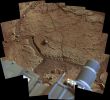
SOL0163-EB-MF-LXTT-IPF.jpgThe "Paving" of Yellowknife Bay - Sol 163 (an Image-Mosaic in Calibrated Natural Colors; credits for the additional process. and color.: Elisabetta Bonora and Marco Faccin/Lunar Explorer Italia/Italian Planetary Foundation)142 visitenessun commentoMareKromiumGen 23, 2013
|
|

SOL0161-EB-MF-LXTT-IPF.jpgThe "Paving" of Yellowknife Bay - Sol 161 (an Image-Mosaic in Natural Colors; credits for the additional process. and color.: Elisabetta Bonora and Marco Faccin/Lunar Explorer Italia/Italian Planetary Foundation)129 visitenessun commentoMareKromiumGen 23, 2013
|
|

SOL0162-EB-MF-LXTT-IPF.jpgThe "Paving" of Yellowknife Bay - Sol 162 (an Image-Mosaic in Enhanced Natural Colors; credits for the additional process. and color.: Elisabetta Bonora and Marco Faccin/Lunar Explorer Italia/Italian Planetary Foundation)128 visitenessun commentoMareKromiumGen 23, 2013
|
|
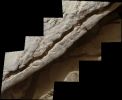
SOL0158-EB-MF-LXTT-IPF.jpgLooking for something?!? - Sol 158 (an Image-Mosaic in Natural Colors; credits for the additional process. and color.: Elisabetta Bonora and Marco Faccin/Lunar Explorer Italia/Italian Planetary Foundation)112 visitenessun commentoMareKromiumGen 23, 2013
|
|
| 25353 immagini su 2113 pagina(e) |
 |
|
|
|
|
84 | |
|
|
|
|
|
|





