| |
| Ultimi arrivi |

ZZ-Mercury-Limb-Flare-Fake-PIA16909-PCF-LXTT-IPF-1.jpgThis is NOT a "Game"!108 visiteFile NASA originale, scaricato dal "NASA - Planetary Photojournal" (ed ora non più esistente). MareKromiumApr 07, 2013
|
|

ZZ-Mercury-Limb-Flare-Fake-PIA16909-PCF-LXTT-IPF-0.jpgThis is NOT a "Game"!93 visiteThis beautiful and, as you can see, deeply suggestive image has been recently taken by the NASA - MESSENGER Spacecraft, while it was imaging the Limb of the Planet Mercury. What you see here could reasonably be an "Outgassing" - like the controversial ones which, sometimes, have been seen occurring on our Moon (actually, the so-called "Outgassings" are events in which Volatile-rich Materials are vented from deep inside the Lunar Interior, up to the Lunar Surface - specifically, we can think about Elements like Radon, Nitrogen, Carbon Monoxide, and/or Carbon Dioxide - and which might be the visible result of Low Level (---> Residual) Lunar Volcanic and/or Tectonic Activities). These Outgassing Phenomena, as you should know, are commonly put in the Cathegory of the so-called "Transient Lunar Phenomena" (or TLP, for short).-
On the other hand, this "Flare" might also be the result of an extremely unlikely (but yet possible) Residual Active Volcanic Activity (so, in this scenario, we would be looking at an actual Volcanic Plume) which happened on the innermost Planet of the Solar System: a Planet that has always been considered by the Planetary Scientists - as well as by the General Scientific Community -, like a (Geologically speaking) "Completely Dead Celestial Body".
It is also possible (even though we, as IPF, believe that this very last hypothesis is the least likely of the three) that the "Flare-like Light" seen here, on the Mercurian Limb, could be the evidence of an Impact (i.e.: a Meteor Strike) that has just occurred. However, if this hypothesis were true, we could also assume, just by looking at the shapes of both the Main Plume and the Upper Cloud which can be seen right on top of the Plume itself, that the Celestial Object that hit the Surface of Mercury should/must have followed a nearly (---> almost perfectly) Vertical Impact Trajectory (and this is another rather unlikely - better yet: extremely rare - circumstance).
This picture (which is an Original NASA - MESSENGER Spacecraft b/w frame published on the NASA - Planetary Photojournal with the ID n. PIA 16909 - but now, as we wrote herebefore, removed) has been additionally processed and then colorized in Absolute Natural Colors (such as the colors that a human eye would actually perceive if someone were onboard the NASA - MESSENGER Spacecraft and then looked down, towards the Surface of Mercury), by using an original technique created - and, in time, dramatically improved - by the Lunar Explorer Italia Team. Different colors, as well as different shades of the same color, mean, among other things, the existence of different Elements (Minerals) present on the Surface of Mercury, each having a different Albedo (---> Reflectivity) and Chemical Composition.
Important Note for the Readers: the People working at NASA for The MESSENGER Team implied that this picture was (once again, after "Caduceus") some sort of "practical joke", created to celebrate the Worldwide famous "April Fools' Day". Well, we, as IPF, believe that if this picture, as it seems, is actually a "joke" (---> a fake, in this case), it really is a VERY, VERY poor and stupid one. Please, forgive us for being so direct, but even though some People may think that this idea of making a practical joke out of a MESSENGER b/w frame was "funny" and "educational" (and, in a pretty distorted way, it probably was so), we honestly believe that this silly "stunt" only proves, in a LOUD and CLEAR WAY, how easily, once you have the right REPUTATION, skills and means, the original RAW image-data received from Space can be corrupted/tampered with, either by adding or by removing Features.
As you can also easily understand, the implications arising out of this "stunt" are, actually, countless and, in a way (like we already underlined in the past), quite disturbing...
For your reference and information, please visit http://messenger.jhuapl.edu/gallery/sciencePhotos/image.php?gallery_id=2&image_id=1133MareKromiumApr 07, 2013
|
|
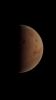
Volcanoes-Arsia_Mons_and_the_Tharsis_Montes-December_2012-PCF-LXTT-IPF-1.jpgNew "Smoke Emission" from Arsia Mons (Absolute Natural Colors; credits for the additional process. and color.: Dr Paolo C. Fienga/Lunar Explorer Italia/Italian Planetary Foundation)122 visiteIn questo interessantissimo (ed ovviamente sconosciuto ai più) frame ESA - Mars Express, ottenuto nel Dicembre 2012, una nuova (e possente, direi) Emissione di Fumi appare essersi formata nella (e caratterizzare la) Regione dove sorge il più "irrequieto" dei tre Tharsis' Montes: Arsia Mons.
Si tratta, ancora una volta, di complessi nuvolosi stratiformi che, "casualmente", si sono formati (o transitavano) nei pressi della Caldera di Arsia - come sostengono ESA e NASA -, oppure siamo realmente davanti ad una (forse l'ennesima) prova che Marte è ancora geologicamemte attivo?
Io la risposta non posso darvela, ma le immagini ci sono ed a me sembrano eloquenti. Poi, come sempre, la "Parola" passa a Voi Lettori...
Dr Paolo C. Fienga (PhD)MareKromiumMar 24, 2013
|
|

Telesto-PIA07702-PCF-LXTT-IPF.jpgTiny Telesto (Absolute Natural Colors; credits for the additional process. and color.: Dr Paolo C. Fienga/Lunar Explorer Italia/Italian Planetary Foundation)78 visiteThe NASA - Cassini Spacecraft passed within a cosmic "stone's throw" (---> meaning very close, in cosmic terms) from the Saturnian moon Telesto in October of the AD 2005, capturing this shot of this tiny Trojan moon. Telesto (which is approx. 24 Km, such as a little less than 15 miles across) appears to be mantled in fine, Icy (and/or "Dusty") Material, although a few shallow Impact Craters and some Rocky Outcrops (and/or large Boulders) are visible. Its smooth Surface does not appear to retain the record of intense cratering that most of Saturn's other moons possess.
The original image was taken in Polarized Green Light with the NASA - Cassini Spacecraft Narrow-Angle Camera on October 11, 2005, at a distance of approximately 14.500 Km (such as a little more than 9004 miles) from Telesto. The image scale is roughly 86 meters (283 feet) per pixel.
This picture (which is an Original NASA - CASSINI Spacecraft b/w frame published on the NASA - Planetary Photojournal with the ID n. PIA 07702) has been additionally processed and then colorized, according to an educated guess carried out by Dr Paolo C. Fienga (LXXT/IPF), in Absolute Natural Colors (such as the colors that a human eye would actually perceive if someone were onboard the NASA - CASSINI Spacecraft and then looked outside, towards the Saturnian moon, Telesto), by using an original technique created - and, in time, dramatically improved - by the Lunar Explorer Italia Team. Different colors, as well as different shades of the same color, mean, among other things, the existence of different Elements (Minerals) present on the Surface of Telesto, each having a different Albedo (---> Reflectivity) and Chemical Composition.MareKromiumMar 22, 2013
|
|

Channels-Terra_Cimmeria-PIA16274-PCF-LXTT-IPF-2.jpgChannels in Terra Cimmeria (Absolute Natural Colors; credits for the additional process. and color.: Dr Paolo C. Fienga/Lunar Explorer Italia/Italian Planetary Foundation)65 visiteThis VIS frame shows us a network of large and small Channels dissecting the Surface of an Highland Region located in Terra Cimmeria. The frame was acquired by the NASA - Mars Odyssey Orbiter during its 49.492nd orbit around the Red Planet.
Latitude (centered): 34,904° South
Longitude (centered): 157,710° East
Instrument: VIS
Captured: February, 9th, 2013
This frame (which is an Original Mars Odyssey Orbiter b/w frame published on the NASA - Planetary Photojournal with the ID n. PIA 16274) has been additionally processed and then colorized in Absolute Natural Colors (such as the colors that a human eye would actually perceive if someone were onboard the NASA - Mars Odyssey Orbiter and then looked down, towards the Surface of Mars), by using an original technique created - and, in time, dramatically improved - by the Lunar Explorer Italia Team.MareKromiumMar 22, 2013
|
|

Gullies-ESP_020661_1440-PCF-LXTT-IPF.jpgGullies in Gasa Crater (Absolute Natural Colors; credits for the additional process. and color.: Dr Paolo C. Fienga/Lunar Explorer Italia/Italian Planetary Foundation)82 visiteThe so-called "Gully Landforms" - just like the ones shown here, in this NASA - Mars Reconnaissance Orbiter image - can often be found in the Inner Rims (or even below, along the Inner Slopes) of many Impact Craters that are located at the Martian Mid-Latitudes. Some changes in these Gully Landforms were first seen in frames taken by the NASA - Mars Global Surveyor - Mars Orbiter Camera (MGS-MOC) in the AD 2006, and studying such activity has been a high priority for HiRISE ever since (and, in fact, many examples of New Deposits located inside Gully Landforms are now well known).
This frame shows a New Deposit inside some Gully Landforms located on the Inner Rim of Gasa Crater; a very (relatively speaking) "fresh" approx. 7-Km diameter Impact Crater that is found in the Southern Mid-Latitudes of the Red Planet (to be precise, at 35,72° South Latitude and 129.45° East Longitude). Said New Deposit appears of a distinctive gray color, with some patches of white Material too, in this Absolute Natural Color version of the NASA - Mars Reconnaissance Orbiter image n. ESP_020661_1440. The picture was acquired during the Southern Spring of Mars, but the Flow that formed the Deposit occurred in the preceding Winter.
As a matter of fact, the current Gully Activities appear to be concentrated in periods going from the late Winter to the early Spring of Mars, and this circumstance may be a consequence of the Sublimation of the Seasonal Carbon Dioxide (CO2) Frost (which, by the way, is well visible in several Gully "Alcoves" during Wintertime).
Mars Local Time: 15:49 (Middle Afternoon)
Coord. (centered): 35,729° North Lat. and 129,386° East Long.
Spacecraft altitude: 258,2 Km (such as about 160,3 miles)
Original image scale range: 25,8 cm/pixel (with 1 x 1 binning) so objects ~ 78 cm across are resolved
Map projected scale: 25 cm/pixel
Map projection: EQUIRECTANGULAR
Emission Angle: 11,0°
Sun-Mars-Spacecraft (or Phase) Angle: 47,6°
Solar Incidence Angle: 58° (meaning that the Sun was about 32° above the Local Horizon at the time the picture was taken)
Solar Longitude: 203,7° (Northern Fall - Southern Spring)
Credits: NASA/JPL/University of Arizona
Additional process. and coloring: Lunar Explorer Italia
This picture (which is an Original Mars Reconnaissance Orbiter EDM enhanced color frame, identified by the serial n. ESP_020661_1440) has been additionally processed and then re-colorized in Absolute Natural Colors (such as the colors that a human eye would actually perceive if someone were onboard the NASA - Mars Reconnaissance Orbiter and then looked down, towards the Surface of Mars), by using an original technique created - and, in time, dramatically improved - by the Lunar Explorer Italia Team.MareKromiumMar 22, 2013
|
|

Craters-Martz_Crater-PIA16273-PCF-LXTT-IPF.jpgFeatures of Martz Crater (Absolute Natural Colors; credits for the additional process. and color.: Dr Paolo C. Fienga/Lunar Explorer Italia/Italian Planetary Foundation)80 visiteThis picture, taken by the NASA - Mars Odyssey Orbiter during its 49.480th orbit around the Red Planet, shows us a small portion of the Inner Rim of the ancient Martz Crater, heavily dissected by a great number of small Channels.
Martz Crater is located in the Southern Hemisphere of Mars, in a Region known as Terra Cimmeria; it is almost 100 Km (such as a little more than 62 miles) wide and approximately 1,5 Km (such as about 0,9 miles) deep. Martz Crater is well known among Planetary Scientists because of its very prominent and steep Complex Central Peak (which is approx. 1500 meters - or 5000 feet - tall): a Central Peak that formed, like you know, at the same time of the Crater (and as a consequence of a phenomenon known as "Rebound Effect"), right after a medium-sized Celestial Object (probably something in between 0,5 to 1 Km - such as from 0,31 to 0,62 miles - across) impacted the Surface of Mars.
Latitude (centered): 34,614° South
Longitude (centered): 143,722° East
Instrument: VIS
Captured: February, 8th, 2013
This frame (which is an Original Mars Odyssey Orbiter b/w frame published on the NASA - Planetary Photojournal with the ID n. PIA 16273) has been additionally processed and then colorized in Absolute Natural Colors (such as the colors that a human eye would actually perceive if someone were onboard the NASA - Mars Odyssey Orbiter and then looked down, towards the Surface of Mars), by using an original technique created - and, in time, dramatically improved - by the Lunar Explorer Italia Team.MareKromiumMar 22, 2013
|
|

Jupiter-Upper_Atmosphere-PIA16837-PCF-LXTT-IPF.jpgInside Jupiter's Atmosphere (Absolute Natural Colors; credits for the additional process. and color.: Dr Paolo C. Fienga/Lunar Explorer Italia/Italian Planetary Foundation)80 visiteThe Jupiter's "Dark Hot Spot" visible in this image - taken on December, 13 of the AD 2000 by the NASA - Cassini Spacecraft Imaging Science Subsystem (while Cassini was on its way to the Saturnian System) - is, in a manner of speaking, a "window" that opens deep inside into Jupiter's Upper Atmosphere. In fact, all around the Dark Hot Spot, there are Layers of higher Clouds, with shapes and colors that can help us to identify which Layer of the Jovian Amosphere they actually belong to.
For instance, the three small gray-bluish Clouds visible to to the right of the frame, are located in the Jovian Upper Troposphere, or perhaps even higher, into the Jovian Stratosphere. On the other hand, the large Gray Band located under the Dark Hot Spot (inside which can be - really - barely seen a few bizarre-looking dense Cloud Formations), is positioned in the Lower Troposphere of Jupiter. In addition, a high, gauzy orangish Haze seems to cover a large portion of the frame.
This picture (which is an Original NASA - Cassini Spacecraft b/w false-color frame published on the NASA - Planetary Photojournal with the ID n. PIA 16837) has been additionally processed and then re-colorized in Absolute Natural Colors (such as the colors that an average human eye would actually perceive if someone were onboard the NASA - CASSINI Spececraft and then looked outside, towards the Jupiter), by using an original technique created - and, in time, dramatically improved - by the Lunar Explorer Italia Team.
Note: we apologize to our Readers, but some of the details (i.e.: a so-called "Gyre" and a "Plume") which characterize part of the dense Cloud-Formations located in the Lower Troposphere of Jupiter can ONLY be seen by watching the false-color version of this frame, as edited by NASA, and found in the Planetary Photojournal. If seen through "human eyes", the aformentioned details disappear almost completely (only the Plume, in fact, can be barely spotted, left of center of the gray Clouds-Band).MareKromiumMar 22, 2013
|
|

Craters-Kasimov_Crater-ESP_030609_1550-PCF-LXTT-IPF-3.jpgInverted Channels in Kasimov Crater (Absolute Natural Colors; credits for the additional process. and color.: Dr Paolo C. Fienga - Lunar Explorer Italia/Italian Planetary Foundation)74 visiteBy slightly enhancing an Absolute Natural Color image such as the EDM (see the inset to the right of the CTX Frame, which represents an about 1-Km wide - such as 0,621 miles - section of the whole area photographed by the NASA - Mars Reconnaissance Orbiter), can help us to achieve a better understanding of the imaged Surface Features, as well as to clearly distinguish between Surface Materials possessing different Histories, Textures and Mineral (---> Chemical) Compositions.
The whole image shows us a portion of the Floor of the Martian Impact Crater named "Kasimov" (a large - approx. 91 Km in diameter - and extremely ancient Impact Crater located in the Southern Hemisphere of the Red Planet), with several brown-gray (with subtle reddish nuances) Ridges that run from the bottom center to the upper left side of the frame. If you look carefully at all these different Ridges, you will notice that the Main Ridge is joined by a smaller one (look at the central portion of the CTX Frame) like small Tributary Rivers join together with larger ones on Earth. Indeed, this is exactly what happened here, on Mars, but - most likely - a few billions of years ago.
These Ridges are called "Inverted Channels" and they mark the locations of ancient Martian Riverbeds (in this case the Main River flowed towards the upper left of the image). Such Inverted Channels formed because the bottoms of these Rivers (---> Tributaries) were all full of Gravel-sized Rocks, whereas the areas around them were made of fine Clays. A VERY long time after the Rivers stopped flowing and dried-up, the Wind, slowly, removed completely the fine and light Clays, but it was not strong enough to blow away the heavy Gravel. In the end, after all the Clays were gone, the old Riverbeds were left as High-standing Gravel Ridges, such as the ones very well visible here (both in the CTX Frame as well as in the EDM).
Mars Local Time: 15:49 (Middle Afternoon)
Coord. (centered): 35,729° North Lat. and 129,386° East Long.
Spacecraft altitude: 258,2 Km (such as about 160,3 miles)
Original image scale range: 25,8 cm/pixel (with 1 x 1 binning) so objects ~ 78 cm across are resolved
Map projected scale: 25 cm/pixel
Map projection: EQUIRECTANGULAR
Emission Angle: 11,0°
Sun-Mars-Spacecraft (or Phase) Angle: 47,6°
Solar Incidence Angle: 58° (meaning that the Sun was about 32° above the Local Horizon at the time the picture was taken)
Solar Longitude: 203,7° (Northern Fall - Southern Spring)
Credits: NASA/JPL/University of Arizona
Additional process. and coloring: Lunar Explorer Italia
The CTX Frame (which is an Original Mars Reconnaissance Orbiter non-map projected b/w frame, identified by the serial n. ESP_030609_1550) and the EDM (which is an Original Mars Reconnaissance Orbiter enhanced color frame, identified by the serial n. ESP_030609_1550-1) have both been additionally processed and then colorized (as far as the EDM is concerned, re-colorized) in Absolute Natural Colors (such as the colors that a human eye would actually perceive if someone were onboard the NASA - Mars Reconnaissance Orbiter and then looked down, towards the Surface of Kasimov Crater - Mars), by using an original technique created - and, in time, dramatically improved - by the Lunar Explorer Italia Team. Different colors, as well as different shades of the same color, mean, among others, the existence of different Elements present on the Surface of Kasimov Crater, each having a different Albedo (---> Reflectivity) and Chemical Composition.MareKromiumMar 22, 2013
|
|

Craters-Ghost_Crater_in_Lakshmi_Region-PIA00477-PCF-LXTT-IPF.jpgPossible "Ghost Crater" in Lakshmi Region (Absolute Natural Colors; credits for the additional process. and color.: Dr Paolo C. Fienga/Lunar Explorer Italia/Italian Planetary Foundation)79 visiteThis NASA - Magellan Spacecraft image covers an area of approximately 100 by 120 Km (such as 62,1 by 74,5 miles) and is located in the Lakshmi Region of Venus, at 47° North Latitude and 334° East Longitude. Due to the extremely dense Venusian Atmosphere, primary Impact Craters of less than a 3 Km (such as 1,863 mileS) diameter are, in fact, nonexistent on the Surface of this Planet. However, the Dark Circular Region and the associated Central Bright Feature visible in this frame are reasonably thought to be the remnants of a Meteoroid that was smaller than the size necessary to create an actual Impact Crater but, anyway, that was big enough to leave some scars on the Venusian Surface.
Entering the Venusian Atmosphere at a low velocity (approximately 350 meters/second - such as about 1260 Km per hour) the Central Bright Feature appears to be a Cluster of Small Secondary Impacts, Ejecta and Debris from the original Meteor that broke up in the Atmosphere and, litterally, fell down in pieces. Even though most of the Meteorite did not hit the Surface, the Atmospheric Shock Wave/s that were generated by the Impact Event, could have been great enough to modify the surrounding Region. One explanation for this radar Dark Circular Formation - called "Dark Margin" -, could be that the Shock Wave/s was/were energetic enough to pulverize some portion of the Venusian Surface (remember that smooth surfaces generally appear radar dark).
Another explanation is that the Surface nere, could be blanketed by a fine material that was formed by the original Meteor's break up through the Atmosphere. Just out of curiosity, more than half of the Impact Craters found on Venus have associated "Dark Margins", and most of them are prominently located left of center of the Craters themselves.
This frame (which is an Original NASA - Magellan Spacecraft Radio-Image published on the NASA - Planetary Photojournal with the n. PIA 00477), since it is just a Radio-Image of the Venusian Surface and NOT a real view of it, has been colorized, according to an educated guess carried out by Dr Paolo C. Fienga (LXTT-IPF), in what they could reasonably be its possible Absolute Natural Colors (such as the colors that a human eye would perceive if someone were onboard the NASA - Magellan Spacecraft and, once the thick layer of Venusian Clouds and Fogs is completely overcome, looked down, towards the Surface of Venus itself), by using an original technique created - and, in time, dramatically improved - by the Lunar Explorer Italia Team.MareKromiumMar 22, 2013
|
|

Craters-Unnamed_Complex_Crater-PIA00462-PCF-LXTT-IPF.jpgUnnamed Complex Crater (Possible Absolute Natural Colors; credits for the additional process. and color.: Dr Paolo C. Fienga/Lunar Explorer Italia/Italian Planetary Foundation)86 visiteThe NASA - Magellan Spacecraft imaged this multiple-Floored, highly Irregular Impact Crater at Latitude 16,4° North and Longitude 352,1° East, during its 481st and 482nd orbits around the Planet Venus (on Earth, it was September, 27, 1990). This Impact Crater, about 9,2 Km (such as approx. 5,7 miles) in maximum diameter, was formed on what appears to be a slightly fractured, radar-dark (---> smooth) Venusian Plain. The abundant, low viscosity Flows associated with this Impact Event have, however, filled local Fault-controlled Troughs (---> Graben). These shallow Grabens are well portrayed on this Magellan image but they would have been unrecognizable if they had not (coincidentally) been infillled by the radar-bright Crater Flows.
This fortuitous enhancement by the Crater Flows - of Fault Structures - that were below the resolution capacity of the Magellan Synthetic Aperture Radar provided the Magellan Science Team with valuable Geologic information. For instance, the Flow Deposits from this Impact Crater are now thought to consist - primarily - of "Shock Melted Rock" (---> such as a remarkable quantity of almost liquid rocky material that got pushed away and outwards by the powerful shock-wave/s that followed the original Impact Event/s) and Fragmented Debris resulting from the nearly simultaneous impacts of 2 (two) projectile fragments into the hot (---> approx. 426° Celsius - or about 800 degrees Farheneit) Surface Rocks of Venus. On the other hand, the presence of various Floors in this highly Irregular Impact Crater is interpreted to be the result of Crushing, Fragmentation, and eventual Aerodynamic Dispersion of a single entry projectile (---> meteor) during its passage through the dense Venusian Atmosphere.
This frame (which is an Original NASA - Magellan Spacecraft Radio-Image published on the NASA - Planetary Photojournal with the n. PIA 00462), since it is just a Radio-Image of the Venusian Surface and NOT a real view of it, has been colorized, according to an educated guess carried out by Dr Paolo C. Fienga (LXTT-IPF), in what they could reasonably be its possible Absolute Natural Colors (such as the colors that a human eye would perceive if someone were onboard the NASA - Magellan Spacecraft and, once the thick layer of Venusian Clouds and Fogs is completely overcome, looked down, towards the Surface of Venus itself), by using an original technique created - and, in time, dramatically improved - by the Lunar Explorer Italia Team.MareKromiumMar 22, 2013
|
|

Titan-Lakes-South_Polar_Lake-01-PIA06241-PCF-LXTT-IPF-002.jpgOntario Lacus and the South Polar Regions of Titan: after the Fog (Absolute Natural Colors; credits for the additional process. and color. Dr Paolo C. Fienga/Lunar Explorer Italia/Italian Planetary Foundation)102 visiteThis view of Titan’s South Pole reveals the intriguing Dark Feature named Ontario Lacus and a host of smaller features dotting the whole South Polar Region. The true nature of this Surface Feature, seen here at left of center, is not yet known with absolute certainty. However, the Feature’s extremely dark coloration, the shore-like smoothness of its perimeter, and its presence in an area where frequent Convective Storm Clouds have been observed by the NASA - Cassini Spacecraft and Earth-based telescopes, made it the best candidate for an open body of liquid on Titan when this image was taken, in June 2005. This interpretation has, afterwards, been strengthened by the sighting of Surface Features having similar morphologies, but this time in Titan’s North Polar Regions during the Fly-By of this Saturnian moon that occurred in late February of the AD 2007. The possibility that those Northern Features, the sizes of small Seas, are either completely or partially filled with Liquid Hydrocarbons has been significantly strengthened also by the Radar Data collected by Cassini and which overlap portions of the Northern Features seen by the Cassini's Imaging Science Subsystem.
Previously, scientists had speculated that Ontario Lacus might simply be a Broad Depression filled by dark, Solid Hydrocarbons falling from the Atmosphere onto Titan’s Surface. In this case, the smoothed outline might be the result of a process unrelated to Rainfall, such as a so-called "Sinkhole" (---> a cavity in the ground, especially in a limestone formation, caused by water erosion and providing a route for Surface Water to disappear) or a "Volcanic Caldera". However, the strong likelihood that the Dark and Smooth North Polar Features are actually Lakes and Seas has made imaging scientists more confident that Ontario Lacus, and the smaller Dark Features dotting the South Polar Regions of Titan, also hold liquid. If correct, this new revelation would mean that each Pole on Titan is, in fact, a large Wetlands Area. The brightest (and almost white) Features seen here (from about 3 to 6 o'clock of the picture), are Methane Clouds (perhaps mixed with Water-Ice Clouds).
The original frame that we show you today, was taken by the NASA - Cassini Spacecraft during the distant Fly-By of Titan that took place in June 6, of the AD 2005, by using a combination of Spectral Filters sensitive to Wavelengths of Polarized InfraRed Light, allowing Cassini to see through the obscuring smog of Titan's Atmosphere and all the way down to the Surface. The image was acquired from an approximate distance of 450.000 Km (such as about 279.450 miles) from Titan. Resolution in the original image is approximately 3 Km (such as 1,863 miles) per pixel.
This picture (which is an Original NASA - Cassini Spacecraft b/w frame published on the NASA - Planetary Photojournal and identified by the n. PIA 06241) has been additionally processed and then colorized, as if the yellowish Fogs that surrounds the planet had been overcome. The colorization, even in this case, has been made according to an educated guess carried out by Dr Paolo C. Fienga (LXTT-IPF), in Absolute Natural Colors (such as the colors that a human eye would actually perceive if someone were onboard the NASA - Cassini Spacecraft and then looked outside, towards the South Polar Region of the Saturnian moon Titan), by using an original technique created - and, in time, dramatically improved - by the Lunar Explorer Italia Team. Different colors, as well as different shades of the same color, mean, among others, the existence of different Elements present in the Atmosphere and on the Surface of Titan, each having a different Albedo (---> Reflectivity) and Chemical Composition.
Note: it is possible (but we, as IPF, have no way to be one-hundred-percent sure of such a circumstance), that the actual luminosity of the Albedo Features seen in this frame would appear, to an average human eye, way lower than it has been shown (better yet: interpreted) here.MareKromiumMar 11, 2013
|
|
| 25353 immagini su 2113 pagina(e) |
 |
|
|
|
|
79 | |
|
|
|
|
|
|





