| |
| Ultimi arrivi |

Comets-Comet_ISON-4-10-2013-HST.jpgComet ISON (Hubble Space Telescope's View)62 visiteCaption originale:"Comet C/ISON was imaged with the Hubble Space telescope on April 10, 2013, using the Wide Field Camera 3, when the Comet was 394 million miles from Earth. View larger. Image via NASA, ESA, J.-Y. Li (Planetary Science Institute), and the Hubble Comet ISON Imaging Science Team".
MareKromiumOtt 17, 2013
|
|

Comets-Comet_ISON-Nucleus.jpgComet ISON (Tian Lian 1 - Satellite's View - Controversial: possible fake)87 visiteEd ecco il Nucleo di ISON: come vedete, assomiglia TANTISSIMO a quello di Tempel-1 e Wild-2. Mia opinione? Immagine genuina. Con tutto quanto ne segue e consegue... Il punto è che, a quanto leggo (ma NON sul Sito dell'Agenzia Spaziale Cinese, sul quale non posso capirci nulla), il Satellite Geostazionario Tian-Lian 1 NON ha fotocamere! E se questo è vero (ma non so se è vero), allora è evidente che siamo davanti all'ennesima bufala...MareKromiumOtt 15, 2013
|
|
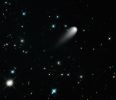
Comets-Comet_ISON-HST-30Apr-V_I-L-800.jpgComet ISON (Hubble Space Telescope's View)149 visiteAdvanced amateur astronomers are already getting good images of Comet ISON, which currently shines at around +12th magnitude in the constellation Cancer. And although NASA’s Deep Impact/EPOXI mission is down for the count, plans are afoot for the Curiosity rover and the Mars Reconnaissance Orbiter to attempt imaging the comet when it makes its closest approach to the Red Planet on October 1st at 0.0724 Astronomical Units (A.U.) or 10,830,000 kilometres distant. If MSL is successful, it would be the first time that a comet has been observed from the surface of another world.
Currently, ISON sits about a magnitude below the projected light curve, (see below) but that isn’t all that unusual for a comet. Already, there’s been increasing talk of “ISON being a dud,” but as Universe Today’s Nancy Atkinson pointed out in a recent post, these assertions are still premature. The big question is what ISON will do leading up to perihelion, and if it will survive its passage 1.1 million kilometres above the surface of the Sun on November 28th to become a fine comet in the dawn skies in the weeks leading up to Christmas.
ISON is already starting to show a short, spikey tail in amateur images. Tsutomu Seki estimated it to be shining at about magnitude +11.1 on September 16th. Keep in mind, a caveat is in order when talking about the magnitudes of comets. Unlike stars, which are essentially a point source, the brightness of a comet is spread out over a large surface area. Thus, a comet may appear visually fainter than the quoted magnitude, much like a diffuse nebula. Although +6th magnitude is usually the limit for naked eye visibility, I’ll bet that most folks won’t pick up ISON with the unaided eye from typical suburban sites until it breaks +4th magnitude or so.
The forward scattering of light also plays a key role in the predicted brightness of a comet. The November issue of Astronomy Magazine has a great article on this phenomenon. It’s interesting to note that ISON stacks up as a “9” on their accumulated point scale, right at the lower threshold of comet “greatness,” versus a 15 for sungrazing Comet C/1965 S1 Ikeya-Seki. Another famous “9” was Comet C/1996 B2 Hyakutake, which passed 0.1018 A.U. or 15.8 million kilometres from Earth on March 25, 1996.
ISON will pass 0.429 A.U. or 64.2 million kilometres from Earth the day after Christmas. Bruce Willis can stay home for this one.
Here is a blow-by-blow breakdown of some key dates to watch for as ISON makes its plunge into the inner solar system:
-September 25th: ISON crosses the border from the astronomical constellation of Cancer into Leo.
-September 27th: ISON passes 2 degrees north of the planet Mars.
-October 1st: The 12% illuminated waning crescent Moon passes 10 degrees south of Mars & ISON.
-Early October: ISON may break +10th magnitude and become visible with binoculars or a small telescope.
-October 4th: New Moon occurs. The Moon then exits the dawn sky, making for two weeks of prime viewing.
-October 10th: ISON enters view of NASA’s STEREO/SECCHI HI-2A CAMERA:
-October 16th: ISON passes just 2 degrees NNE of the bright star Regulus, making a great “guidepost” to pin it down with binoculars.
-October 18th: The Full Moon occurs, after which the Moon enters the morning sky.
-October 26th: A great photo-op for astro-imagers occurs, as ISON passes within three degrees the Leo galaxy trio of M95, M96, & M105.
-October 30th: The 17% illuminated Moon passes 6 degrees south of ISON.
-Early November: Comet ISON may make its naked eye debut for observers based at dark sky sites.
-November 3rd: A hybrid (annular-total) solar eclipse occurs, spanning the Atlantic and Central Africa. It may just be possible for well placed observers to catch sight of ISON in the daytime during totality, depending on how quickly it brightens up. The Moon reaching New phase also means that the next two weeks will be prime view time for ISON at dawn.
-November 5th: ISON crosses the border from the astronomical constellation of Leo into Virgo.
-November 7th: ISON passes less than a degree from the +3.6 magnitude star Zavijava (Beta Virginis).
-November 8th: ISON passes through the equinoctial point in Virgo around 16:00 EDT/20:00 UT, passing into the southern celestial hemisphere and south of the ecliptic.
-November 14th: ISON passes less than a degree from the 10th magnitude galaxy NGC 4697.
-November 17th: The Moon reaches Full, passing into the morning sky.
-November 18th: ISON passes just 0.38 degrees north of the bright star Spica.
-November 22nd: ISON crosses into the astronomical constellation of Libra.
-November 23rd: ISON sits 4.7 degrees SSW of the planet Mercury and 4.9 SSW of Saturn, respectively.
-November 25th: ISON pays a visit to another famous comet, passing just 1.2 degrees south of short period comet 2P/Encke which may shine at +8th magnitude.
-November 27th: ISON enters the field of view of SOHO’s LASCO C3 coronagraph.
-November 28th: ISON reaches perihelion at ~18:00 PM EST/ 23:00 UT.
After that, all bets are off. The days leading up to perihelion will be tense ones, as ISON then rounds the Sun on a date with astronomical destiny. Will it join the ranks of the great comets of the past? Will it stay intact, or shatter in a spectacular fashion? Watch this space for ISON updates… we’ll be back in late November with our post-perihelion guide!
Be sure to also enjoy recently discovered Comet C/2013 R1 Lovejoy later the year.
(source: http://www.universetoday.com/104818/comet-ison-a-viewing-guide-from-now-to-perihelion/#ixzz2fpLTKJwD)
Read more: http://www.universetoday.com/104818/comet-ison-a-viewing-guide-from-now-to-perihelion/#ixzz2fpLG75usMareKromiumSet 24, 2013
|
|

Comets-Comet_ISON-Nucleus_Crop_Chumack.jpgComet ISON95 visite"Comet ISON is probably at least twice as big as Comet Lovejoy and will pass a bit farther from the sun’s surface" notes Knight. “This would seem to favor Comet ISON surviving and ultimately putting on a good show.
One of the most exciting possibilities would be a partial break-up. "If Comet ISON splits, it might appear as a 'string of pearls' when viewed through a telescope," speculates Battams. “It might even resemble the famous Comet Shoemaker-Levy 9 that hit Jupiter in 1994.”
A break-up would pose no threat to Earth, assures Yeomans. "Comet ISON is not on a collision course. If it breaks up, the fragments would continue along the same safe trajectory as the original comet."
Whatever happens, northern sky watchers will get a good view. For months after it swings by the sun, Comet ISON will be well placed for observers in the northern hemisphere. It will pass almost directly over the North Pole, making it a circumpolar object visible all night long.
Will Comet ISON fizzle ... or sizzle? Stay tuned to Science@NASA for updates.MareKromiumSet 24, 2013
|
|
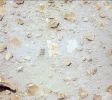
SOL0382-MF-EB-LXTT-IPF.jpg"Laser" effects on Morning "Frost" at Gale? - Sol 382 (Natural Colors; credits for the additional process. and color.: Elisabetta Bonora and Marco Faccin/Lunar Explorer Italia/Italian Planetary Foundation)120 visitenessun commentoMareKromiumSet 08, 2013
|
|

SOL0379-MF-EB-LXTT-IPF.jpgMorning "Frost" at Gale? - Sol 379 (Natural Colors; credits for the additional process. and color.: Elisabetta Bonora and Marco Faccin/Lunar Explorer Italia/Italian Planetary Foundation)114 visiteSia detto senza polemica, le immagini NASA in Natural, Approximately and Almost True/Natural Colors del Pavimento (Floor) di Gale Crater ci hanno abituato ad un giallo opaco, con pressocchè zero sfumature e zero colorazioni diverse. uUna colorazione - a parere di chi scrive - veramente innaturale.
Ma è davvero così? A noi, come Gruppo Lunexit/IPF, sembra poco credibile.
Ed il dubbio cresce di molto, una volta che si sia adottato lo stesso Image and Color Processing usato dalla NASA, ma ottenendo risultati RADICALMENTE differenti. Molti di Voi ricorderanno lo strato di "Brina" (---> Frost) che, tutto intorno al Viking Lander 2, caratterizzava la Pianura di Utopia, durante i lunghi mesi del gelido Inverno Marziano. Ora, perché escludere a priori che, anche all'interno del Cratere Gale, possano verificarsi delle "brinate"?
Ma siamo realmente sicuri che, negli strati più bassi dell'Atmosfera Marziana (a ridosso del suolo, praticamente), non vi sia del vapore acqueo che, ad alcune ore della giornata, congela e si deposita, colorando di bianco/grigio i rilievi giallastri dell'interno del Cratere Gale?
Ci hanno chiamati "complottisti" ed "incompetenti". Sarà anche così. Ma immagini come questa, NON "taroccate" e NON "alterate" in alcun modo, le quali ci fanno nascere dei legittimi dubbi e dunque ci fanno pensare (l'attività più ALTA - e meno usata... - dagli "umani), dove altro pensate di trovarle, se non qui?!? Quale Sito "Dedicato" e NON SCHIERATO, oltre a Lunar Explorer Italia, potete trovare sulla Rete?!?
Si, lo sappiamo: la NASA è la NASA. Ma l'Uomo, l'Essere Umano, con la sua Intelligenza e Capacità di discernimento e di critica, è sempre e comunque di più. Noi Vi offriamo il massimo che possiamo ottenere, con i nostri mezzi e le nostre capacità e competenze. E lo facciamo in Buona Fede, SEMPRE. Non Vi piace? Girate pagina. Ma se non sapete far nulla di realmente Vostro e di realmente valido, almeno evitate di criticare e di parlare a vanvera. Per favore. Lo diciamo per Voi, perché la "figura" che fanno i nostri (ignoti, incappucciati ed ignorantissimi) detrattori, è veramente patetica....MareKromiumSet 08, 2013
|
|

SOL0372-MH0305000000E1_DXXX-EB-MF-LXTT-IPF.jpgHorizon - Sol 372 (Natural Colors; credits for the additional process. and color.: Elisabetta Bonora and Marco Faccin/Lunar Explorer Italia/Italian Planetary Foundation)114 visitenessun commentoMareKromiumSet 08, 2013
|
|

SOL0368-MF-EB-LXTT-IPF.jpgHorizon - Sol 368 (Natural Colors; credits for the additional process. and color.: Elisabetta Bonora and Marco Faccin/Lunar Explorer Italia/Italian Planetary Foundation)109 visitenessun commentoMareKromiumSet 08, 2013
|
|

Titania-PIA01978-PCF-LXTT-IPF.jpgOn the Limb of Titania (Possible Absolute Natural Colors; credits for the additional process. and color. Dr Paolo C. Fienga/Lunar Explorer Italia/Italian Planetary Foundation)84 visiteLike their semi-divine namesakes, Dione's twin Impact Craters Romulus and Remus (just above-right of the center) stand together while Dido, the larger Impact Crater showing a magnificent and impressive Central Peak, lies to the South/East, on the lower left Limb of Dione and almost half-way on top of the Terminator. The lit Terrain seen here is on the Saturn-facing Hemisphere of Dione and North is up.
The image was taken in Visible Light with the NASA - Cassini Spacecraft Narrow-Angle Camera on April 28, 2013. The view was obtained at a distance of approximately 870.000 miles (such as a little more than 1,4 Million KiloMeters) from Dione and at a Sun-Dione-Cassini Spacecraft, or Phase, Angle of 77°. Image scale is roughly 5 miles (a little more than 8 Km) per pixel.
This frame (which is an Original NASA - Cassini Spacecraft b/w frame published on the NASA - Planetary Photojournal with the ID n. PIA 17126) has been additionally processed, contrast enhanced, magnified to aid visibility of the Surface details and then colorized, according to an educated guess carried out by Dr Paolo C. Fienga/LXTT/IPF, in what they should be its Absolute Natural Colors (such as the colors that a human eye would actually perceive if someone were onboard the NASA - Cassini Spacecraft and then looked outside, towards the Saturnian moon Dione), by using an original technique created - and, in time, dramatically improved - by the Lunar Explorer Italia Team. Different colors, as well as different shades of the same color, mean, among others, the existence of different Elements present on the Surface of Dione, each having a different Albedo (---> Reflectivity) and Chemical Composition.
Note: it is possible (but we, as IPF, have no way to be one-hundred-percent sure of such a circumstance), that the actual luminosity of Dione - as it is in this frame - would appear, to an average human eye, a little bit lower than it has been shown (or, better yet: interpreted) here.MareKromiumSet 08, 2013
|
|

Dione-PIA17126-PCF-LXTT-IPF.jpgRomulus and Friends (Absolute Natural Colors; credits for the additional process. and color.: Dr Paolo C. Fienga/Lunar Explorer Italia/IPF)65 visiteLike their semi-divine namesakes, Dione's twin Impact Craters Romulus and Remus (just above-right of the center) stand together while Dido, the larger Impact Crater showing a magnificent and impressive Central Peak, lies to the South/East, on the lower left Limb of Dione and almost half-way on top of the Terminator. The lit Terrain seen here is on the Saturn-facing Hemisphere of Dione and North is up.
The image was taken in Visible Light with the NASA - Cassini Spacecraft Narrow-Angle Camera on April 28, 2013. The view was obtained at a distance of approximately 870.000 miles (such as a little more than 1,4 Million KiloMeters) from Dione and at a Sun-Dione-Cassini Spacecraft, or Phase, Angle of 77°. Image scale is roughly 5 miles (a little more than 8 Km) per pixel.
This frame (which is an Original NASA - Cassini Spacecraft b/w frame published on the NASA - Planetary Photojournal with the ID n. PIA 17126) has been additionally processed, contrast enhanced, magnified to aid visibility of the Surface details and then colorized, according to an educated guess carried out by Dr Paolo C. Fienga/LXTT/IPF, in what they should be its Absolute Natural Colors (such as the colors that a human eye would actually perceive if someone were onboard the NASA - Cassini Spacecraft and then looked outside, towards the Saturnian moon Dione), by using an original technique created - and, in time, dramatically improved - by the Lunar Explorer Italia Team. Different colors, as well as different shades of the same color, mean, among others, the existence of different Elements present on the Surface of Dione, each having a different Albedo (---> Reflectivity) and Chemical Composition.
Note: it is possible (but we, as IPF, have no way to be one-hundred-percent sure of such a circumstance), that the actual luminosity of Dione - as it is in this frame - would appear, to an average human eye, a little bit lower than it has been shown (or, better yet: interpreted) here.MareKromiumSet 08, 2013
|
|

Miranda-PIA00042-PCF-LXTT-IPF.jpgMiranda's Southern Hemisphere (Possible Absolute Natural Colors; credits for the additional process. and color.: Dr Paolo C. Fienga/Lunar Explorer Italia/Italian Planetary Foundation)80 visiteThis image-mosaic of the Uranian moon Miranda was taken by the NASA - Voyager 2 Spacecraft on January 24, 1986, from a distance of approx. 147.000 Km (such as about 91.287 miles). This image-mosaic was constructed from images taken through the Spacecraft's Narrow-Angle Camera's Green, Violet and UltraViolet Filters.
Miranda, just about 480 Km (such as approx. 299 miles) across, is the smallest of Uranus' five Major natural satellites. Miranda's Regional Geologic Provinces are shown very well in this view of its Southern Hemisphere, imaged at a resolution of roughly 2,7 Km (such as 1,67 miles) per pixel. The dark- and bright-Banded Region with its curvilinear traces, covers about half of the frame. Higher-resolution pictures taken some time later showed many Fault Valleys and Ridges, all parallel to these "Bands". Near the Terminator Line (on the right - Dx), another system of Ridges and Valleys abuts the Banded Terrain; furthermore, many Impact Craters pockmark the Surface of Miranda all over this Region. The largest of these Craters are about 30 Km (approx. 18,63 miles) in diameter and many more of them lie in the range of 5 to 10 Km (such as from 3,1 to 6,2 miles) in diameter.
This frame (which is an Original NASA - Voyager 2 Spacecraft Natural Color image-mosaic published on the NASA - Planetary Photojournal with the ID n. PIA 00042) has been additionally processed, contrast enhanced, magnified to aid visibility of the Surface details and then re-colorized, according to an educated guess carried out by Dr Paolo C. Fienga/LXTT/IPF, in what they should be its Absolute Natural Colors (such as the colors that a human eye would actually perceive if someone were onboard the NASA - Voyager 2 Spacecraft and then looked outside, towards the Uranian moon Miranda), by using an original technique created - and, in time, dramatically improved - by the Lunar Explorer Italia Team. Different colors, as well as different shades of the same color, mean, among others, the existence of different Elements present on the Surface of Miranda, each having a different Albedo (---> Reflectivity) and Chemical Composition.
Note: it is possible (but we, as IPF, have no way to be one-hundred-percent sure of such a circumstance), that the actual luminosity of Miranda - as it is in this frame - would appear, to an average human eye, a little bit lower than it has been shown (or, better yet: interpreted) here.MareKromiumSet 08, 2013
|
|

Oberon-PIA01352-PCF-LXTT-IPF.jpgIcy Oberon (Absolute Natural Colors; credits for the additional process. and color.: Dr Paolo C. Fienga - Lunar Explorer Italia/Italian Planetary Foundation)71 visiteUranus' outermost and largest moon, Oberon, can be very well seen in this NASA - Voyager 2 frame which was obtained January, 22, 1986, from a distance of approx. 2,77 Million KiloMeters (such as a little more than 1,72 Million Miles). The Clear-Filter Image, shuttered by the Voyager's Narrow-Angle Camera, shows us that Oberon displays several distinct Highly Reflective (---> High-Albedo) "Patches" of its Surface which also show - and this circumstance still sounds kind of strange/unusual - very Low-Albedo Centers. Some of the bright Patches are suggestive of Radial Patterns that could represent the visible consequence of powerful Impact Events which occurred on a basically Ice-rich Surface (in other words, we may be looking at Rayed Impact Craters that formed - were excavated - on an extremely hard and frozen Surface) .
On average, Oberon reflects (in all directions) only about 20% (twenty-percent) of the Incident Sunlight and that fact makes it Celestial Body with a (relatively) Low Albedo. The moon is about 1600 Km (such as approx. 993,6 miles) in diameter; the resolution of this image is roughly 51 Km (such as about 31,67 miles) per pixel. This frame was taken 2 (two) days before Voyager's 2 Closest Approach to Oberon (at which point the Spacecraft flew-by Oberon at a distance of approx. 471.000 Km - such as about 292.491 miles - from its frozen Surface).
This frame (which is an Original NASA - Voyager 2 Spacecraft Natural Color image published on the NASA - Planetary Photojournal with the ID n. PIA 01352) has been additionally processed, contrast enhanced, magnified to aid visibility of the Surface details and then re-colorized, according to an educated guess carried out by Dr Paolo C. Fienga/LXTT/IPF, in what they should be its Absolute Natural Colors (such as the colors that a human eye would actually perceive if someone were onboard the NASA - Voyager 2 Spacecraft and then looked outside, towards the Uranian moon Oberon), by using an original technique created - and, in time, dramatically improved - by the Lunar Explorer Italia Team. Different colors, as well as different shades of the same color, mean, among others, the existence of different Elements present on the Surface of Oberon, each having a different Albedo (---> Reflectivity) and Chemical Composition.
Note 1: it is possible (but we, as IPF, have no way to be one-hundred-percent sure of such a circumstance), that the actual luminosity of Oberon - as it is in this frame - would appear, to an average human eye, a little bit lower than it has been shown (or, better yet: interpreted) here.
Note 2: the "squared" feature visible at about 4 o'clock of Oberon's disk (almost on the Limb of the moon and right on the Terminator Line), is just an original image defect.MareKromiumSet 08, 2013
|
|
| 25353 immagini su 2113 pagina(e) |
 |
|
|
|
|
73 | |
|
|
|
|
|
|





