| Ultimi arrivi |

White_Eagle.jpgThe Beauty of Nature...426 visitenessun commentoMareKromiumOtt 15, 2023
|
|
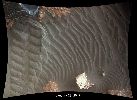
PIA21143_mardi_sand_movement.gifFunny-looking Sand Movements (GIF-Movie)328 visiteInteresting...MareKromiumOtt 15, 2023
|
|

New_Lunar_Crater.jpgManmade new Lunar Impact Crater: Luna 25180 visitenessun commentoMareKromiumOtt 15, 2023
|
|

ZZ-Falling_on_Saturn.jpgEnd of Mission (Artistic View)276 visitenessun commentoMareKromiumOtt 15, 2023
|
|

0000-Mars_from_Perseverance.jpgFree-fall on to Mars274 visiteLanding time...MareKromiumOtt 13, 2023
|
|

Comparisons.jpgComparisons246 visiteSun - Earth: the average diameter of the Sun is about 1,392,000 km, almost 109 times larger than the Earth (12,742 km). This means that we could put 109 Earths side by side to match the diameter of our star.
Stephenson 2-18 - Sun: the largest known star compared to the Sun. We are talking about a radius of 2,158 solar radii (solar radius equals 696,340 km). If we were to place it at the centre of our Solar System, its photosphere would engulf the orbit of Saturn, the lord of the rings.
Ton 618 - Stephenson 2-18: the largest known black hole compared to the largest star. Ton 618 has a diameter of 2606 astronomical units (1 astronomical unit is equivalent to the distance Earth - Sun or 150 million kilometres). To give a better idea, Saturn (used as a comparison before) is 10 astronomical units away from the Sun.
We are ants in the Universe!MareKromiumOtt 13, 2023
|
|
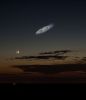
Andromeda.jpgIf our eyes were a CCD Camera... (Credits: Stephen Rahn - Tom Buckley-Houston)315 visiteThis is, of course, a photographic COMPOSITION, but the proportions are exact, and what we would see in the sky if the Andromeda Galaxy were bright enough, would be an object almost as wide as 7 full moons.
The Moon seen from Earth, in fact, occupies about half a degree in the sky. M31 on the other hand, over 2 million light years away, is over 3 degrees wide.MareKromiumOtt 08, 2023
|
|
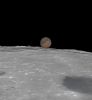
Mars_setting_from_the_Moon.jpg...Sinking behind the Moon...260 visiteMolto bella, ma ha un quid che non va. "Puzza" di falso (fatto BENISSIMO, ma falso).MareKromiumOtt 05, 2023
|
|
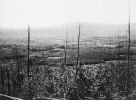
Tunguska_Crater_-_Russia.jpgTunguska (Russia)256 visiteCosa succede quando un meteorite fa breccia nell'atmosfera terrestre ma non colpisce il suolo ed esplode invece a mezz'aria? Questo e' esattamente quello che accadde nel 1908 vicino al fiume Podkamennaya Tunguska. Sebbene non sia visibile alcun cratere, l'esplosione ha appiattito circa 80 milioni di alberi su un'area di 2.150 km quadrati di foresta.MareKromiumSet 25, 2023
|
|
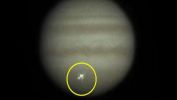
Cometary_Impact.jpgCometary Impact on Jupiter254 visitenessun commentoMareKromiumSet 25, 2023
|
|

South_African_Clouds.jpgRed Clouds (South Africa)227 visitenessun commentoMareKromiumSet 25, 2023
|
|
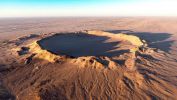
Earth_Impact_Craters_-_Tenoumer_Crater_-_Mauritaria.jpgTenoumer Crater (Mauritania - Western Sahara)189 visiteIl drammatico bordo quasi circolare del cratere Tenoumer e' una delle caratteristiche geologiche distintive del paesaggio desertico del Sahara occidentale della Mauritania. MareKromiumSet 25, 2023
|
|
| 25353 immagini su 2113 pagina(e) |
 |
|
|
|
|
7 | |
|
|
|
|





