| Ultimi arrivi |
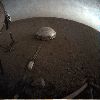
IN-SOL0145-22441_PIA23180_raw-web.gifLate Afternoon's Clouds over Elysium - Sol 145 (GIF-Movie)138 visiteCaption NASA:"NASA's InSight used its Instrument Context Camera (ICC) beneath the Lander's Deck to image these drifting clouds at Sunset. This series of images was taken on April 25, 2019, the 145th Martian Day, or Sol, of the mission, starting at around 6:30 p.m. M.L.T.".MareKromiumNov 15, 2019
|
|
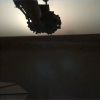
IN-SOL0145-22442_PIA23201_raw-web.jpgSunrise over Elysium Planitia - Sol 145174 visiteCaptionb NASA originale:"NASA's InSight Lander used its Instrument Deployment Camera (IDC) on the Spacecraft's Robotic Arm (RA) to image this Sunrise on Mars on April 24, 2019, the 145th Martian Day (or Sol) of the mission. This was taken around 05:30 a.m. Mars Local Time (M.L.T.).
This image accurately shows the panorama as a human eye would see it".MareKromiumNov 15, 2019
|
|
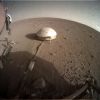
IN-SOL0332-raw_images_710846_site=insight.pngThe Sky over Elysium Planitia - Sol 332136 visiteCaption NASA originale:"NASA's InSight Mars lander acquired this image of the area in front of the Lander using its Lander-mounted, Instrument Context Camera (ICC).
This image was acquired on November 2, 2019, Sol 332 of the InSight mission where the Local Mean Solar Time for the image exposures was 12:40:35.305 PM. Each ICC image has a field of view of 124 x 124 degrees".MareKromiumNov 15, 2019
|
|
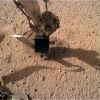
IN-SOL0343-raw_images_727399_site=insight.pngElysium's Floor - Sol 343139 visiteLo scopo di questo Lander, come ci spiega la stessa NASA, non é (ovviamente, solo) quello di ottenere delle "belle immagini" del Pianeta Rosso. Il fine é quello di studiare il Sottosuolo di Marte e le sue ettività (sismiche). Prendiamo atto.
Da notare, in questa immagine, la colorazione del Suolo: diremmo rosa pallido, molto simile (ma forse un pò più chiaro) al Landing Site di Phoenix (Vastitas Borealis).
Caption NASA:"NASA's InSight Mars lander acquired this image using its Robotic Arm (RA)-mounted, Instrument Deployment Camera (IDC).
This image was acquired on November 13, 2019, Sol 343 where the Local Mean Solar Time was 07:50:40.196 AM. Each IDC image has a field of view of 45 x 45 degrees".MareKromiumNov 15, 2019
|
|

AA-Mars_Always.jpgCongratulations!152 visiteSu Marte, come sospettavamo da molti anni, esiste attività Sismica (forse "Residuale"), molto probabilmente Vulcanica (idem), sembra esserci una "Qualche Forma di Vita" (!!!) e, last but not least, ci hanno pure fatto ascoltare - grazie ai microfoni posizionati sul Lander In-Sight (NASA) - il suono del "Vento di Marte".
Tutto Bellissimo!
Peccato che, con mezzi ENORMEMENTE inferiori, c'eravamo arrivati anche noi, con paziente e quasi "certosino" lavoro di analisi forografica e dei Dati Pubblici, da oltre dieci anni (a proposito, fu il nostro Socio Storico, Marco Faccin, a notare che di "microfoni" ce ne sono anche su altri Lander....).
Ora ho pure scoperto che il Nostro Sito é sparito dai "Collegamenti Esterni" di Wikipedia, a vantaggio di un altro, gestito da una "vecchia conoscenza".
Bene: molto bravo Lui (Onore a chi vince) e fesso io (o noi, se volete).
Che soddisfazione: gli anni passano, ma la Metodologia "Premiante", in Italia, proprio non cambia mai. Ma va bene così: tanto, chi ha fatto, sa di aver fatto.
E chi ha...fatto altro..., ne é pure consapevole.
E tanto mi basta.
Dr Paolo C. Fienga (PhD)MareKromiumNov 13, 2019
|
|

Marsorbitsolarsystem.gifEarth and Mars: the Orbital motion149 visiteUna GIF molto interessante e ben fatta che illustra con chiarezza come mai un Anno Marziano equivale, sostanzialmente, a due Anni Terrestri (in effetti, il Periodo di Rivoluzione di Marte intorno al Sole dura - circa - 687 Giorni Terrestri).MareKromiumNov 13, 2019
|
|

Comet_Borisov_-_GIF_3.gifFrom far away: the Comet Borisov through the Solar System (GIF-Movie)287 visiteGuardate bene! EccoVi la differenza (REALE ed IN FATTO) tra un Fly-By and uno Swing-By...E senza dimenticare "Oumuamua"!
As the first known object of its type, Oumuamua presented a unique case for the International Astronomical Union (IAU, for short), which assigns designations for astronomical objects. Originally classified as comet C/2017 U1, it was later reclassified as Asteroid A/2017 U1, due to the absence of a coma (--> "Chioma", in Italian).
Once it was unambiguously identified as coming from outside the Solar System, a new designation was created.
The name comes from the Hawaiian word "oumuamua", meaning 'scout' (from ou, meaning 'reach out for', and mua, reduplicated for emphasis, meaning 'first, in advance of', and reflects the way this object is like a scout or messenger sent from the distant past to reach out to Humanity.
It roughly translates to 'first distant messenger' (or "The First Messenger from the distance").
Before the official name was decided upon, the name "Rama" was suggested by the name given to an Alien Spacecraft discovered under similar circumstances in the 1973 science fiction novel "Rendezvous with Rama", by Sir Arthur C. Clarke.MareKromiumNov 10, 2019
|
|

Comet_Borisov_-_GIF.gifFrom far away: Comet Borisov (GIF-Movie)121 visitenessun commentoMareKromiumNov 10, 2019
|
|

Comet_Borisov_-_Still.pngFrom far away: Comet Borisov141 visiteDa un altro Sistema, dallo Spazio Interstellare, da "altrove".... La "Cometa" Borisov attraverserà il nostro Sistema Solare così come una Rondine attraversa il nostro campo visivo in un luminoso giorno di Primavera.
Da dove viene? Dove va?
... Ma che importa, alla fine?!?.....MareKromiumNov 10, 2019
|
|

Voyager_2.jpgVoyager 2: Citizen of the Universe169 visiteLanciata 42 anni fa la Sonda Voyager 2 è diventata il secondo oggetto costruito dall’uomo (dopo la sonda Voyager 1) a lasciare il sistema solare (o meglio l’Eliosfera ossia la zona influenzata dai venti solari) e sta viaggiando nello spazio interstellare. A certificarlo, sulle pagine di Nature Astronomy, sono stati i ricercatori dell’università dell’Iowa, che hanno registrato il debole ma preciso segnale trasmesso “dall’altra parte” ossia da oltre il confine invisibile che segna la fine del sistema solare. Il fatto che Voyager abbia attraversato il sistema solare ci fornisce dati preziosi sulla formazione dell’eliosfera e, si presume, ci fornirà dati ancor più importanti in merito a quel che c’è oltre il sistema solare, nello spazio inesplorato, visto che si stima che, senza incidenti, le sonde Voyager e Voyager 2 potranno continuare il loro viaggio potenzialemente per altri 5 miliardi di anni, ossia, potenzialmente per sempre.MareKromiumNov 06, 2019
|
|
OPP-SOL4406-1N519329440EFFCQK0P1787L0M1.jpgSo it looks like.... - Sol 4406108 visiteMarte cambia sempre, eppure - guardando frames che ci (ri)portano alla memoria "L'Alba di Opportunity", tutto sembra sempre uguale. Ma sarà davvero così?!?...
Forse. O forse no.
Comunque la qualità delle immagini del MER Opportunity, oltre le "Garanzie" (di fabbricazione) e le dette e ripetute "Ottimistiche Previsioni" degli Scienziati che seguono questa Missione da anni, é sempre piuttosto alta. Complimenti!MareKromiumOtt 26, 2019
|
|
OPP-SOL4610-1N537447055EFFCUGPP1954R0M1.jpgOutcrops and Ouposts... - Sol 4610108 visitenessun commentoMareKromiumOtt 26, 2019
|
|
| 25353 immagini su 2113 pagina(e) |
 |
|
|
|
|
62 | |
|
|
|
|





