| Ultimi arrivi |

162173-Ryugu-003.jpg162173 Ryugu - What a Shadow!!!109 visitenessun commentoMareKromiumGen 21, 2020
|
|

162173-Ryugu-005.jpg162173 Ryugu - From the Surface113 visitenessun commentoMareKromiumGen 21, 2020
|
|

162173-Ryugu-006.jpg162173 Ryugu99 visite...ma non Vi sembra di aver già visto qualcosa del genere?!?... Osservate BENE!!!...MareKromiumGen 21, 2020
|
|

162173-Ryugu-020.png162173 Ryugu - Orbital Pattern124 visiteNella Nomenclatura Ufficiale, 162173 Ryugu è un Asteroide appartenente alla cosiddetta "Classe Apollo" (ossia una serie di Asteroidi prossimi alla Terra - Near-Earth - caratterizzati da un'orbita avente un Semiasse Maggiore superiore ad una U.A. - Unità Astronomica, e cioé la distanza media fra la Terra ed il Sole, vale a dire circa 150 MKM) ed un Perielio inferiore ad 1,017 U.A.
Scoperto nell'AD 1999, Ryugo presenta un'orbita caratterizzata da un Semiasse Maggiore pari a 1,189 U.A. e da un'eccentricità di 0,190, inclinata di 5,88405° rispetto all'Eclittica.
Le sue caratteristiche orbitali lo qualificano come "oggetto potenzialmente pericoloso" per la Terra ed esso è stato selezionato come obiettivo della missione Hayabusa 2 della JAXA, la quale prevede di recuperare alcuni campioni dall'Asteroide e riportarli sulla Terra. MareKromiumGen 21, 2020
|
|

Neptune-PIA21629.jpgNeptune from the Saturnian Sky (Natural Colors; credits: NASA/JPL-Caltech/Space Science Institute)120 visiteCaption NASA:"On August 25, 1989, NASA's Voyager 2 made its historic Fly-By of Neptune and its largest moon, Triton. The Cassini Spacecraft took this image to celebrate the anniversary of that event.
Neptune appears in this Natural Color composite as a pale blue disk (similar to Cassini's image of Uranus from 2014), just below and to the right of image center. Most of the faint specks in the image are background stars, although some are likely Cosmic Rays (charged particles that strike the camera detector).
By imaging Neptune, Cassini's Solar System family portrait-taking is complete. The Mission's Planetary Photojournal includes all of the major Planets except Mercury, which is too close to the Sun to be imaged, as well as dwarf planet Pluto.
This view was acquired by the Cassini narrow-angle camera on Aug. 10, 2017, at a distance of approximately 2,72 Billion Miles (such as approx. 4,38 BKM) from Neptune. Red, blue and green filter images were combined to create this Natural Color image".MareKromiumGen 20, 2020
|
|

ZZZ-Mercury-PIA19448.jpgFarewell Messenger!....129 visiteCaption NASA:"Originally planned to orbit Mercury for one year, the mission exceeded all expectations, lasting for over four years and acquiring extensive datasets with its seven scientific instruments and radio science investigation. This afternoon, the Spacecraft succumbed to the pull of Solar Gravity and impacted Mercury's Surface.
The image shown here is the last one acquired and transmitted back to Earth by the mission. The image is located within the Floor of the roughly 93-Km-diameter Impact Crater named "Jokai". The Spacecraft struck the Planet just north of Shakespeare Basin".
Date acquired: April 30, 2015
Image Mission Elapsed Time (MET): 72716050
Image ID: 8422953
Instrument: Narrow Angle Camera (NAC) of the Mercury Dual Imaging System (MDIS)
Center Latitude: 72,0° North
Center Longitude: 223,8° East
Resolution: 2,1 meters/pixel
Scale: This image is about 1 Km across
Solar Incidence Angle: 57,9° (meaning that the Sun was 32,1° high on the Local Horizon)
Emission Angle: 56,5°
Phase Angle: 40,7°MareKromiumGen 20, 2020
|
|

ZZZ-Mercury-PIA19445.jpgReady to say "Farewell"....94 visiteCaption NASA:"This image, acquired on April, 29th, 2015, is one of MESSENGER's last. On April 30th, the Spacecraft will complete its highly successful orbital mission and impact the Surface of Mercury.
Impact was expected at 19:26:02 UTC (3:26:02 pm EDT) but will occur out of sight and communication with the Earth. The MESSENGER Team will try to establish communications with the Spacecraft when its orbit would allow it to be visible from Earth. The inability to establish communications between MESSENGER and the scheduled Earth-based tracking antenna will provide the first confirmation that the Spacecraft has impacted the Surface. After about 30 minutes following the predicted Mercury Impact Time, the Team plans to announce whether MESSENGER's orbital mission has come to an end".
Date acquired: April 29, 2015
Image Mission Elapsed Time (MET): 72595737
Image ID: 8414772
Instrument: Narrow Angle Camera (NAC) of the Mercury Dual Imaging System (MDIS)
Center Latitude: 69.46° North
Center Longitude: 229,49° East
Resolution: 1,7 meters/pixel
Scale: The largest crater in this image has a diameter of about 330 meters.MareKromiumGen 20, 2020
|
|

IN-SOL0333-PIA23512.jpgMan-made Martian Shadow - Sol 333109 visiteCaption NASA:"The shadow of NASA InSight's Robotic Arm (or "R.A." for short) moves over its Heat Probe, or "Mole," on Nov. 3, 2019, the 333rd Martian Day, or Sol, of the mission".
Nota: guardate i colori della Superficie in questa immagine ("Naturali", ossia "Autentici", "come li vedrebbe un Essere Umano", secondo la NASA) e poi guardate quelli dell'immagine ottenuta 10 Soles più tardi. Anche questi ultimi dovrebbero essere sempre "Naturali".
Vi sembrano identici?
InSight, come sapete, NON si muove. Potrebbe essere un effetto dell'illuminazione solare (qui il Sole é più alto rispetto al frame del Sol 343). Oppure noi abbiamo le idee confuse sui "Colori" della Superficie di Elysium (e può pure essere, ci mancherebbe).MareKromiumGen 20, 2020
|
|

ZZ-ZZ-ZZ-ZZ-ZZ-ZZ-ZZ-ZZ-ZZ-Pluto-PIA21863.jpgFlying over Pluto...72 visiteNote: the topographic reliefs visible here have been exaggerated by a factor of 2 to 3 to emphasize topography; the Surface colors have also been enhanced to bring out detail. Digital mapping and rendering were performed by Paul Schenk and John Blackwell of the Lunar and Planetary Institute in Houston".
MareKromiumGen 20, 2020
|
|

ZZZ-Mercury-PIA19424.jpg86 visiteCaption NASA:"The MESSENGER Spacecraft sent this frame back to Earth after the it emerged from Superior Solar Conjunction, when the communication is largely blocked by the Sun. This is one of our last views of Mercury from MESSENGER. Featured here is the Ejecta Blanket of a (relatively) fresh Unnamed Impact Crater located just outside the scene. Ejecta scoured the Surface leaving behind beautiful patterns of Secondary Impact Craters".
Date acquired: April 16, 2015
Image Mission Elapsed Time (MET): 71544702
Image ID: 8343072
Instrument: Narrow Angle Camera (NAC) of the Mercury Dual Imaging System (MDIS)
Center Latitude: 55,67° North
Center Longitude: 97,37° East
Resolution: 19,9 meters/pixel
Scale: This scene is approximately 20 Km acrossMareKromiumGen 20, 2020
|
|

APOLLO_11_AS_11-37-5455HR-0.jpgAS 11-37-5455 - Flare-like Light? (CTX Frame)133 visiteArgomento ed immagine già viste e riviste, ma sembra che non bastino mai le "spiegazioni".... Ed allora, per favore, leggete il commento al frame che segue.MareKromiumGen 17, 2020
|
|
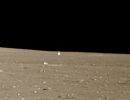
APOLLO_11_AS_11-37-5455HR-1.jpgAS 11-37-5455 - Flare-like Light? (EDM)166 visite..."Highly reflective boulder", venne definito da un Tecnico NSSDC da me interpellato, oltre 15 anni fa.
In altre parole: una "roccia ad alta riflettenza". Ok. Ma che emette un "fascio di Luce blu" e "sparisce" nel frame successivo, scattato a 3 secondi di distanza????
E poi, qualche imbecille, é pure venuto a dirmi - scrivermi, anonimamente, come ovvio... - che erano "cassiate cosmiche"....
Ma aprite gli occhi e guardate: questo è "il piccolo oggetto strano che sembra una fiaccola" descritto da Armstrong in "live from the Moon"! Poi, per carità, se vedete Paperino, Topolino o chissà cosa (probabilmente nulla), ci sta. Ma non venite a dirmi che é un image-artifact od un macigno che brilla al Sole, please....MareKromiumGen 17, 2020
|
|
| 25353 immagini su 2113 pagina(e) |
 |
|
|
|
|
56 | |
|
|
|
|





