| |
| Ultimi arrivi |
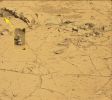
SOL0753-ML0032370000400001E01_DXXX-000.jpgSol 753 - What is "That"?!?132 visiteImmagine (secondo me straordinaria!) segnalata dal Nostro Amico e Partner, Lorenzo Leone, con Anomalia di Superficie identificata da sconosciuti.
In altre parole, come bene ha detto Lorenzo, "non é farina del nostro sacco".
Certo é che si tratta di una Surface Feature davvero peculiare ed assai difficile da spiegarsi razionalmente.... O no?!?MareKromiumGen 29, 2020
|
|

WASP12_b-PIA22565.jpgWASP 12b15061 visiteQuest'oggi, intorno alle ore 22:15 CET, mia Madre, Jolanda Guerra, Istriana, Profuga, ex- Assistente Sociale, nata a San Lorenzo di Albona il 27 Settembre 1928, é defunta a Mandello del Lario (LC), dopo lunga sofferenza.
Non mi piacciono le parole, ma i fatti.
Cercherò di OnorarLa, sin dove posso e come posso. Era molto Credente, come me. Più di me.
Che Dio, Suo Marito e Mio Padre, Ugo, i Suoi Genitori, Leone Guerra e Giovanna Bresaç, ed i Suoi Fratelli e Sorelle, La accolgano come si conviene.
Amen.MareKromiumGen 25, 2020
|
|

APOLLO_11_AS_11-37-5455HR-2.jpgAS 11-37-5455 - Flare-like Light? (SDM)1124 visite...difficile dire che si tratti di un "macigno ad alta riflettenza (Albedo)"... Molto difficile.
E se qualcuno parlasse di image-artifact, allora vorrebbe dire che di immagini non capisce proprio nulla. Gli image-artifacts sono un'altra cosa. Gli image-artifacts sono semplici "difetti" (dell'immagine), ossia un qualcosa di profondamente differente da quanto vediamo qui. E ne abbiamo un lungo ed ampio Album ad essi relativo.
...It is very hard to say that we are looking at a "highly reflective boulder"... Really hard.
And if anybody would wish to talk about an image-artifact, then it would mean that such an individual understands really nothing. Nothing at all. The Image-artifacts are just "defects" (of the frame), and therefore something deeply different from what we are watching here. And we do have a huge Album which talks about - and shows many of - them.MareKromiumGen 25, 2020
|
|

Titan-PIA22481-1.jpgThe Great Seas and Lakes of Titan177 visiteCaption NASA:"During NASA's Cassini mission's final distant encounter with Saturn's giant moon Titan, the Spacecraft captured this view of the truly enigmatic moon's North Polar landscape of Lakes and Seas, which are filled with liquid Methane and Ethane.
Punga Mare (about 240 miles, or approx. 386,2 Km, across) is seen just above the center of the mosaic, with Ligeia Mare (roughly 300 miles, or about 48,3 Km, wide) below center and vast Kraken Mare stretching off 730 miles (such as approx. 1.174,8 Km) to the left of the mosaic. Titan's numerous smaller and still Unnamed Lakes can be seen around the seas and scattered around the right side of the mosaic. Among the ongoing mysteries about Titan is how these Seas and Lakes are formed.
Another mystery at Titan has been the weather. With its extremely dense Atmosphere, Titan has a Methane Cycle much like Earth's Water Cycle of evaporation, cloud formation, rainfall, surface runoff into Rivers, and collection in Lakes and Seas.
During Titan's Southern Summer, the Cassini Spacecraft also observed Cloud activity over the South Pole.
However, typical of observations taken during Northern Spring and Summer, the view here reveals only a few small clouds. They appear as bright features just below the center of the mosaic, including a few above Ligeia Mare.
The images in this mosaic were taken with the ISS Narrow-Angle Camera, using a spectral filter sensitive to wavelengths of Near-InfraRed Light centered at 938 nanometers.
They were captured on Sept. 11, 2017, during Cassini's last encounter with Titan. Four days later, Cassini was deliberately plunged into the Atmosphere of Saturn.
The view was obtained at a distance of approximately 87.000 miles (a little less than 140,013 Km) from Titan. Image scale is about 0,5 miles (approx. 800 meters) per pixel.
The image is an Orthographic Projection centered on 67,19° North Latitude and 212,67° West Longitude.
Note: an Orthographic View is most like the view seen by a distant observer looking through a telescope".MareKromiumGen 23, 2020
|
|

Atlas,_Daphins_and_Pan-PIA21449.jpgAtlas, Daphnis and Pan157 visiteCaption NASA:"This montage of views from NASA's Cassini Spacecraft shows three of Saturn's Small Ring moons: Atlas, Daphnis and Pan at the same scale for ease of comparison.
Two differences between Atlas and Pan are obvious in this montage. Pan's Equatorial Band is much thinner and more sharply defined, and the central mass of Atlas (the part underneath the smooth Equatorial Band) appears to be smaller than that of Pan.
All of these images were taken using the Cassini Spacecraft Narrow-Angle Camera. The images of Atlas were acquired on April 12, 2017, at a distance of about 10.000 miles (approx. 16,0093 Km) and at a Sun-moons-Spacecraft angle (or Phase Angle) of 37°. All three images are oriented so that North is up".MareKromiumGen 23, 2020
|
|

Saturn-PIA21895.jpgFarewell Cassini...148 visiteCaption NASA:"This Natural Color view view is the last image taken by the imaging cameras on NASA's Cassini Spacecraft. It looks toward the planet's night side, lit by reflected light from the Rings, and shows the location at which the Spacecraft would enter the Planet's Atmosphere a few hours later.
ThE view was created by using images taken with red, green and blue spectral filters. The imaging cameras obtained the view at approximately the same time that Cassini's Vsual and InfraRed Mapping Spectrometer made its own observations of the impact area in the thermal infrared.
This location - the site of Cassini's atmospheric entry - was at this time on the night side of the Planet, but would rotate into daylight by the time Cassini made its final dive into Saturn's Upper Atmosphere, ending its remarkable 13-year exploration of Saturn.
The view was acquired on Sept. 14, 2017 at 19:59 UTC (spacecraft event time). The view was taken in Visible Light using the Cassini Spacecraft Wide-Angle Camera at a distance of about 394.000 miles (such as roughly 634.081 Km) from Saturn. Image scale is about 11 miles (about 17,7 Km). The original image has a size of 512 x 512 pixels".MareKromiumGen 23, 2020
|
|

Titan-PIA21624.jpgDouble Titan141 visiteCaption NASA:"These two views of Saturn's moon Titan exemplify how NASA's Cassini Spacecraft has revealed the Surface of this fascinating world.
Cassini carried several instruments to pierce the veil of hydrocarbon haze that enshrouds Titan. These include the Spacecraft's Radar and the Visual and InfraRed Mapping Spectrometer, or VIMS. The mission's imaging cameras also have several spectral filters sensitive to specific wavelengths of InfraRed Light that are able to make it through the Haze to the Surface and back into space. These "spectral windows" have enable the imaging cameras to map nearly the entire surface of Titan.
In addition to Titan's Surface, images from both the imaging cameras and VIMS have provided windows into the moon's ever-changing Atmosphere, chronicling the appearance and movement of Hazes and Clouds over the years. A large, bright and feathery band of Summer Clouds can be seen arcing across high Northern Latitudes in the view at right (Dx).
These views were obtained with the Cassini Spacecraft Narrow-Angle Camera on March 21, 2017. Images taken using red, green and blue spectral filters were combined to create the Natural-Color View on the left (Sx).
The false-color view at right (Dx) was made by substituting an InfraRed image (centered at 938 nanometers) for the red color channel.
The views were acquired at a distance of approx. 613.000 miles (such as a little more than 986.000 Km) from Titan and the Image Scale is roughly 4 miles (such as approx. 6,437 Km) per pixel".MareKromiumGen 23, 2020
|
|

Saturn-PIA21903-01.jpgThe End....115 visitenessun commentoMareKromiumGen 23, 2020
|
|

Saturn-PIA21903-00.jpgThe End....106 visiteCaption NASA originale:"This view of Saturn looks toward thePplanet's Night Side, only lit by Sunlight reflected from the Rings.
A mosaic of some of the very last images captured by Cassini's cameras, shows the location where the Spacecraft would have entered the Planet's Atmosphere a few hours later. An annotated view (see the next frame) marks the entry site with an oval. While this area was on the Night Side of the Planet at the time, it would rotate into daylight by the time Cassini made its final dive into Saturn's Upper Atmosphere, ending its remarkable 13-year exploration of Saturn.
Images taken using red, green and blue spectral filters were combined to show the scene in Near Natural Colors. The images were taken with Cassini's wide-angle camera on Sept. 14, 2017, at a distance of approx. 394.000 miles (such as a little more than 634.000 Km) from Saturn.
The Cassini spacecraft ended its mission on Sept. 15, 2017".MareKromiumGen 23, 2020
|
|

162173-Ryugu-000.jpg162173 Ryugu115 visiteLe caratteristiche superficiali di questo Asteroide della "Classe Apollo" lo rendono incredibilmente simile ad ALMENO altri due Asteroidi che ben conosciamo: 25143 Itokawa e 101955 Bennu. Tutti (almeno in teoria...) formatisi per "aggregazione gravitazionale di corpuscoli".
Interessanti, per tanti motivi. Ma soprattutto perché sono, di fatto, degli Asteroidi quasi completamente identici: nessun Cratere da Impatto e Boulders "enormi" ben visibili nelle loro immagini di profilo (tipo "Skyline").
A questo punto bisogna ammettere che i Tecnici della JAXA (l'Agenzia Spaziale Giapponese) hanno un "occhio" ed una "mira" davvero eccezionali! Chissà, oltre le dichiarazioni di facciata, che cosa stanno cercando... Volete un'ipotesi? Magari l'Origine della Vita sulla Terra. Oppure le modalità attraverso le quali questi Asteroidi non solo si formano, ma poi "sopravvivono", nonostante la loro "fragilità", alle Onde Gravitazionali (vedi: Limite di Roche) ed alle Ere (e qui parliamo di miliardi di anni).MareKromiumGen 21, 2020
|
|
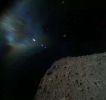
162173-Ryugu-001.jpg162173 Ryugu - Sunlit, and almost Sunstruck...117 visitenessun commentoMareKromiumGen 21, 2020
|
|

162173-Ryugu-002.jpg162173 Ryugu - Wow! The shadow of Hayabusa 2120 visitenessun commentoMareKromiumGen 21, 2020
|
|
| 25353 immagini su 2113 pagina(e) |
 |
|
|
|
|
55 | |
|
|
|
|
|
|





