| Ultimi arrivi |

SOL-0001-25622_1_-_PIA24422_-_Navcam_360_-_Maki_7_Navcam_360_08_N_LRGB_0002_RAS_0010052_CYL_S_UNCORCLJ01-stretched-v2.pngSol 1 - Panorama128 visiteCaption NASA:"This panorama, taken on Feb. 20, 2021, by the Navigation Cameras, or NavCams, aboard NASA’s Perseverance Mars Rover, was stitched together from six individual images after they were sent back to Earth.
A key objective for Perseverance’s Mission on Mars is Astrobiology, including the search for signs of ancient microbial life.
The Rover will characterize the planet’s geology and past climate, pave the way for human exploration of the Red Planet, and be the first mission to collect and cache Martian rock and regolith.
Subsequent missions, currently under consideration by NASA in cooperation with ESA (European Space Agency), would send spacecraft to Mars to collect these cached samples from the surface and return them to Earth for in-depth analysis.
The Mars 2020 Perseverance mission is part of NASA’s Moon to Mars exploration approach, which includes Artemis missions to the Moon that will help prepare for human exploration of the Red Planet".MareKromiumFeb 24, 2021
|
|

SOL-0004-NLM_0004_0667310972_991ECM_N0010052AUT_04096_00_2LLJ01.pngSol 4 - Setting Sun over Jazero Crater105 visiteCaption NASA Original:"NASA's Mars Perseverance Rover acquired this image using its onboard Left Navigation Camera (NavCam).
The camera is located high on the Rover's Mast (Master Antenna) and aids in driving. This image was acquired on Feb. 23, 2021 (Sol 4) at the local mean solar time of 16:40:58".MareKromiumFeb 24, 2021
|
|

SOL-0001-FLR_0000_0666952977_663ECM_T0010044AUT_04096_00_2I3J01_1200.jpgSol 1 - First look at Jazero Crater120 visiteNASA's Mars Perseverance Rover acquired this image of the area in front of it using its onboard Front Left Hazard Avoidance Camera A.
This image was acquired on Feb. 18, 2021 (Sol 0) at the Local Mean Solar Time of 15:53:58.MareKromiumFeb 20, 2021
|
|

SOL-0000-MPR-25610_PIA24270-HiRISE-touchdown-annotated-1200.jpgSol 0 - Perseverance's Landing inside Jazero Crater119 visite"Welcome to Jezero Crater". The crater was once home to a lake and will allow the rover to look for signs of ancient microbial life on the currently inhospitable planet.
"Inhospitable"? Are we sure?!?...MareKromiumFeb 20, 2021
|
|
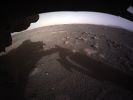
SOL-0001-MPR-25612_PIA24430-panorama-1200.jpgSol 1 - Pale Blue Sky over Perseverance?151 visiteImmagine NON ritoccata. Il Cielo di Marte non mi sembra di quel solito "giallo-ocra" uniforme e piatto...MareKromiumFeb 20, 2021
|
|

Tethys.pngTethys and the Sun (possible Natural Colors; credits for the additional process. and color.: Marco Faccin and E. Bonora)109 visitenessun commentoMareKromiumFeb 10, 2021
|
|

SOU-SOL039-11.jpgLook at that!!! (Part I) - 05:13 Mars Local Time, Clouds 10° above the Local Horizon122 visiteCaption NASA originale:"These are more wispy blue clouds from Sol 39 as seen by the Imager for Mars Pathfinder. The bright clouds near the bottom are about 10° above the horizon. The clouds are believed to be at an altitude of 10 to 15 Km and are thought to be made of small water ice particles. The picture was taken about 40 minutes before Sunrise".
Vero o falso? Passiamo alla Part II.MareKromiumFeb 10, 2021
|
|
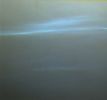
SOU-SOL039-12.jpgLook at that!!! (Part II) - 05:13 Mars Local Time, clouds 30° above the Local Horizon146 visiteCaption NASA originale:"This true color image shows the eastern sky, 30° above the horizon at 05:13 MLT on Sol 39. The bright streaks are probably ice clouds which have formed during the night. In the true colour image, the clouds appear to be blue compared to the background. This is a real effect. Unlike the red dust, the clouds are almost invisible at infrared wavelengths.
The clouds are also moving. In order to create this image, the individual, single color, data frames have had to be shifted with respect to each other. The motion indicates that the clouds are moving from the north-east to the South-West".
ATTENZIONE: questa immagine non è altro che il medesimo frame, da noi rubricato come "Look at that!!! (Part I)", capovolto e con filtro/colore modificato, passando dal Rosso/Rosa/Arancio al Verde/Azzurro! Ebbene, grazie all'attenzione che poniamo nell'analisi dei frames, questa volta la NASA può solo nascondersi: li abbiamo beccati! E, se ancora non foste convinti, andate a vedere il frame che segue il quale altro non è se non la sovrapposizione dei frames I e II.
La NASA avrà anche i mezzi, ma ha MENTITO SPUDORATAMENTE per ANNI! E sapete queal'è la cosa che più ci meraviglia? Ma come abbiamo fatto a non accorgerci prima di una simile mistificazione?MareKromiumFeb 10, 2021
|
|

SOU-SOL039-13.jpgLook at that!!! (Part III)164 visiteFine dell'investigazione.
Sol 39 della Sonda Soujourner-Pathfinder: i primi due frames - che, secondo la NASA - sono due frames DIVERSI e si riferirebbero a periodi DIVERSI del giorno Marziano (o "Sol"), sono, in vero, lo STESSO frame, a colori mutati (uno, il primo, che tende al rosa e l'altro al blu-verde) e poi capovolti.
Sovrapponendoli, la "furbata" salta fuori.
E allora? Chi sono i "Complottisti"??? Quelli che sparano a caso ed a prescindere, o quelli che esaminano, vedono e poi smascherano la più grande Agenzia Spaziale del Mondo? Noi abbiamo beccato la NASA a mentire, pure spudoratamente. Ed i Complottisti saremmo noi??? E la NASA, allora, cos'é?MareKromiumFeb 10, 2021
|
|

Dark_Matter~0.jpgDark Matter138 visiteDark matter is a form of matter thought to account for approximately 85% of the matter in the universe and about a quarter of its total mass–energy density or about 2.241×108722,27 kg/m3. Its presence is implied in a variety of astrophysical observations, including gravitational effects that cannot be explained by accepted theories of gravity unless more matter is present than can be seen. For this reason, most experts think that dark matter is abundant in the universe and that it has had a strong influence on its structure and evolution. Dark matter is called dark because it does not appear to interact with the electromagnetic field, which means it does not absorb, reflect or emit electromagnetic radiation, and is therefore difficult to detect.
Primary evidence for dark matter comes from calculations showing that many galaxies would fly apart, or that they would not have formed or would not move as they do, if they did not contain a large amount of unseen matter. Other lines of evidence include observations in gravitational lensing and in the cosmic microwave background, along with astronomical observations of the observable universe's current structure, the formation and evolution of galaxies, mass location during galactic collisions and the motion of galaxies within galaxy clusters. In the standard Lambda-CDM model of cosmology, the total mass–energy of the universe contains 5% ordinary matter and energy, 27% dark matter and 68% of a form of energy known as dark energy. Thus, dark matter constitutes 85% of total mass, while dark energy plus dark matter constitute 95% of total mass–energy content.
Because dark matter has not yet been observed directly, if it exists, it must barely interact with ordinary baryonic matter and radiation, except through gravity. Most dark matter is thought to be non-baryonic in nature; it may be composed of some as-yet undiscovered subatomic particles. MareKromiumGen 29, 2021
|
|

Comet_Oumuamua-2.jpgOumuamua (large)155 visiteQuesto è l'ingrandimento dell'immagine profonda di prima. Sempre al centro, l'asteroide interstellare "Oumuamua", circondato dalle tracce di stelle deboli prodotte poichè il telescopio insegue l'asteroide in movimento (rispetto alla stelle cosiddette "fisse"). L'immagine è ottenuta combinando numerose immagini del VLT (Very Large Telescope) dell'ESO e del telescopio Gemini South. L'oggetto è indicato con un cerchio blu e appare come una sorgente puntiforme, senza polvere diffusa.MareKromiumGen 21, 2021
|
|

Comet_Oumuamua-1.jpgOumuamua116 visiteQuesta immagine profonda mostra, al centro, l'asteroide interstellare "Oumuamua", circondato dalle tracce di stelle deboli prodotte poichè il telescopio insegue l'asteroide in movimento (rispetto alla stelle cosiddette "fisse"). L'immagine è ottenuta combinando numerose immagini del VLT (Very Large Telescope) dell'ESO e del telescopio Gemini South. L'oggetto è indicato con un cerchio blu e appare come una sorgente puntiforme, senza polvere diffusa.MareKromiumGen 21, 2021
|
|
| 25353 immagini su 2113 pagina(e) |
 |
|
|
|
|
47 | |
|
|
|
|





