| Ultimi arrivi |

Luna-19.jpgThe "Dark Side of the Moon": Antenna MAST131 visitenessun commentoMareKromiumOtt 04, 2022
|
|

Luna-18.jpgThe "Dark Side of the Moon": on the edge...108 visitenessun commentoMareKromiumOtt 04, 2022
|
|

Luna-17.jpgThe "Dark Side of the Moon": Horizon103 visitenessun commentoMareKromiumOtt 04, 2022
|
|

Luna-15.jpgThe "Dark Side of the Moon": Surface and small Craters91 visitenessun commentoMareKromiumOtt 04, 2022
|
|
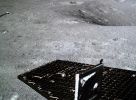
Luna-14.jpgThe "Dark Side of the Moon": approaching the (Relatively small) Impact Crater92 visitenessun commentoMareKromiumOtt 04, 2022
|
|
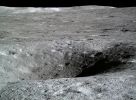
Luna-13.jpgThe "Dark Side of the Moon": relatively small (Secondary) Impact Crater124 visitenessun commentoMareKromiumOtt 04, 2022
|
|

Luna-12.jpgThe "Dark Side of the Moon": the Chang-e 4 Rover103 visitenessun commentoMareKromiumOtt 04, 2022
|
|

Luna-11.jpgThe "Dark Side of the Moon": Rover Tracks92 visitenessun commentoMareKromiumOtt 04, 2022
|
|

Luna-10.jpgThe "Dark Side of the Moon": the Surface79 visitePoco più di un anno fa, la sonda cinese Chang'e 4 è diventata la prima ad atterrare sul lato della Luna non visibile dal nostro pianeta: per celebrare questo anniversario, la Cina ha rilasciato una serie di dati scientifici e immagini catturate dal veicolo spaziale. Dal suo atterraggio il Rover ha in realtà percorso poco più di 350 metri studiando le formazioni rocciose del nostro satellite, e grazie a una "Terrain Camera" montata nella parte superiore del Lander ha fornito scatti ad altissima definizione, come potete vedere nelle foto di questa Gallery. La speciale macchina fotografica, morta alla fine del primo giorno lunare (circa 29,5 giorni terrestri), era in grado di ruotare di 360° e ha fornito dettagliati e interessanti materiali di studio per gli scienziati.MareKromiumOtt 04, 2022
|
|

Dart-7.jpegDimorphos145 visiteDART's last complete image of Dimorphos before impact. It was taken when the spacecraft was about 7 miles (approx. 12 Km) from the asteroid and 2" before impact. Dimorphos was about 6,8 MMs (such as about 11 MKM) from Earth at the time of DART's impact.MareKromiumSet 28, 2022
|
|

Didymos_and_Dimorphos.jpeg65803 Didymos and 65803-1 Dimorphos100 visiteAsteroid Didymos and its small moonlet Dimorphos make up what’s called a "Binary Asteroid System" – meaning the small moon (Dimorphos) orbits the larger body (Didymos).
The two asteroids are not a threat to Earth, but because they do pass relatively close to Earth, they were chosen as the target for NASA’s Double Asteroid Redirection Test (DART) mission – the agency's first mission to test planetary defense technology. This technology could one day be used to deflect hazardous asteroids on a collision course with Earth.MareKromiumSet 28, 2022
|
|

Dart-6.jpgGreat Balls of Fire! - 679 visitenessun commentoMareKromiumSet 28, 2022
|
|
| 25353 immagini su 2113 pagina(e) |
 |
|
|
|
|
21 | |
|
|
|
|





