| Ultimi arrivi |

Hyperion - artistic vision.jpgHyperion's ice Crevasses166 visitenessun commentoLug 06, 2004
|
|

Enceladus - artistic vision.jpgA Frozen and yet active volcano on Enceladus195 visiteUn vulcano (o magari un "geyser"?) ancora attivo sul corpo celeste più brillante dell'intero Sistema Solare: Encelado.
Un'intuizione, una 'licenza artistica' o magari un'imbeccata da parte di chi sa?!?Lug 06, 2004
|
|

Saturn and His Moons.jpgSaturn59 visitenessun commentoLug 06, 2004
|
|

JUPITER from 84,1 MKM.jpgJupiter from 84,1 MKM61 visitenessun commentoLug 06, 2004
|
|

JUPITER from 81,3 MKM.jpgJupiter from 81,3 MKM62 visitenessun commentoLug 06, 2004
|
|

JUPITER from 77,6 MKM.jpgJupiter from 77,6 MKM63 visiteDid you know that the "Planet With The Shortest Day" is Jupiter?
The planet Jupiter has the shortest day of all the nine major planets in the Solar System: it spins around on its axis once every 9 hrs 55 mins and 29,69 secs. Jupiter is about five times further from the Sun than the Earth and so it's years are much longer than Earth years: Jupiter completes one "year" in 4.332,6 Earth days. Jupiter is also one of the brightest objects in the night sky (jointly with the star Syrius and planet Venus in our Northern Hemisphere and with the Alpha and Beta Centauri star system in the Southern Hemisphere).
Lug 06, 2004
|
|
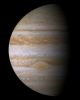
JUPITER from 10,1 MKM.jpgJupiter from 10,1 MKM90 visitePadre degli Dei e Signore incontrastato del Sistema Solare; troppo grande per essere solo un pianeta, ma troppo piccolo per diventare una stella. Con la sua luce giallo-arancio illumina i nostri cieli durante la notte ed è, assieme a Venere, uno dei primi astri ad essere visibile verso l'imbrunire ed è l'unico corpo celeste che può essere visto ad occhio nudo (sapendo dove guardare...) anche durante il giorno.
Questo è Giove.Lug 06, 2004
|
|

Jupiter, Europa & Callisto.jpgJupiter, Europa and Callistus62 visitenessun commentoLug 06, 2004
|
|

SOL165-P2377_L257_f-A175R1.jpgSparkling Cristals near the Hills - Sol 165 (Natural Colors; credits: NASA/JPL-Caltech)218 visiteUna nuova immagine, davvero intrigante, ripresa da Spirit alle pendici delle Eastern Hills: cristalli (o polveri cristalline, almeno apparentemente) di colore celeste/azzurro che si formano quando il suolo Marziano viene "disturbato" e che creano un contrasto davvero suggestivo con il marrone bruciato o l'arancio/mattone che sembra essere (ad oggi ed almeno in via "ufficiale") il colore dominante di Marte. Lug 05, 2004
|
|

TITAN-N00006532.jpgTitan from app.x 340.000 Km away - Lightnings on Titan or a scratch in the picture?61 visitenessun commentoLug 05, 2004
|
|

TITAN-N00006531.jpgTitan from Cassini-Huygens - app.x 340.000 Km away62 visitenessun commentoLug 05, 2004
|
|

TITAN-N00006513.jpgTitan from Cassini-Huygens - app.x 340.000 Km away61 visitenessun commentoLug 05, 2004
|
|
| 25353 immagini su 2113 pagina(e) |
 |
|
|
|
|
2046 | |
|
|
|
|





