| Ultimi arrivi |

Amalthea-PIA01076.jpgAmalthea and a few inner Moons of Jupiter74 visiteChe cosa distingue questi "macigni vaganti" dalla maggior parte delle Lune di Giove? Si tratta di Lune originarie del Sistema Gioviano o sono state "attratte" da Giove, durante un passaggio troppo ravvicinato? Probabilmente si tratta di asteroidi vaganti o di comete mancate: oggetti provenienti dalla Fascia di Kuiper (KBO) che, in transito accanto al Gigante Gassoso, si sono trovati all'angolo ed alla velocità corretti per non essere nè semplicemente deflessi dalla loro corsa e quindi scagliati via nello...Ago 26, 2004
|
|

OPP-SOL208-1P146648952EFF35B8P2423L7M1.jpgEscher Rock and the "paved walls" of Endurance - Sol 208 (EDM)80 visitenessun commentoAgo 26, 2004
|
|
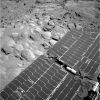
SOL229-2N146694188EFF8600P1805L0M1.jpgClose view of the Rover and Martian soil60 visiteAgo 26, 2004
|
|

SOL229-2N146694237EFF8600P1805R0M1.jpgClose view of the Rover and Martian soil67 visiteAgo 26, 2004
|
|
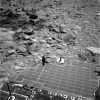
SOL229-2N146694287EFF8600P1805R0M1.jpgClose view of the Rover and Martian soil68 visiteAgo 26, 2004
|
|

Saturn and 2 Companions-N00015014.jpgSaturn and some Companion from about 9.000.000 Km72 visitenessun commentoAgo 26, 2004
|
|

AC-Still the E-ring-W00001386.jpgA bright light in the Space of Saturn: Saturn overexposed (3)110 visiteQuesta volta l'immagine che dovrebbe riguardare l'Anello "E" di Saturno e che invece, di regola, si risolve in un fascio di luce, ci appare in una nuova forma. Si potrebbero dire tante cose, ma noi dobbiamo essere pragmatici ed attenerci ai fatti: questo enorme bagliore non sappiamo cosa è o cosa rappresenta.
La NASA, pur non rispondendo direttamente alle nostre richieste, ha detto - commentando un frame simile a questo - che si tratta SEMPRE di Saturno e/o della porzione più esterna dei suoi Anelli, ampiamente sovraesposto/i.
Sinceramente, non sappiamo cosa dire, però abbiamo trovato dei frames simili a questo ma ottenuti dalla Sonda Voyager 2 durante il suo transito accanto ad Urano.
In quel caso la NASA disse, con grande chiarezza ed immediatamente, che si trattava di effetti luminosi causati dalla sovraesposizione del corpo più luminoso inquadrato dalla camera della Sonda (e cioè di Urano stesso).Ago 26, 2004
|
|

SNR-Cassiopeia-A-cassA6_cxo_full.jpgCassiopeia A from Chandra Obs.101 visite"...Può accadere, se si guarda lontano, di vedere cose nuove, che nessuno ha mai visto prima. Si fanno scoperte interessanti e si rinnova la Scienza e lo Spirito...Però bisogna stare attenti, se si guarda troppo lontano: rischiamo infatti di dimenticare il punto di partenza. Le nostre memorie sbiadiscono e si creano orrendi baratri fra noi e gli altri. E poi, se si riesce a scrutare oltre l'Ultima Stella, può anche succedere di imbattersi negli occhi di qualcun altro che, curioso, ricambia lo sguardo..."
P.C. Floegers - "In the Paradox"Ago 26, 2004
|
|

Io-Eruption on Tvashtar Catena-PIA02584_modest.jpgIo: eruption in Tvashtar Catena87 visiteThis pair of images taken by NASA's Galileo spacecraft captures a dynamic eruption at Tvashtar Catena, a chain of volcanic bowls on Jupiter's moon Io. They show a change in the location of hot lava over a period of a few months in 1999 and early 2000.
The image on the left uses data obtained on Nov. 26 and July 3, 1999, at resolutions of 183 meters (600 feet) and 1.3 kilometers (0.8 miles) per pixel, respectively. The red and yellow lava flow itself is an illustration based upon imaging data. The image on the right is a composite using a five-color observation made on Feb. 22, 2000, at 315 meters (1030 feet) per pixel.
These are among the most fortuitous observations made by Galileo because this style of volcanism is too unpredictable and short-lived to plan to photograph.
Short-lived bursts of volcanic activity on Io had been previously detected from Earth-based observations, but interpreting the style of volcanic activity from those lower-resolution views was highly speculative. These Galileo observations confirm hypotheses that the initial, intense thermal output comes from active lava fountains. Galileo's high-resolution observations of volcanic activity on Io have also confirmed other hypotheses based on earlier, low-resolution data. These include interpretations of slowly spreading lava flows at Prometheus and Amirani and an active lava lake at Pele. These tests of earlier hypotheses increase scientists' confidence in interpreting volcanic activity seen in low-resolution remote sensing data of Earth as well as Io. However, these data are still of insufficient resolution to adequately test the more quantitative models that have been applied to volcanic eruptions on Earth and Io.
These images also show other geologic features on Io, such as the scalloped margins of the plateau to the northeast of the active lavas. These margins appear to have formed by sapping, a process usually associated with springs of water. Liquid sulfur dioxide might be the fluid responsible for sapping on Io. A better understanding of sapping on Io will influence how scientists interpret similar features on Mars(where the viability of carbon dioxide or water as the sapping fluid remains controversial).
Ago 25, 2004
|
|

Europa-fullcolor-PIA02590_modest.jpgEuropa in full colors68 visitenessun commentoAgo 25, 2004
|
|

Io-Tupan Patera-fullcolor-PIA02599_modest.jpgIo: Tupan Patera75 visiteWonderful colors in a volcanic crater named Tupan Patera on Jupiter's moon Io, as seen in this image from NASA's Galileo spacecraft, show varied results of lava interacting with sulfur-rich materials.
The colorfulness of the image is only slightly enhanced from what the human eye would see on the scene. The red in the image includes a small amount of infrared energy. Tupan Patera, named after a Brazilian thunder god, was seen as an active hot spot in earlier Galileo observations, but those low-resolution views did not show details of volcanic activity. This image taken in October 2001 at a resolution of 135 meters (443 feet) per picture element reveals the complex nature of the crater.
Tupan is now clearly shown to be a volcanic depression, about 75 kilometers (47 miles) across, surrounded by cliffs about 900 meters (3000 feet) tall. In the center is a large area that must be higher than the rest of the crater floor because it has not been covered by the dark lavas. Much of the area is coated with a diffuse red deposit that Galileo scientists believe has condensed from sulfur gas escaping from volcanic vents. The floor of Tupan is covered with a surreal pattern of dark black, green, red, and yellow materials. The black material is recent, still-warm lava. The yellow is presumed to be a mix of sulfurous compounds, and the green appears to form where red sulfur has interacted with the dark lavas. While Galileo scientists have found previous evidence for both molten sulfur and molten rock on Io, this image shows the best evidence to date of chemical reactions taking place between the two.
The intermingled patches of sulfur and lava are difficult to explain. The yellowish sulfur may be melting from within the crater walls over solidified but warm lava. The sulfur may boil away from the areas too hot for liquid sulfur to sit on, leaving patches where the dark lava is still visible.
North is to the top of the image and the Sun illuminates the surface from the upper right.
Ago 25, 2004
|
|
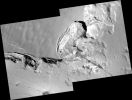
Io-Telegonus Mensa-PIA03528_modest.jpgIo: Telegonus Mensa60 visitenessun commentoAgo 25, 2004
|
|
| 25353 immagini su 2113 pagina(e) |
 |
|
|
|
|
1999 | |
|
|
|
|





