| Ultimi arrivi |

ZC-OPPMAP-08-SM-01-OpTraverseMap-B093R1_br2.jpgOpportunity's Traverse Map192 visiteIl valore scientifico di queste Mappe, comunque - ed a prescindersi dalle questione, di certo pure importante, relativa al posizionamento dei rottami -, è indubitabilmente alto e noi dobbiamo essere pronti a riconoscerlo.
Aggiorneremo questi commenti non appena avremo ricostruito con le immagini la Mappa dell'area in questione.Ago 31, 2004
|
|

ZD-ENDMAP-12-WC-01-endurance-B127R1.jpgDetailed map of Endurance Crater188 visitenella Sezione "Walking on Mars" ci sono decine di immagini di Endurance Crater, riprese da svariati punti di vista e da angolazioni ogni volta diverse.
Questa Mappa Vi può essere di aiuto per capire meglio, per ogni dettaglio visto, il punto esatto di Endurance Crater in cui il dettaglio in questione si trova.
Per cui... Buon lavoro!Ago 31, 2004
|
|
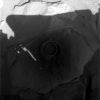
SOL231-2P146880766EFF8600P2576L2M1.jpgMartian terrain and a shadow57 visiteQuesta immagine del suolo di Marte è davvero preziosa, non solo perchè "scolpisce" (letteralmente) il contrasto luce/ombra che esiste sul Pianeta, ma anche perchè, trattandosi di una ripresa ravvicinata (ma non eccessivamente ravvicinata!) del suolo, ci consente di vedere ed apprezzare con sufficiente chiarezza la consistenza del medesimo così come apparirebbe ai nostri occhi "se fossimo là".Ago 31, 2004
|
|
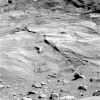
SOL232-2P146958067EFF8600P2405L6M1.jpgUnusually-looking Martian Terrain near the Rover - Sol 23256 visitenessun commentoAgo 31, 2004
|
|
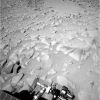
SOL233-2N147049604EFF8600P1871R0M1.jpgUnusual rocks near the Rover64 visite...Attenzione: noi non stiamo in nessun modo inferendo od asserendo che questa roccia "arcuata e levigata" sia di certa origine artificiale! Se lo facessimo, infatti, nulla ci distinguerebbe da quei Ricercatori che vedono "manufatti" ovunque, così banalizzando la ricerca di Anomalie reali e rendendo ridicole le ricerche poste in essere dall'intero Movimento. Noi diciamo solo che rocce come questa che Vi abbiamo adesso evidenziato meritano, a nostro parere, un'analisi maggiormente attenta e mirata. Ago 31, 2004
|
|

SOL233-2N147049604EFF8600P1871L0M1.jpgUnusual rocks near the Rover56 visiteEsiste - fra le tante - una stranezza delle rocce Marziane che ci ha colpito in maniera particolare. Quale? Un esempio si vede molto bene in questo frame: osservate il gruppo di rocce più scure, a ridosso del Rover, in basso, alla Vostra Sn. Non potrete non notare una roccia "arcuata e levigata" che proietta ombra. Ecco: è questo, secondo noi, il tipo di roccia che merita davvero il grado di "Anomalia" e che andrebbe studiata a fondo. Le rocce "curve", infatti, sono abbastanza rare in Natura...Ago 31, 2004
|
|
SOL233-2N147046098EFF8600P1554L0M1.jpgSky and Land on Sol 23359 visitenessun commentoAgo 31, 2004
|
|

ZE-P-Spirit Path To The Mountains-06-MG-03-travmap2-A190R1_br2.jpgThe Area of "Santa Anita" (Traverse Map up to Sol 141)229 visiteThe red dot labeled "Sol 134-141" in this map illustrates when and where NASA's Mars Exploration Rover Spirit acquired the "Santa Anita Panorama." Scientists consider this area, located roughly three-fourths of the way between "Bonneville Crater" and the base of the "Columbia Hills," a treasure trove that may be studied for decades to come.
The color thermal inertia data show how well different surface features hold onto heat. Red indicates a high thermal inertia associated with rocky terrain (regions that take longer to warm up and cool down); blue indicates a lower thermal inertia associated with smaller particles and fewer rocks (areas that warm up and cool off quickly). Ago 31, 2004
|
|

ZG-Columbia Hills-08-MG-05-vanilla-A190R1_br2.jpgAt the base of Columbia Hills (Traverse Map up to Sol 187)228 visiteThis map illustrates the NASA Mars Exploration Rover Spirit's position at the base of the "Columbia Hills" from sols 183 to 187 (July 9 to 13, 2004). The dotted blue line indicates the rover's planned energy-efficient path to climb the hill and reach the intriguing rock outcrops at the top of "West Spur."Ago 31, 2004
|
|

ZF-Columbia Hills-05-MG-02-travmap1-A190R1_br2.jpgAt the base of Columbia Hills (Map up to Sol 187)227 visiteThe yellow line on this map illustrates the total path traveled by NASA's Mars Exploration Rover Spirit during its mission. Spirit landed at the starting point at Gusev Crater on Jan. 3, 2004, and has since traveled about 3.5 kilometers (2.2 miles) to reach "West Spur" at the "Columbia Hills." Also seen on the map are "Bonneville" and "Missoula" craters. The blue dotted line illustrates the energy-efficient path planned for Spirit to reach intriguing rock outcrops atop "West Spur."
Ago 31, 2004
|
|

SOL229-Mosaic-PIA06838_modest.jpgEastward from the "West Spur" of the "Columbia Hills"71 visitePlanetary scientists got excited when they saw this imagery coming in from NASA's Mars Exploration Rover Spirit because they could see hints of rock strata and other interesting geologic features ahead. In the middle of this image, from upper left to the lower right, lies a trough that resembles a small ravine. To the right of that and a little way up the hill, beyond a rock-strewn surface, sits a small rounded ridge. Fine horizontal streaks, just perceptible in this image, suggest possible layering in the bedrock. Above that are rock features that appear to drape across the slopes. Scientists are discussing whether to take the rover closer or select other interesting targets for further study. Ago 30, 2004
|
|
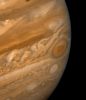
Jupiter-V2-LAFT-PIA01370_modest.jpgLate afternoon on Jupiter...59 visiteCaption NASA originale:"This color composite made from Voyager 2 narrow-angle camera frames shows the Great Red Spot during the late Jovian afternoon. North of the Red Spot lies a curious darker section of the South Equatorial Belt (SEB), the belt in which the Red Spot is located. A bright eruption of material passing from the SEB northward into the diffuse equatorial clouds has been observed on all occasions when this feature passes north of the Red Spot. The remnants of one such eruption are apparent in this photograph". Ago 30, 2004
|
|
| 25353 immagini su 2113 pagina(e) |
 |
|
|
|
|
1988 | |
|
|
|
|





