| Ultimi arrivi |

ZF-Mercury_s South Pole-PIA02415_modest.jpgMercury's South Pole68 visite3) vaporizzazione delle rocce causata da impatti con altri corpi celesti (meteore o comete).
Ma leggiamo ora cosa ci dice la NASA a proposito del fly-by del Mariner 10 nei pressi del suo Polo Sud: "...After passing Mercury the first time and making a trip around the Sun, Mariner 10 again flew by Mercury on September 21, 1974. This encounter brought the spacecraft in front of Mercury in the southern hemisphere. In this frame south is down, the South Pole is located on the right hand edge of the large crater that has only its rim sticking up into the light ("Chao Meng Fu" crater). When this frame was acquired, Mariner 10 was about 83.000 Km from Mercury".
Un'ultima annotazione riguarda i gas presenti nella sottilissima esosfera di Mercurio. Non possiamo parlare di un'atmosfera vera e propria poichè le molecole dei vari elementi che si trovano intorno al Pianeta sono così poche che non riescono neppure a collidere fra loro, come invece accade su Venere, Marte e la Terra stessa, ma si limitano a "rimbalzare" sulla sua superficie!Set 12, 2004
|
|

ZB-Uranus-HP-V2-PIA01391_modest.jpgFarewell Uranus...61 visiteUna veduta finale di Urano, registrata dalla Sonda Voyager 2 il 27 Gennaio 1986. Come potete vedere chiaramente, Urano si sta facendo sempre più piccolo, quasi che fosse "divorato" dall'oscurità che lo circonda...
Quest'immagine, per Voyager 2 (e per noi tutti), rappresenta l'addio ad Urano ed al suo Sistema di Anelli e di Lune.
Ci torneremo mai? Sicuramente si, ma potrebbero passare tantissimi anni prima che ciò accada davvero...
Set 12, 2004
|
|

ZA-Uranus-IP-V2-PIA00346_modest.jpgFarewell Uranus... (1)62 visiteCaption NASA originale:"This image shows a crescent Uranus, a view that Earthlings never witnessed until Voyager 2 flew near and then beyond Uranus on January 24, 1986. The hazy blue-green atmosphere probably extends to a depth of around 5.400 miles, where it rests above what is believed to be an icy or liquid mixture (an 'ocean') of water, ammonia, methane and other volatiles, which in turn surrounds a rocky core, perhaps a little smaller than Earth".
Set 12, 2004
|
|

ZA-Triton-PIA02247_modest.jpgFarewell Triton...57 visiteCaption NASA originale:"Voyager 2 obtained this parting shot of Triton, Neptune's largest satellite, shortly after closest approach to the moon and passage through its shadow on the morning of Aug. 25, 1989. The distance to Triton was 90.000 Km and the phase angle was 155°, so that only a thin crescent of Triton's south polar region can be seen. Because of the high phase angle, and perhaps because of scattering sunlight in Triton's hazy atmosphere, few surface features are also easily discernible". Un piccolo commento: non sembra anche a Voi di intuire una sottile somiglianza fra Tritone e Titano?...Set 12, 2004
|
|

Jupiter_s Aurora-HST-PIA03155_modest.jpgJupiter's Aurora - HST80 visiteCaption NASA originale:"Auroras are curtains of light resulting from high-energy electrons racing along the planet's magnetic field into the upper atmosphere.
The electrons excite atmospheric gases, causing them to glow.
The image shows the main oval of the aurora, which is centered on the magnetic north pole, plus more diffuse emissions inside the polar cap. The HST image shows also unique emissions from the magnetic "footprints" of 3 of Jupiter's largest moons.
Auroral footprints can be seen in this image from Io (along the lefthand limb), Ganymede (near the center), and Europa (just below and to the right of Ganymede's auroral footprint).
These emissions, produced by electric currents generated by the satellites, flow along Jupiter's magnetic field, bouncing in and out of the upper atmosphere". Set 12, 2004
|
|

The Sky-PIA04203_modest.jpgThe Sky and 95.851.753 stars with Ks 13.5109 visiteWhat appears most prominently is the Galactic plane and the Galactic bulge. As you can see, the plane is cut by dark dust lanes, clouds and several dusty regions. You can clearly see the 2 Magellanic Clouds (note the prominent bar and incipient spiral structure of the Large Cloud). Near the Small Magellanic Cloud is the globular cluster 47 Tucanae. Cutting almost north-south through one side of the bulge is the dwarf Sagittarius Galaxy which, along with the Clouds, is a Milky Way's satellite Galaxy.Set 12, 2004
|
|

M-033-2.jpgM 33 - Spiral Galaxy (Local Group)61 visite"...Pensi di potermi sfuggire?
Sei un illuso: ti inseguirò oltre i limiti dello Spazio e del Tempo, se necessario, e non ci sarà nessuna supernova grande abbastanza da riuscire a coprire le tue tracce. Non ci saranno Terre o Cieli che potranno nasconderti, nè in questo Universo, nè in qualsiasi altro.
Ti troverò comunque!..."
P.C. Floegers - "In the Paradox"Set 11, 2004
|
|

M-028-1.jpgM 28 - Globular Star Cluster63 visite"...Cato dixit litterarum radices amares esse, fructus iucundiores..."
(Catone)
"...Catone disse che le radici della conoscenza sono (sovente) amare, ma dolcissimi ne sono i suoi frutti..."Set 11, 2004
|
|
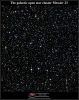
M-023-2.jpgM 23 - Open Star Cluster66 visite"...Bontà e Saggezza ai vili sembrano vili..."
W. ShakespeareSet 11, 2004
|
|

M-021-1.jpgM 21 - Open Star Cluster73 visite"L'Infinito e l'Eternità esprimono due delle qualità di Dio. Non possono essere comprese nè discusse: devono essere solo accettate per quello che sono"
P.C. Floegers - "In the Paradox"Set 11, 2004
|
|

M-022-1.jpgM 22 - Globular Star Cluster60 visite"...La fiaccola che brucia dai due lati, esprime il doppio della luminosità, ma dura la metà del tempo..."
(dal film "Blade Runner")Set 11, 2004
|
|
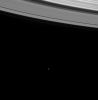
Saturn and Mimas-PIA06473.jpgSaturn and Mimas63 visiteCaption NASA originale:"On its first orbit of the ringed planet, the Cassini spacecraft gazed into the distance to capture this image of the icy moon Mimas (398 Km - 247 miles wide). The faint F-Ring is visible as the outermost strand of the rings in this view. The image was taken in visible light with the narrow angle camera on August 16, 2004, at a distance of 8.9 MKm (5.5 MMs) from Saturn. The image scale is 53 kilometers (33 miles) per pixel. Contrast was slightly enhanced to aid visibility".Set 11, 2004
|
|
| 25353 immagini su 2113 pagina(e) |
 |
|
|
|
|
1976 | |
|
|
|
|





