| Ultimi arrivi |
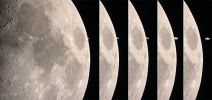
ZV-Moon and Saturn.jpgMoon and Saturn170 visiteCaption NASA originale:"In this sharp sequence of telescopic digital images from the Powell Observatory near Louisburg, Kansas, USA, Saturn is seen reappearing from behind the bright lunar limb over a period of about 2 minutes. The ringed planet emerges above the dark, smooth Lunar Mare Crisium".Set 13, 2004
|
|

Sun-Equinox 2002.jpgThe Sun during the 2002 Equinox59 visiteCaption NASA originale:"The active Sun near the March Equinox, the beginning of Autumn in the south and Spring in the northern hemisphere. Recorded in a band of extreme ultraviolet light emitted by highly ionized iron atoms, the Sun's upper atmosphere (or solar corona) shines with an array of active regions and plasma loops suspended in magnetic fields. The bright coronal structures and loops seen here have temperatures of about 1.500.000° K".Set 13, 2004
|
|

M-042-7.jpgM 42 and M 43 in a wide field75 visite"...Il Tempo e lo Spazio - e converrete che si tratta di un dogma comune ed accettato - si assumono indissolubilmente connessi.
Ma che dire se ci sbagliassimo?
Il fatto che una Stella sia lontana da noi 50 anni luce potrebbe non implicare affatto che la sua luce, per come noi la vediamo adesso, rappresenti l'immagine effettiva di quella Stella così come essa era 50 anni fa! E se il vero ed unico Dogma dell'Universo fosse l'Assoluta Contemporaneità?..."
P.C. Floegers - "In The Paradox"Set 13, 2004
|
|

Jupiter.jpgJupiter's Kingdom157 visiteForse non è Giove il pianeta a cui l'Artista (Lynette Cook) stava pensando mentre l'opera veniva realizzata, ma a noi è venuto in mente il Re degli Dei e quindi...Set 13, 2004
|
|
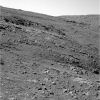
SOL242-2P147851631EFF8800P2291L7M1.jpgRocks and outcrops on the Hills (3)56 visite...fine di poter poi dire "guardate: la nostra bravura supera i confini della nostra stessa immaginazione"! In 2do luogo ci preme ribadire - proprio in virtù di quanto vediamo ogni giorno e nonostante la NASA continui a dire il contrario - che le condizioni di Marte NON POSSONO essere così "ostili" come essa stessa afferma. Conclusione?
I dati oggettivi suggeriscono alcune (possibili/plausibili) verità, ma la loro interpretazione resta infarcita di silenzi e bugie.
E questo è davvero sconsolante...Set 13, 2004
|
|
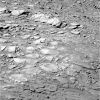
SOL242-2P147851523EFF8800P2291L7M1.jpgRocks and outcrops on the Hills (2)57 visite...diventa un "trionfo". Noi siamo i primi ad essere felici per questo "trionfo" però, in qualità di Ricercatori e di persone dotate di una normale intelligenza, desideriamo fare una piccola puntualizzazione. Non riteniamo corretto, innanzi tutto, che la NASA ci prenda in giro stimando la "vita massima" di un suo prodotto in un arco di tempo irrisorio (sapevamo tutti molto bene che i Rover avrebbero avuto una vita decisamente lunga, salvo il verificarsi di eventi negativi davvero straordinari) al solo...Set 13, 2004
|
|
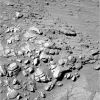
SOL242-2P147851414EFF8800P2291L7M1.jpgRocks and outcrops on the Hills (1)56 visiteQuesta immagine, al pari delle 2 che seguono, ci arriva dalle pendici delle Columbia Hills ed è relativa al 242mo giorno di permanenza del Rover Spirit sull'Area Gusaev Crater. Se non andiamo errati, la missione doveva durare - più o meno - circa 150 soles. Il Rover, in altre parole, avrebbe dovuto smettere di funzionare - a causa delle condizioni "ostili" di Marte - già da qualche mese. E invece eccolo che funziona a meraviglia e la missione può essere definita ancora di più di un semplice successo:...Set 13, 2004
|
|

Saturn from HST-PIA01272_modest.jpg"Ringless Saturn" from Hubble Space Telescope (1998)59 visiteCaption NASA originale:"TOP - This is a NASA Hubble Space Telescope snapshot of Saturn with its rings barely visible. Normally, astronomers see Saturn with its rings tilted. Earth was almost in the plane of Saturn's rings, thus the rings appear edge-on. BOTTOM - This photograph shows Saturn with its rings slightly tilted. The moon called Dione, on the lower right, is casting a long, thin shadow across the whole ring system due to the setting Sun on the ring plane. The moon on the upper left of Saturn is Tethys".Set 12, 2004
|
|

Saturn in infrared-HST-PIA01268_modest.jpgInfrared view of Saturn - HST60 visiteCaption NASA originale:"The blue colors indicate a clear atmosphere down to a main cloud layer. The green and yellow colors indicate a haze above the main cloud layer. The red and orange colors indicate clouds reaching up high into the atmosphere and red clouds are even higher than the orange ones. The densest regions of two storms near Saturn's equator appear white hile the rings, basically made up of chunks of ice, are as white as images of ice taken in visible light".Set 12, 2004
|
|

ZD-Pluto.jpgPluto and the stars around...96 visiteUn'immagine, a nostro parere, altamente suggestiva di Plutone e del campo stellato che lo circonda. Anche questo frame è stata estratto dalla "2MASS Atlas Image Gallery at IPAC".
Plutone è l'oggetto posizionato ESATTAMENTE AL CENTRO della fotografia.Set 12, 2004
|
|

AA-Uranus and Neptune.jpgUranus, Neptune and their Moons together!!!126 visiteUn'immagine davvero meravigliosa ottenuta dalla 2MASS Southern Facility il giorno 7 Giugno 1998. Come gentilmente richiesto dalla 2MASS, riconosciamo i loro diritti sull'immagine e riportiamo integralmente la seguente "caption":
"Atlas Image [or Atlas Image mosaic] obtained as part of the Two Micron All Sky Survey (2MASS), a joint project of the University of Massachusetts and the Infrared Processing and Analysis Center/California Institute of Technology, funded by the National Aeronautics and Space Administration and the National Science Foundation" Set 12, 2004
|
|

6-Venus.jpgVenus from Galileo146 visiteCaption NASA originale:"This colorized picture of Venus was taken February 14, 1990, from a distance of almost 1,7 MMs, about 6 days after Galileo's closest approach to the planet. It has been colorized to a bluish hue to emphasize subtle contrasts in the cloud markings and to indicate that it was taken through a violet filter. Features in the sulfuric acid clouds near the top of the planet's atmosphere are most prominent in violet and ultraviolet light". Set 12, 2004
|
|
| 25353 immagini su 2113 pagina(e) |
 |
|
|
|
|
1975 | |
|
|
|
|





