| Ultimi arrivi |

The limb of the Sun.jpgThe limb of the Sun70 visiteFotografia amatoriale della corona solare durante l'ultima grande eclissi totale del 1999. Ott 18, 2004
|
|

SN-1987A-Starfield_-_HST_(dtl).jpgSupernova 1987A - HST203 visiteDa NASA - Picture of the Day del 9-02-1999: "Bright stars don't last forever. A bright star similar to others in this field exploded in a spectacular supernova that was witnessed on Earth in 1987. The result is visible even today as unusual rings and glowing gas. The above picture is a composite of recent images taken over several years. The explosion originated from a bright massive star that ran out of nuclear fuel. SN1987A occurred in the Large Magellanic Cloud (LMC), a satellite galaxy only 150.000 LY from our Milky Way Galaxy. The rings of SN1987A are currently excited by light from the initial explosion. Astronomers expect the inner ring to brighten in the next few years as expanding supernova debris overtakes it".Ott 18, 2004
|
|

The Moon from ESO.jpgThe Moon from European Space Obs.134 visiteDa "NASA - Picture of the Day" del 12.02.1999: "Late last month, NASA's Lunar Prospector spacecraft moved in for a closer look at the Moon. Now entering an extended mission phase, controllers have reduced the altitude of this polar lunar orbiter from 100 Km to about 30 Km. Having mapped global properties and recorded evidence for water-ice at the lunar poles, the lower orbit allows Prospector's instruments to gather valuable confirming data at higher resolutions. The new orbit is not without some risk, though, and maneuvers are required every 28 days to maintain it. Should the maneuvers fail to be performed, the spacecraft would impact the surface only two days later. This lunar close-up was recorded by the European Southern Observatory's new WFI camera. It shows dramatic shadows and contrasting terrain near the prominent Gassendi crater at the northern edge of the Moon's Mare Humorum".Ott 18, 2004
|
|
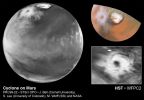
Mars-9a.jpgCyclone!142 visiteNASA - Picture of the Day del 20 Maggio 1999:"Late last month (April 1999) a team of Mars-watching astronomers sighted an immense cyclonic storm system raging near the (...) North Pole. Their discovery picture, made with the HST on April 27, is seen at left while the projected insets (right) show closeups of the storm and surrounding areas. Shrunken to its martian midsummer state, Mars' north polar cap appears at the top of the picture and (...) it is clearly smaller than the storm just below it and farther left. Similar to the "spiral storms" detected on Mars over 20 years ago by the Viking spacecraft, this storm was marked by a system of swirling bright water-ice clouds instead of the billowing dust of a more typical martian wind storm. Measuring roughly 1.600 Km across (...) it was comparable in size to cyclones seen in planet Earth's polar regions. The storm (...) may have had a lifetime of only a few days". Commento: ma come si fa a dire che su Marte non piove da qualche milione di anni?!?!?!Ott 18, 2004
|
|

Japetus-N00022351.jpgJapetus and "something" else? (2)104 visiteUn secondo frame, consecutivo al precedente: l'oggetto (o l'artifact) sembra comunque essersi leggermente spostato. Certo è che si riesce a vedere con chiarezza una buona porzione di questo controverso "corpo scuro", qualunque cosa essa sia. Un piccolo dato (sconcertante): la porzione di sagoma che si lascia vedere sembra avvicinarsi molto al tipico "disco volante"; un disco volante molto simile a quello che un certo Robert "Bob" Lazar (uno Scienziato americano assai controverso che salì all'onore delle cronache mondiali qualche anno fa, dopo aver dichiarato di essersi occupato di alcuni studi - retroingegneria? - su un UFO precipitato a Terra e custodito in Nevada, nella "famosa" Area 51) chiamò "Sport Model", ossìa il "Modello Base" di tutta una serie di velivoli circolari di asserita origine non terrestre.
Che dire? Gli elementi che possediamo sono davanti ai Vostri occhi: provate ad elaborare l'immagine ed a farVi un'idea. Se vorrete, poi, potrete comunicarcela e noi ne parleremo.Ott 18, 2004
|
|

Japetus-N00022350.jpgJapetus and "something" else? (1)113 visiteGiapeto viene fotografato da una distanza di poco superiore al milione di Km. La fotografia è brutta e Giapeto, come potete vedere chiaramente, è totalmente sovraesposto. Ma quello che rileva, in questa immagine, è il "corpo scuro" che sembra volersi celare dietro al bagliore intenso (glare) di Giapeto. Di che cosa si tratta? Secondo noi potrebbe trattarsi di un artifact, ossìa di un oggetto non reale, creatosi durante la fase di sviluppo e/o di processo e/o di elaborazione/compressione e/o, come in questo caso, di trasmissione a Terra dei dati relativi all'immagine originale. Questa è l'ipotesi più probabile. Ma non ci sembra neppure da scartare a priori l'altra possibilità, decisamente più suggestiva, per cui il "corpo scuro" che intravediamo, semi-immerso nella luce sia, in realtà, un oggetto reale: un'astronave aliena che osserva la Sonda Cassini-Huygens da vicino. Molto vicino...Ott 18, 2004
|
|
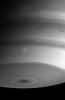
Saturn-South Pole~0.jpgThe South Pole of Saturn58 visiteQuesta immagine, pubblicata sul Sito "NASA Picture of the Day" del 18.10.2004 ci sembra interessante perchè presenta - a nostro parere - una Anomalia. Innanzitutto eccoVi la caption originale:"...Visible in the above image of Saturn are bright bands, dark belts and a dark spot right over the South Pole. The above image in infrared light spans over 30.000 Km and was taken early last month (Sept.) by the Cassini spacecraft. Saturn's atmosphere is about 75% H, 25% He and small amounts of heavier compounds including water vapor, methane, and ammonia. The relatively low gravity at Saturn's cloud tops result in a thicker haze layer, which in turn makes atmospheric features blurrier than Jupiter". I dati sull'atmosfera di Saturno sono interessanti e le indicazioni relative ad alcune surface features corrette. Ma che cosa possiamo dire di quell'area circolare, luminescente, biancastra, ben visibile, perpendicolare al Polo Sud, a circa centro immagine?!? E' un difetto di processo? Un artifact? Una nuvola sferica?Ott 18, 2004
|
|

Sunrise from Space.jpgSunrise from space...86 visiteCaption NASA originale:"Sunrise seen from low Earth orbit by the shuttle astronauts can be very dramatic indeed. In this view, the Sun is just visible peaking over towering anvil-shaped storm clouds whose silhouetted tops mark the upper boundary of the troposphere, the lowest layer of planet Earth's atmosphere. Sunlight filtering through suspended dust causes this dense layer of air to appear red. In contrast, the blue stripe marks the stratosphere, the tenuous upper atmosphere, which preferentially scatters blue light". Ott 17, 2004
|
|

EROS-PIA03143.jpgEros: NEAR-Shoemaker's Probe landing site82 visiteThe location of NEAR Shoemaker's landing site is shown in this image mosaic taken on December 3, 2000, from an orbital altitude of about 200 Km (approx. 124 miles). In this view, south is to the top and the terminator (the imaginary line dividing day from night) lies near the equator. The landing site (at the tip of the arrow) is near the boundary of two distinctly different provinces, both of which the spacecraft will photograph as it descends. To the south and east (above and to the left) lies older, cratered terrain, while to the north (down) is the saddle-shaped feature Himeros, whose lesser density of superposed craters indicates relatively recent resurfacing by geologic processes.Ott 17, 2004
|
|

Saturn-N00021884.jpgSaturn58 visiteAlcune immagini, a volte, le selezioniamo "a caso" (per esempio quando il soggetto ripreso è interessante ma ce ne sono davvero un'infinità di altre simili); altre volte, invece - ed in tutta sincerità - le prendiamo solo perchè sono "belle". Questa immagine di Saturno, ripresa da una distanza di circa 4,7 milioni di Km, è - secondo noi - molto bella. Saturno ed il suo imponente - ancorchè delicato - sistema di anelli si vedono benissimo, così come molto bene si vedono due tracce lasciate - forse - da raggi cosmici: la prima, piuttosto piccola e debole, la potete distinguere in alto, appena all'esterno dell'F-Ring, e la seconda, davvero molto lunga e luminosa (e che pare "tagliare" gli Anelli), appena più sotto rispetto alla prima, verso la Dx dell'Osservatore.Ott 17, 2004
|
|

Japetus-N00022199.jpgJapetus from approx. 1.218.000 Km61 visiteLa Sonda Cassini-Huygens si è sensibilmente avvicinata non solo a Saturno, ma anche ad alcune delle sue Lune interne. Questa immagine (una delle tantissime) di Giapeto, è stata ripresa da una distanza di poco superiore al milione di Km e ci fa già vedere molti dettagli della superficie di questo mondo ghiacciato e ricoperto di crateri da impatto. Il gioco di luci ed ombre che sembra caratterizzare la "faccia" di Giapeto rende l'immagine ancora più "aliena" ed affascinante.Ott 17, 2004
|
|

IC-0418.jpgIC 418 - The "Spirograph" Nebula - HST210 visite"...Ci è stato raccomandato a chiare lettere, vedi, di non lasciare parlare mai un Meldiano, uno come te insomma.
Ci è stato anche detto di fare per bene il lavoro per il quale siamo nati: farlo sino in fondo, in maniera compiuta e felice, ma senza MAI personalizzarlo. Farlo bene, insomma, e poi passare a farne un altro. Igiene mentale, credo che si chiami. Se ti può aiutare a star meglio ti dirò che non c'è nulla di personale fra noi. Pertanto, se vuoi essere così gentile da chiudere gli occhi..."
"Aspetta! Perchè devo chiudere gli occhi? Ma tu cosa fai ai Meldiani? In cosa consiste il tuo "lavoro"?!?..."
"Il mio lavoro è semplice: io, i Meldiani, li uccido"
R. Sheckley - "Mindswap"Ott 17, 2004
|
|
| 25353 immagini su 2113 pagina(e) |
 |
|
|
|
|
1935 | |
|
|
|
|





