| Ultimi arrivi |

Moon Eclypse 2004.3.jpgMoon's eclypse - October 2004 (3)123 visiteImmagine amatoriale, ma di ottima qualità, dell'eclissi dell'Ottobre 2004. La ripresa proviene da Tacoma (Washington - USA). L'Autore della ripresa si è nascosto dietro il nick-name di KBoard. Si tratta forse di un pianista, oltre che di un astro-fotografo di indubbie qualità?!?Ott 30, 2004
|
|

Moon Eclypse 2004.2.jpgMoon's eclypse - October 2004 (2)154 visiteUna splendida serie di immagini dell'eclisse di Luna dell'Ottobre 2004 riprese da Donja Stubica (Croazia).Ott 30, 2004
|
|

Moon Eclypse 2004.1.jpgMoon's eclypse - October 2004 (1)152 visiteQuesta è la prima di una serie di 4 immagini amatoriali dell'eclisse totale di Luna dell'Ottobre 2004. Le abbiamo recuperate da un Sito chiamato "Universe Today".
Un buon Sito, ci sembra.Ott 30, 2004
|
|

CW Leonis.jpgCW Leonis157 visite"Nemo doctus unquam mutationem consilii incostantiam dixit esse..."
(Cicerone)
"...Nessun uomo saggio ha mai detto che il cambiare idea è sinonimo di volubilità..."
(Voltaire riprese il medesimo concetto nel suo "Candide" con la frase - poi divenuta proverbiale - secondo cui "Soltanto le vacche non cambiano mai idea")Ott 30, 2004
|
|

Mars Odyssey.jpgMars Odyssey88 visiteDa "NASA - Picture of the Day" del 25.10.2001:"After an interplanetary journey lasting 200 days, the Mars Odyssey spacecraft has entered orbit around the Red Planet on October, 25, 2001. This success is welcome as in the past Mars has often seemed a difficult planet to visit. Beginning with the first Soviet attempts in 1960, around 30 missions have tried while only 10 or so have gone without serious mishap (...) Cautiously dipping into the Martian atmosphere, the spacecraft will gradually adjust its present wide and elliptical 20-hour orbit to a circular 2-hour orbit only 400 Km above the planet's surface. Then, its instruments and cameras will focus on exploring the climate and geologic history of Mars, including the search for water and evidence of life-sustaining environments. In the artist's conception above, the spacecraft with wing-like solar panels is imagined firing its rocket engine for Mars orbit insertion over terrain seen in natural and false-color".Ott 30, 2004
|
|

Craters-Newton_Crater-03.jpgNewton Crater's Gullies (Original NASA/MGS/MSSS b/w Frame)171 visiteDa "NASA - Picture of the Day" del 26.6.2000:"...Inside a small crater that lies inside large Newton Crater on Mars, numerous narrow channels run from the top down to the crater floor. The above picture covers a region spanning about 3000 meters across. These and other gullies have been found on Mars in recent HR pictures taken by the orbiting Mars Global Surveyor robot spacecraft. Similar channels on Earth are formed by flowing water, but on Mars the temperature is normally too cold and the atmosphere too thin to sustain liquid water. Nevertheless, many scientists now hypothesize that liquid water did burst out here from underground Mars, eroded the gullies and pooled at the bottom as it froze and evaporated. If so, life-sustaining ice and water might exist even today below the Martian surface (...)". L'idea che ci sia acqua allo stato liquido sotto la superficie di Marte non è nuova, anzi: la NASA stessa lo ipotizzava 4 anni fa. Oggi, dopo mesi di esplorazione "in loco", tutto tace. Forse un ripensamento?Ott 30, 2004
|
|
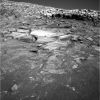
OPP-SOL272-1N152336047EFF37HNP1909L0M1.jpgThe "Paving" inside Endurance Crater (2)70 visiteQuello che si diceva in sede di commento al frame precedente ora lo si può tranquillamente ripetere.
Forse in questa ripresa la incredibile bellezza dei "pavimenti" del Cratere Endurance si nota ancora meglio, grazie all'altissima definizione usata dalla Camera di Navigazione del Rover.Ott 30, 2004
|
|
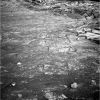
OPP-SOL272-1N152335995EFF37HNP1909R0M1.jpgThe "Paving" inside Endurance Crater (1)75 visiteDue riprese ravvicinate e ad altissima definizione dei "pavimenti" che caratterizzano le pareti di Endurance Crater. Si tratta, come già dicemmo in passato, di un'opera della Natura assolutamente straordinaria e che, da certi punti di vista, lascia davvero senza parole. Guardate la perfezione degli "incastri" che dividono una roccia dall'altra: sembra un mosaico, una riuscitissima esecuzione di un pavimento a "blocchi". Manca solo un pò di erbetta o di muschio che cresce fra una lastra e l'altra ed il risultato finale sarebbe davvero perfetto...Ott 30, 2004
|
|

Mimas - PIA06509_modest.jpgMimas: the "Ring Master"59 visiteCaption NASA originale, tratta dal Planetary Photojournal:"Mimas, seen here beyond Saturn's rings, is a major sculptor of Saturn's rings. The 398-Km-wide moon not only maintains the Cassini Division (not seen here), a gap wide enough to be visible from Earth through a small telescope, but it is also responsible for two of the thin, bright bands visible in this image near the rings' center, interior to the dark Encke Gap.
Knots in the thin, twisted F-Ring also are easily visible here.
The image was taken in visible light with the Cassini spacecraft narrow angle camera on Sept. 7, 2004, at a distance of 8.8 MKMs from Mimas and at a Sun-Mimas-spacecraft - or phase - angle of 84 degrees. The image scale is 53 Km per pixel".
Ott 30, 2004
|
|

Tethys - N00023703.jpgTethys, from approx. 250.000 Km59 visitenessun commentoOtt 30, 2004
|
|
The E-Ring - W00002645.jpgThe "E-Ring" from approx. 415.000 Km58 visitenessun commentoOtt 30, 2004
|
|
The E-Ring - W00002666.jpgThe "E-Ring" from approx. 411.000 Km57 visiteUn'immagine spettacolare ma assolutamente enigmatica: dalla distanza da cui è stata effettuata questa ripresa, infatti, la reale tessitura dell'Anello "E" non è ancora risolvibile. Certo, si vedono già molte cose ("clumps" e "punti luminosi" abbastanza ben definiti) ma, secondo noi, interpretarle in questo momento ed usando solo i pochi dati a nostra disposizione, equivarrebbe - in fondo - a "tirare ad indovinare". Per cui aspettiamo ancora un pò...Ott 30, 2004
|
|
| 25353 immagini su 2113 pagina(e) |
 |
|
|
|
|
1926 | |
|
|
|
|





