| |
| Ultimi arrivi |

SOL304-2P153328458EFF89AIP2552L2M1.3.jpgPorous stones on Mars (4)99 visite...si voleva? Può essere, in fondo: se ci pensate bene, infatti, una volta che si è tolta credibilità a chi (Ente o persona fisica che sia) dovrebbe possederne per definizione, oltre che per competenza istituzionale, a chi si può credere? Se il "Professore" diventa inattendibile, che cosa succede? Succede esattamente quello che vediamo: ognuno di noi (Lunar Explorer inclusa) si sente in diritto di esprimere una propria opinione, basata sulle proprie idee, competenze, esperienze, sino ad arrivare alle semplici sensazioni o convinzioni che di scientifico non hanno nulla. Togliere credibilità a "chi sa" per davvero, significa togliere credibilità a tutti!
E' per questo che il proliferare di voci, opinioni, Siti, Forum e chi più ne ha, più ne metta, anche se dimostra l'esistenza di un certo fervore intellettuale, alla fine - allorchè le diversità di opinioni finiscono in polemiche e risse - fa il gioco di coloro che la Verità la vogliono affossare in uno dei tanti crateri della Luna o di Marte.
Per sempre.Nov 11, 2004
|
|
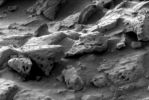
SOL304-2P153328458EFF89AIP2552L2M1.2jpg.jpgPorous stones on Mars (3)90 visiteNon ci vuole un sociologo nè un esperto di comunicazione o di sondaggi per capire che una conseguenza fondamentale (la più importante, forse) di questa "sensazione/certezza" diffusa nella popolazione degli Appassionati (e non solo) sta nella "totale perdita di credibilità da parte degli Enti Scientifici preposti al ricevimento, in prima battuta, e quindi alla elaborazione, stima, studio, gestione, diffusione e controllo di queste informazioni". Parliamo della NASA, su tutti, ma non trascuriamo l'ESA e le altre Agenzie Spaziali di volta in volta chiamate in causa. Insomma: i "Professori" hanno raggiunto la credibilità ZERO presso gli "Studenti". E' questo, in fondo, il risultato fondamentale che hanno ottenuto le valanghe di reticenze, mezze ammissioni e contraddizioni (sino ad arrivare alle menzogne, talune addirittura offensive per le persone dotate di un minimo di intelligenza ) che hanno caratterizzato l'informazione scientifica in campo spaziale negli ultimi 35 anni. O forse era proprio questo ciò che...Nov 11, 2004
|
|
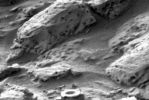
SOL304-2P153328458EFF89AIP2552L2M1.1jpg.jpgPorous stones on Mars (2)80 visiteE' una nostra sensazione soltanto, oppure ogni singolo buchetto vede al suo interno "qualcosa"? E cos'è quel "qualcosa"?
Abbiamo dato un'occhiata, come nostra abitudine, a svariati Siti simili a Lunar Explorer e, di tanto in tanto, leggiamo anche quello che si dice di Marte, Saturno e, in generale, della Vita nel Cosmo nei (tantissimi) Forum che si trovano su Internet e che sono dedicati a questo affascinante (ma sempre più complesso e controverso) argomento. La nostra sensazione - al di là del fatto che le campagne di disinformazione, da un lato, e di controinformazione, dall'altro, come poste in essere dai media che vanno per la maggiore, hanno dato eccellenti risultati (la gente è confusa, fondamentalmente) - è che la maggior parte degli Appassionati (tralasciamo i Professionisti di questo campo) abbia decretato - senza possibilità di appello - che la Vita, nel Cosmo in generale e su Marte in particolare, "ESISTE", senza alcun dubbio. Ma non è tutto qui... Nov 11, 2004
|
|

Jupiter - HST.jpgTriple eclypse on Jupiter (false colors - HST)69 visiteDa "NASA - Picture of the Day" dell'11.11.2004: "This false-color image of banded gas giant Jupiter shows a triple eclipse in progress on March 28 - a relatively rare event, even for a large planet with many moons. Captured by the Hubble Space Telescope's near-infrared camera are shadows of Jupiter's moons Ganymede (left edge), Callisto (right edge) and Io, three black spots crossing the sunlit Jovian cloud tops. In fact, Io itself is visible as a white spot near picture center with a bluish Ganymede above and to the right, but Callisto is off the right hand edge of the scene. Viewed from Jupiter's perspective, these shadow crossings would be seen as solar eclipses, analogous to the Moon's shadow crossing the sunlit face of planet Earth. Historically, timing the eclipses of Jupiter's moons allowed astronomer Ole Roemer to make the first accurate measurement of the speed of light in 1676". Nov 11, 2004
|
|

Earth_and_Moon_from_Mars-01.jpg"Us", from Mars (EDM)98 visitevedi il commento al frame precedenteNov 10, 2004
|
|

Earth_and_Moon_from_Mars-00.jpgEarth and Moon from Mars98 visiteCaption originale:"This is the first image of Earth ever taken from another planet that actually shows our home as a planetary disk. Because Earth and the Moon are closer to the Sun than Mars, they exhibit phases, just as the Moon, Venus, and Mercury do when viewed from Earth. As seen from Mars by MGS on 8 May 2003, Earth and the Moon appeared in the evening sky. The MOC Earth/Moon image has been specially processed to allow both Earth (with an apparent magnitude of -2.5) and the much darker Moon (with an apparent magnitude of +0.9) to be visible together. The bright area at the top of the image of Earth is cloud cover over central and eastern North America. Below that, a darker area includes Central America and the Gulf of Mexico. The bright feature near the center-right of the crescent Earth consists of clouds over northern South America. The image also shows the Earth-facing hemisphere of the Moon, since the Moon was on the far side of Earth as viewed from Mars.The slightly lighter tone of the lower portion of the image of the Moon results from the large and conspicuous ray system associated with the crater Tycho.Nov 10, 2004
|
|

Martian_Limb-MGS-E23-00100_limb-01.jpgMartian Limb, Clouds, Haze and Outer Space (Original NASA/MGS/MSSS b/w Frame)131 visiteCaption originale:"Mars Global Surveyor orbits the Red Planet 12 times each day. Half of each orbit is spent on the day side of Mars, which is where most Mars Orbiter Camera images are obtained because sunlight is required to illuminate the Surfaces being observed. However, on the night side of Mars, the wide angle cameras can see clouds and hazes above the sunward Martian Limb. This blue wide angle camera image, obtained on the night side of Mars on May 15, 2003, shows Clouds picking up the first sunlight before dawn near 55° North Latitude. The scene is illuminated by sunlight from the right. The Sun is actually on the other side of the Planet and has not yet risen over this Region. The dark area on the left side of the picture is the Martian Surface at night. The dark band on the right side is Outer Space. The bright features just right of center are the Clouds hanging above the Martian Limb over Mars' Northern Plains. North is up and the Spacecraft was moving Southward when the image was acquired".Nov 10, 2004
|
|

Martian_Limb-MGS-E23-00100_limb-00.jpgMartian Limb and Outer Space (Original NASA/MGS/MSSS b/w Frame)169 visitecaption originale: "The Mars Global Surveyor (MGS) Mars Orbiter Camera (MOC) red and blue wide angle cameras provide daily coverage of the Red Planet "from Limb to Limb." The "Limbs" are the edges of the Planet as seen to the West and East of the spacecraft. Depending on weather conditions, Clouds or Haze can sometimes be seen above the Limb. This picture was taken by the blue camera in December 2002. It is an oblique view looking Westward across heavily Cratered Terrain at High Southern Latitudes. A thin line of Haze, high in the Martian Atmosphere, can be seen above the Planet's Surface. The view of Craters in the foreground is enhanced by the presence of bright, winter-time CO2 Frost. The darkness above the Limb is outer space".Nov 10, 2004
|
|

Martian_Mountains-MGS-02.jpgCharitum Montes (Natural Colors; credits: NASA/MGS/MSSS)155 visitenessun commentoNov 10, 2004
|
|

Martian_Mountains-MGS-01.jpgCharitum Montes (Natural Colors; credits: NASA/MGS/MSSS)136 visiteCaption originale: "This is a perspective view of the Charitum Montes, the Mountain Range that bounds Southern Argyre Planitia, created by combining red and blue Mars Global Surveyor (MGS) Mars Orbiter Camera (MOC) wide angle images with topography from the MGS Mars Orbiter Laser Altimeter (MOLA). Carbon dioxide frost coats some of the hills, craters, and mountainsides in this southern springtime image. The picture is located near 57° South Lat. and 43°West Long. North is toward the top, South toward the bottom. Sunlight illuminates the scene from the upper left. The area shown is about 355 Km. A smaller portion of this image was previously released in July 2003 as "Frosty Mountains." Nov 10, 2004
|
|

Saturn-W00003055.jpgSaturn and his shadow (1)60 visiteUn'immagine molto bella, ma incompleta: l'abbiamo scelta fra le tante perchè simboleggia abbastanza bene quello che molti di noi, da qualche tempo, stanno pensando.
Che cosa? Che la pagina dedicata alle "istantanee di Saturno" (http://saturn.jpl.nasa.gov/multimedia/images/raw/raw-images), da qualche tempo, non venga aggiornata mediante l'inserimento di TUTTE le fotografie scattate da Cassini-Huygens, come invece accadeva durante i primi tempi della Missione. Ad ogni modo, non appena avuto questo sospetto, abbiamo iniziato a controllare - e lo abbiamo fatto per 10 giorni - i codici alfanumerici identificativi delle 2 (solo2?!?) telecamere dalle quali le foto vengono scattate e, quindi, di tutte le immagini ricevute. Risultato? Ci sono dei "buchi" colossali! EccoVi le possibili spiegazioni di questo fatto:
1) forse le immagini da inserire sono troppe ed allora viene fatta una cernita - fra quali inserire e quali non - alla "sorgente" (già, ma da chi è fatta questa cernita, ed in base a quali parametri?); Nov 10, 2004
|
|

Saturn-W00003106.jpgSaturn and his shadow (4)61 visiteCosa significa, in fondo, quello che dice la "caption" che abbiamo integralmente riportato e che viene apposta alla fine di ogni immagine NASA commentata? Vuol dire che Cassini-Huygens è un Progetto che coinvolge, oltre alla NASA, anche altre due Agenzie Spaziali, ma che tutto ciò che riguarda le immagini viene gestito da Washington. Il che, in altre - e forse più crude - parole, vuol dire che il "peso" delle tre Agenzie coinvolte NON è, nè potrebbe essere mai - ovviamente - lo stesso.
Questo è un argomento profondamente scabroso e ci piacerebbe sentire l'opinione anche di qualche altro Amico di Lunar Explorer che ci legge (quasi) tutti i giorni.
Aspettiamo le Vostre comunicazioni ed opinioni quindi!...Nov 10, 2004
|
|
| 25353 immagini su 2113 pagina(e) |
 |
|
|
|
|
1918 | |
|
|
|
|
|
|





