| Ultimi arrivi |

Saturn-W00003147.jpgSaturn's Rings overexposed (4)61 visiteUn'ennesima - curiosissima, dobbiamo ammetterlo - versione degli Anelli di Saturno ampiamente sovraesposti. Che cosa sia il "raggio" di luce che sembra avere origine dagli Anelli stessi, ci è impossibile dirlo. Se andate a guardare il Sito dedicato alla Sonda Cassini-Huygens e, in particolare, quella sua sezione dedicata alle "last 500 raw images" della Sonda, avrete l'opportunità di notare il quantitativo sempre crescente, negli ultimi tempi, di questo tipo di immagine sovraesposta la quale, come ha fatto con noi, ha tratto in inganno tanti Ricercatori ed Appassionati. Questo tipo di immagini "strane" ed "ingannevoli", dunque, è salito (molto), ma il quantitativo globale di immagini in arrivo da Saturno si è paurosamente abbassato. Per questa volta evitiamo speculazioni che sarebbero (forse) troppo ovvie, però non possiamo non notare che questo nuovo trend è decisamente inusuale. Nov 14, 2004
|
|

M-016-92.jpgM 16 - The "Eagle Nebula"116 visite"...Dei facientes adiuvant..."
(Varrone)
"...Gli Dei aiutano i volonterosi..."
(oggi si dice "aiutati, che Dio ti aiuta")Nov 13, 2004
|
|

M-015-2.jpgM 15 - Globular Star Cluster90 visite"...Iniqua numquam regna perpetuo manent..."
(Seneca)
"...Gli imperi che poggiano sull'inganno non durano mai a lungo..."Nov 13, 2004
|
|
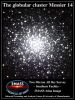
M-014-2.jpgM 14 - Globular Star Cluster86 visite"Asinus in tegulis"
(Petronio)
"L'asino sul tetto"
(Dal "Satyricon". Detto beffardo usato per deridere coloro che parlano - seriamente - di cose inverosimili, ritenendole o anche prendendole per possibili o addirittura per vere)Nov 13, 2004
|
|

Moon, Venus and Jupiter from Earth.jpgThe Moon, Venus and Jupiter from Shiraz (Iran)161 visiteDa "NASA - Picture of the Day" del giorno 13.11.2004: " Early morning risers around the world have enjoyed the sight of bright planets in this week's predawn skies - further enhanced by the celestial spectacle of the waning crescent Moon. From some locations the Moon was seen to pass in front of Jupiter or Venus, a lunar occultation. Recorded near sunrise on November 10th from Shiraz, Iran, this eastern horizon view finds Jupiter (top) and a brilliant Venus in line with the Moon, a lovely conjunction of the three brightest objects in the night sky. Although the Moon has now fallen out of the early morning scene, Venus and Jupiter (along with a much fainter Mars) still precede the rising Sun above the eastern horizon". Una fotografia molto simile a quella ripresa dalla Turchia (Bursa) - già pubblicata nella Sezione dedicata a Giove - la quale ci mostra e dimostra che non è poi così difficile "cristallizzare" un particolare (e suggestivo) momento del Cielo.Nov 13, 2004
|
|

Tethys-PIA06518_modest.jpgTethys from approx. 7.900.000 Km56 visiteCaption NASA originale: "Two large craters and hints of several smaller ones are visible in this Cassini image of Saturn's icy moon Tethys (1060 Km across).
The image was taken in visible light with the Cassini spacecraft narrow angle camera on Sept. 23, 2004, at a distance of 7.9 MKMs from Tethys and at a Sun- Tethys-spacecraft, or phase, angle of 80°. The image scale is 48 Km per pixel. The image has been contrast-enhanced and magnified by a factor of four to aid visibility". Nov 12, 2004
|
|

SOL305-2R153447225EFF89CYP1313R0M1.jpgRight rear-view from Rover Spirit at 14:41, Mars Local Time - Sol 30556 visitenessun commentoNov 12, 2004
|
|

SOL305-2R153445835EFF89CKP1302L0M1.jpgLeft rear-view from Rover Spirit at 14:18, Mars Local Time - Sol 30556 visitenessun commentoNov 12, 2004
|
|

SOL305-2F153447382EFF89CYP1222L0M1~0.jpgFront-view from Rover Spirit at 14:43, Mars Local Time - Sol 30556 visitenessun commentoNov 12, 2004
|
|

OPP-SOL280-navcam_view-B285R1.jpgThe inner wall of Endurance Crater (Burns Cliff) - Sol 28071 visiteCaption NASA originale: ""Burns Cliff" during the rover's 280th martian day (Nov. 6, 2004). This cliff in the inner wall of "Endurance Crater" displays multiple layers of bedrock for the rover to examine with its panoramic camera and miniature thermal emission spectrometer. The rover team has decided that the farthest Opportunity can safely advance along the base of the cliff is close to the squarish white rock near the center of this image. After examining the site for a few days from that position, the the rover will turn around and head out of the crater". Già, Opportunity sta per uscire da Endurance. Ma dove andrà? Forse a controllare che lo "scudo termico" di cui abbiamo tanto detto e visto sia davvero lo "scudo termico"? Ce la farà ad arrivare sin là, o si "guasterà" prima?... Dobbiamo solo aspettare qualche altro Sol, e poi sapremo!...Nov 12, 2004
|
|
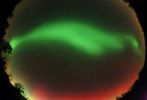
Aurora_Borealis-Coronal_Aurora.jpgCoronal Aurora near Warrensbourg - Missouri (USA)73 visiteIn relazione a quanto detto e scritto solo pochi giorni fa, ecco una nuova Aurora la quale, oltre ad essere stata particolarmente intensa (come potete ben vedere), è accaduta ad un latitudine che di Polare o presso-Polare non ha proprio nulla. La NASA dice che è un fenomeno inusuale ma "normale", vista l'attività solare di questi giorni. Permetteteci, a questo riguardo, una battuta: è proprio il fatto che sia la NASA a dire di non preoccuparci che ci fa preoccupare... EccoVi il commento originale da "NASA - Picture of the Day" del giorno 12.11.2004: "(...) Amazing! Unbelievable!, The best I've ever seen! ... They aren't talking about a movie, though. Instead, even casual sky critics are remarking on November's stunning auroral displays, visible with surprising intensities well beyond the confines of high latitudes where auroral activity is normally observed (...)". Vedete?!? Entusiasmo, eccitazione, linguaggio più da show che da Scienza e dintorni: è il nuovo corso della NASA...Nov 12, 2004
|
|
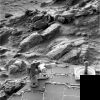
SOL304-2P153328458EFF89AIP2552L2M1.0.jpgPorous stones on Mars (1)73 visiteCi giunge dal Sol 304 un'immagine assolutamente incredibile e, per ora, completamente ignorata: pietre porose su Marte. Quante volte, in riva al mare o sul greto di fiumi ci siamo imbattuti in queste pietre che, di regola, ospitano delle minuscole forme di vita acquatica (e non solo)? Si tratta, di regola, di rocce ignee in origine, ma la porosità - a ben guardare - può anche derivare dal concorso di altri elementi, tra i quali non possiamo certo ignorare (oltre l'acqua) l'attività stessa di alcune creature viventi le quali, per "farsi una casa", rosicchiano, scavano, bucano etc.
Quale sarà, dunque, l'origine di queste DECINE di rocce porose fotografate da Spirit alle pendici, o poco più su, delle Columbia Hills? Che cosa mai ci racconteranno, questa volta, i nostri Amici del Controllo Missione? Nuovi "hints of a watery past on Mars"?!?
Guardate ora il dettaglio ingrandito di queste rocce che abbiamo preparato nel frame successivo... Nov 11, 2004
|
|
| 25353 immagini su 2113 pagina(e) |
 |
|
|
|
|
1917 | |
|
|
|
|





