| Ultimi arrivi |
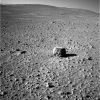
SOL325-2N155227983EFF9500P0665R0M1.jpgJust a lonely boulder...68 visitenessun commentoDic 05, 2004
|
|

Kemble_s Cascade Asterism.jpgThe "asterism" known as "Kemble's cascade"86 visite"...Coelum, non animo mutant, qui trans mare currunt..."
(Orazio)
"...I viaggiatori cambiano il cielo (sotto cui si muovono), non (la loro) natura..."Dic 05, 2004
|
|

APOLLO 15 AS 15 88-12008-HD Detail Mgnf.jpgAS 15-88-12008 - What is that!!! (ORIGINAL - HD - Detail mgnf)406 visiteIl dubbio che si tratti di un oggetto ESTERNO alla Navicella sussiste, ma non siamo in grado di sostanziarlo (almeno per ora).
Aggiornamento: in data 25.11.2004 abbiamo ricevuto i frames AS 88-12007, 12008 a 12009 in versione Originale e Uncompressed. Nel frame AS-12008 si vede molto bene, alla Dx dell'Osservatore (dettaglio purtroppo poco visibile nella versione per ora pubblicata sul Sito) la "Blue Flare" che tenne compagnia in svariati momenti agli Astronauti dell'Apollo 14! C'è dunque una possibile connessione fra questa "Blue Flare" e le luci blu e bianche che circondano la Navicella? Secondo noi è possibile, ma l'analisi dei frames ricevuti è appena iniziata e le sorprese, come sapete, non finiscono davvero mai...
Nel frattempo, Vi offriamo un dettaglio del frame AS-12008: guardate attentamente i "riflessi" e poi cercate di farVi venire in mente qualche intuizione. Noi attendiamo con fiducia...Dic 04, 2004
|
|

The F-Ring-PIA06144~1.jpgThe "F-Ring", alone58 visiteCaption NASA originale:"Zigzagging kinks and knots dance around Saturn in the F-Ring. From a great distance, as during Cassini's initial approach to Saturn in mid-2004, the F-Ring appears as a faint, knotted strand of material at the outer fringe of Saturn's immense ring system. From this close vantage point, just after the spacecraft rounded the planet to begin its second orbit, the F ring resolves into several ringlets with a bright central core. The core of the F ring is about 50 Km wide and is located at a distance of approximately 80.100 Km from Saturn's cloud tops". Dic 04, 2004
|
|

Prometheus-PIA06143_modest.jpgPrometheus and the F-Ring60 visiteAs it completed its first orbit of Saturn, Cassini zoomed in on the rings to catch this wondrous view of the shepherd moon Prometheus (102 Km across) working its influence on the multi-stranded and kinked F-Ring. The F-Ring resolves into five separate strands in this closeup view. Potato-shaped Prometheus is seen here, connected to the ringlets by a faint strand of material. Imaging scientists are not sure exactly how Prometheus is interacting with the F-Ring here, but they have speculated that the moon might be gravitationally pulling material away from the ring. The ringlets are disturbed in several other places. In some, discontinuities or "kinks" in the ringlets are seen; in others, gaps in the diffuse inner strands are seen. All these features appear to be due to the influence of Prometheus. The image was taken in visible light with the narrow angle camera on Oct. 29, 2004, at a distance of about 782.000 Km from Prometheus and at a phase angle of 147°. Scale is 4.7 Km per pixel".Dic 04, 2004
|
|
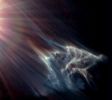
IC-0349-HST.jpgIC 349 and Merope - HST144 visite"...Quod nemo novit, paena non fit..."
(Apuleio)
"...Ciò che nessuno conosce, a nessuno fa danno..."Dic 04, 2004
|
|

Eros-PIA02495_modest.jpgSide view and front view of a bright crater60 visiteLighting and viewing geometries make a huge difference in the appearance of Eros' surface features. One of the most striking examples is the 2.7 Km diameter crater shown in these two images. The image at left, looking at the crater nearly edge-on, was taken February 16, 2000, from a range of 341 Km. The image at right was taken high over the crater on March 2, 2000, from a range of 226 Km. In the first image the only visible part of the crater's interior is the far, bright wall, which at the time was well-lit. The lighting, in combination with the particular viewing angle, make the crater appear stunningly bright. In the second view, the brighter material occupies only part of the slightly-shaded interior, greatly reducing the overall brightness contrast between the crater and the surrounding terrain.Dic 03, 2004
|
|

Wild 2-PIA06283_modest.jpgComet Wild 289 visiteThis is an artist's concept depicting a view of comet Wild 2 as seen from NASA's Stardust spacecraft during its flyby of the comet on Jan. 2, 2004.Dic 03, 2004
|
|

OPP-SOL297-2-merb_ncam_site38_pos97_cyl-B305R1_br2.jpgLooking for a "way out"... (2)87 visiteCome si diceva in sede di commento originale alla frazione di frame precedente, dunque, l'uscita da Endurance non deve essere azzardata. Nessuna "scorciatoia", quindi: si esce per la stessa strada dalla quale si era entrati e poi...E poi si vedrà che cosa fare e, soprattutto, si deciderà DOVE andare.
Noi suggeriamo, ancora una volta, di andare a dare un'occhiata da vicino allo "scudo termico"...Dic 03, 2004
|
|

OPP-SOL297-1-merb_ncam_site38_pos97_cyl-B305R1_br2.jpgLooking for a "way out"... (1) - Sol 29755 visiteCaption NASA originale:"As NASA's Mars Exploration Rover Opportunity was making its way back toward its original entry path into "Endurance Crater," scientists and engineers spotted what they hoped might be a shortcut for climbing out of the crater. The possible exit path, pictured on the far right of this image where the outcrop is punctuated, was eventually deemed too hazardous for the rover to attempt. Opportunity would have had to cross terrain with a slope of 28 degrees and face a tall rock outcropping very close to the exit chute opening which, itself, is too narrow for the rover to pass. This view combines several frames taken by the rover's navigation camera during Opportunity's 297th sol on Mars (Nov. 24, 2004). It is presented in a cylindrical projection with geometric seam correction. The location from which the image was taken has been designated as Opportunity's Site 38, Position 97". Dic 03, 2004
|
|

Saturn_s Rings-PIA06533_modest.jpgSaturn's Rings from about 631.000 Km62 visiteCaption NASA originale:"The usually bright B-Ring (at center) appears very dim in this view of the rings taken on the side of the rings that is not illuminated. The scene resembles a photographic negative, with bright and dark areas reversed (although in some places in the rings, the blackness of space is seen). From this viewing angle, the rings are lit from below: both dense and empty regions are dark, and regions of intermediate particle density are bright.
The image was taken with the Cassini spacecraft wide angle camera on Oct. 27, 2004, at a distance of about 631.000 Km from Saturn through a filter sensitive to wavelengths of visible violet light. The image scale is 34 Km per pixel". Dic 03, 2004
|
|

Saturn-the Encke Gap-PIA06534_modest.jpgThe "Encke Gap" of Saturn's Rings61 visiteCaption NASA originale:"An intriguing knotted ringlet within the Encke Gap is the main attraction in this Cassini image. The Encke Gap is a small division near the outer edge of Saturn's rings that is about 300 Km wide. The tiny moon Pan (20 Km across) orbits within the gap and maintains it.
Many waves produced by orbiting moons are also visible.
The image was taken in visible light with the Cassini spacecraft narrow angle camera on Oct. 29, 2004, at a distance of about 807,000 Km from Saturn. The image scale is 4,5 Km per pixel".
Dic 03, 2004
|
|
| 25353 immagini su 2113 pagina(e) |
 |
|
|
|
|
1906 | |
|
|
|
|





