| Ultimi arrivi |
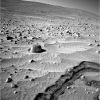
SOL337-2N156291102EFFA000P0665R0M1.jpgA lonely boulder and deep tracks (1)57 visiteQuesto frame, ripreso durante il Sol 337 di Spirit, ci mostra, oltre alle (consuete) profondissime tracce lasciate dal Rover sulle sabbie di Gusaev Carter, anche un macigno solitario il quale sembra poggiare all'interno di una piccola fossa, fatta a forma di cerchio. Osservate attentamente, dunque, l'avvallamento su cui si trova il macigno in questione: sul suo lato in luce (a sinistra dell'Osservatore) dovreste chiaramente vedere una porzione di terreno liscia e rotondeggiante, leggermente più scura rispetto al resto del paesaggio. E' sufficiente un modesto ingrandimento dell'immagine per rendersi conto che quest'area liscia circonda tutta la roccia, formando una circonferenza (almeno per quanto attiene il versante a noi visibile). Si tratta, certamente, della conseguenza di un evento naturale, ma ciò non toglie che ci troviamo davanti ad una conformazione del suolo Marziano davvero strana. Forse l'effetto di qualche dust-devil di modestissime dimensioni? O magari un semplice mulinello d'aria?Dic 15, 2004
|
|

Titan-W00003639.jpgClouds around Titan60 visiteImmagine di Titano ripresa da circa 29.000 Km. Oltre alle nuvole (sempre bianche e vaporose) non si riesce a distinguere alcun dettaglio della superficie di questa luna.Dic 15, 2004
|
|
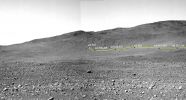
SOL149-PancamLabeled-A334R1.jpgSpirit's ascent on to "Husband Hill" (edited) - Sol 149115 visiteCaption NASA originale:"This view from where Spirit stood on its 149th martian day (June 3, 2004) shows, on the hillside at the center of the image, the terrain that the Rover is crossing six months later. The view is a mosaic of several frames taken with Spirit's panoramic camera.
NASA's Mars Exploration Rover Spirit has left the West Spur of the Columbia Hills and crossed a flatter saddle to the main body of Husband Hill. The Rover's course from the 313th to 330th Sol, of its mission (Nov. 19 to Dec. 6, 2004) is indicated on a mosaic view made from images taken with Spirit's panoramic camera on Sol 149 (June 3, 2004)".Dic 14, 2004
|
|

OPP-SOL291-Clouds-B313R1.jpgMartian clouds over Endurance Crater (2)105 visitecaption NASA originale:"Clouds appear in the martian sky above Endurance Crater in this mosaic of frames taken by the NavCam on NASA's Mars Exploration Rover Opportunity during the morning of the Rover's 291st sol (Nov. 17, 2004). The view spans an arc from the east on the left to the southwest on the right.
Opportunity has observed differences in cloudiness from one sol to the next, a reminder that Mars, like Earth, has daily weather as well as longer-term seasonal changes.
The images that are combined to produce this view have been processed to remove geometrical distortion associated with the camera's 45-degree field of view. In addition, special image processing has been applied to the original images to enhance the clouds and make them visible across the entire mosaic. Glare from the Sun washed out the clouds on the left in the original images; this glare was removed. The rim of Endurance has been processed separately and merged back with the sky to better show the context".Dic 14, 2004
|
|

OPP-SOL290-Clouds-B313R1.jpgMartian clouds over Endurance Crater (1)114 visiteCaption NASA originale:"Clouds add drama to the sky above Endurance Crater in this mosaic of frames taken by the navigation camera on NASA's Mars Exploration Rover Opportunity at about 9:30 a.m. on the rover's 290th sol (Nov. 16, 2004). The view spans an arc from east on the left to the southwest on the right.
These clouds are part of a band that forms near the equator when Mars is near the part of its orbit that is farthest from the Sun. For Opportunity (and Spirit and the rest of the southern hemisphere), this occurs in late fall and early winter. During this period, atmospheric temperatures and the amount of water vapor combine to form large-scale clouds. These clouds look like Earth's cirrus clouds and share other similarities with cirrus clouds in that they are believed to be composed entirely of water-ice particles with sizes on the order of several micrometers (a few ten-thousandths of an inch)".Dic 14, 2004
|
|

Titan-PIA06151_modest.jpgTitan from about 810.000 Km59 visiteCaption NASA originale:"The bright and dark regions near the center of the frame are features on Titan's surface. The image has been processed to make features more visible. The surface contrast is degraded toward the edges of the disk due to the effects of Titan's smoggy atmosphere. The region seen here is similar to that seen during Cassini's first close flyby of Titan in October. The bright area toward the bottom of the image is the region dubbed "Xanadu." North is to the upper right.
The image was acquired at a distance of approximately 810.000 Km and the image scale is 4.8 Km per pixel". Ed ora una curiosità: guardate il bordo di Titano, in alto alla Vostra Dx, ad ore 2, c'è un rilievo rotondeggiante (una "cupola scura") perfettamente visibile. Non sembra un difetto della foto o un artifact derivante da vizio di processo e/o di compressione dell'immagine. E allora, secondo Voi, che cos'è? Dic 14, 2004
|
|

M-033-3.jpgM 33 - Spiral Galaxy101 visite"Il Tempo ed il Movimento sono solo illusioni, create come aiuto alla nostra incapacità di cogliere la Realtà nella sua interezza. Tutto ciò che esiste, esiste come "percorso": da questo punto di vista la nostra intera Esistenza è equiparabile ad un cammino fatto di scelte, ognuna delle quali ci immette su un determinato percorso. Non esiste nulla di predeterminato nella Realtà: siamo noi che, scegliendo un percorso, scegliamo anche una Realtà e la percezione ad essa relativa. Possiamo cambiare percorso tutte le volte che vogliamo, sempre. Ciò che non possiamo modificare, tuttavia, è la percezione di un evento (e dunque della Realtà relativa ad un certo percorso) dopo che lo abbiamo scelto e vissuto. Cerco di spiegarmi meglio: io faccio il netturbino, ma nei bidoni e nei cassonetti vedo solo quello che io ho scelto di trovare, non ciò che qualcun altro ha deciso di gettare via. D'altra parte, se scegliessi la via della percezione elementare, troverei solo spazzatura"
P.C. Floegers - "Dilbert riletto"Dic 14, 2004
|
|
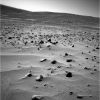
SOL335-2N156104207EFF9946P0757R0M1.jpgSand dunes near Spirit, on Sol 335 (3)57 visitenessun commentoDic 13, 2004
|
|
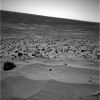
SOL335-2N156104056EFF9946P0757R0M1.jpgSand dunes near Spirit, on Sol 335 (2)57 visiteProsieguo della panoramica sulle dunette che circondano Spirit. Una curiosità: guardate attentamente il macigno che, in questo frame, è visibile sull'estrema Sn dell'Osservatore. Non sembra anche a Voi che assomigli - moltissimo - alla roccia ripresa dalla Sonda Soujourner-Pathfinder e chiamata "Yogi"?!?
Fateci caso...Dic 13, 2004
|
|
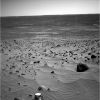
SOL335-2N156104005EFF9946P0757R0M1.jpgSand dunes near Spirit, on Sol 335 (1)57 visiteUn macigno (boulder) solitario ed una suggestiva area sabbiosa che ricorda il greto di un fiume in secca. Le "onde" disegnate da queste dune di modestissime dimensioni sono davvero stupende, come stupendo e suggestivo è il resto del paesaggio, illuminato da un Sole che non sembra - almeno a giudicare dalle immagini - così "freddo" ed "incapace di riscaldare", come gli Scienziati ci ripetono da tempo, un pianeta "morto e desolato".
L'istantanea è stata effettuata alle 13:00 MLT.Dic 13, 2004
|
|

Japetus-N00025365.jpgThe anomalous moon "Japetus" from approx. 4,7 MKMs58 visitenessun commentoDic 13, 2004
|
|
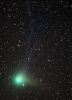
Comets-Comet_Mach_Holz.jpgThe C/2004 Q2 Comet106 visiteScoperta solo pochi mesi fa, la Cometa C/2004 Q2 (Machholz) è già chiaramente visibile (a magn. 5 o superiore) nei Cieli del Sud. Ma nessuna paura, non occorrerà viaggiare per vederla: essa si sta rapidamente portando verso i nostri Cieli e, nel frattempo, continuerà ad aumentare il suo splendore (probabilmente sino alla prima metà di Gennaio 2005). La luminosità massima che C/2004 Q2 potrà raggiungere non ci è ancora nota; ciò che sappiamo, invece, è che essa resterà nei "nostri" Cieli per buona parte del 2005 e la potremo anche vedere in prossimità della Stella Polare nei primi giorni di Marzo. L'immagine che Vi proponiamo (da "NASA - Picture of the Day" del 13.12.2004) è stata ripresa ai primi di Dicembre e, come potete vedere, la cometa già ci mostra una consistente "chioma", un'abbondante coda di polveri e detriti (di colore bianco e verde) ed un'abbastanza intricata "coda ionica" (andante verso la Dx dell'Osservatore), che presenta delle increspature verso la fine. Dic 13, 2004
|
|
| 25353 immagini su 2113 pagina(e) |
 |
|
|
|
|
1900 | |
|
|
|
|





