| Ultimi arrivi |

OPP-SOL328-1P157306437EFF40A3P2578R3M1.jpgThe Heat-Shield and its surroundings (1) - Sol 32899 visiteEccoVi ora una sequenza di frames (relativi ai Soles 328 e 329) che rappresentano delle vedute ravvicinate dello Scudo Termico, dell'area circostante (ricoperta da innumerevoli frammenti metallici scintillanti) e del cratere prodottosi a seguito dell'impatto non frenato di questa componente della Navicella con il suolo di Meridiani Planum. Delle belle immagini, senza dubbio.Dic 28, 2004
|
|

Saturn-PIA06164-br500.jpgSaturn, Titan and Mimas in real colors60 visiteCaption NASA originale:"From its station nearly 1,2 BKMs (or 746 MMs) from Earth, the stalwart Cassini spacecraft sends holiday greetings to Earth with this lovely color portrait of Saturn and two of its moons. This color portrait serves as reminder of the Saturnian places we have already seen and the promise of future discovery at Titan when the European Space Agency's Huygens probe arrives at Titan on Jan. 14, 2005. A grayish, oval-shaped storm is visible in Saturn's southern hemisphere and is easily 475 Km across - the size of some hurricanes on Earth. Titan is visible near lower right with its thick, orange-colored atmosphere, and faint Mimas (398 Km across) appears just right of the rings' outer edge. Images taken in the red, green and blue filters with the Cassini spacecraft wide angle camera on Dec. 14, 2004, were combined to create this color view at a distance of approximately 719.000 Km from Saturn. The image scale is 43 Km (or 27 miles) per pixel".Dic 28, 2004
|
|

Enceladus-PIA06547_modest.jpgEnceladus in visible light60 visiteCaption NASA originale:"Hints of the curving linear grooves that crisscross bright, icy Enceladus are just discernible in this image captured by the Cassini spacecraft. Enceladus is almost entirely composed of water ice and has a surface as bright as snow. Its diameter is 499 Km (310 miles).
This view shows principally the leading hemisphere of Enceladus. The image was taken in visible light with the Cassini spacecraft narrow angle camera on Nov. 1, 2004, at a distance of 1,8 MKMs from Enceladus and at a Sun-Enceladus-spacecraft, or phase, angle of 108°. North is up. The image scale is about 11 Km (or 7 miles) per pixel. The image has been magnified by a factor of two and contrast enhanced to aid visibility of surface features". Dic 28, 2004
|
|

Saturn.jpgSaturn in real colors60 visitenessun commentoDic 28, 2004
|
|

M-031-9.jpgThe "core" of M 31104 visite"...Due proposizioni contraddittorie non possono essere entrambe vere. Esse non possono, cioè, coesistere in Natura.
Volete un esempio? Ma certo! Pensate ad un albero: esso è un albero, oppure NON lo è. Esiste forse una terza possibilità?..."
"Logica, Principii ed Assiomi"Dic 28, 2004
|
|
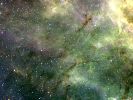
The_Tarantula_Nebula-R136.jpgInside the Large Magellanic Cloud: the "Tarantula Nebula"90 visite"...Non mi importa che la mia opera venga letta ora, oggi, o dalla Posterità, fra mille e più di mille anni.
Potrò tranquillamente aspettare un secolo i miei Lettori, poichè Dio stesso ha atteso un Osservatore per seimila anni.
Il mio è un trionfo: ho rubato l'Aureo Segreto degli Egiziani ed ora, voglio abbandonarmi al mio Sacro Furore..."
Edgar Allan Poe - "Eureka"Dic 28, 2004
|
|

s going to Titan-IMG000616-br500.jpgDown to Titan!75 visiteCaption NASA originale:"This artist's conception of the Cassini orbiter shows the Huygens probe separating to enter Titan's atmosphere. After separation, the probe drifts for about 3 weeks until reaching its destination, Titan. Equipped with a variety of scientific sensors, the Huygens probe will spend 2-2,5 hours (maybe more) descending through Titan's dense, murky atmosphere of nitrogen and carbon-based molecules, beaming its findings to the distant Cassini orbiter overhead. The probe could continue to relay information for up to 30 minutes after it lands on Titan's frigid surface, after which the orbiter passes beneath the horizon as seen from the probe". Dic 24, 2004
|
|
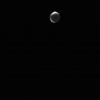
Japetus-N25973.jpgJapetus from approx. 2,2 MKM62 visiteGiapeto: in questa immagine, ripresa da una considerevolissima distanza, possiamo vedere una parte del suo "volto": quella più scura ed enigmatica. La causa del buio che regna su un'ampia porzione della superficie di Giapeto viene attribuita, da qualche Scienziato, alla possibile presenza, su di essa, di enormi depositi di polveri (di carbone o, comunque, di qualcosa di molto simile alle polveri di carbone) i quali, letteralmente, "soffocano e spengono" tutta la luce che arriva. Un Mondo tenebroso, quindi: un Mondo fatto più di ombra che di luce.
Un Mondo, dunque, che sarebbe ancora più affascinante tentare di scoprire...Dic 24, 2004
|
|

SOL346-2R157091826EFFA225P1314L0M1.jpgSpirit's looking back...on Sol 34658 visitenessun commentoDic 24, 2004
|
|

SOL346-2F157091919EFFA225P1214L0M1.jpgSpirit's looking ahead...on Sol 34657 visitenessun commentoDic 24, 2004
|
|

Huygens to Titan-IMG001244-br500.jpgHuygens probe's going to Titan91 visiteAn artist's concept of the European Space Agency's Huygens Probe en route to Titan after release from the NASA Cassini orbiter. Dic 24, 2004
|
|

OPP-SOL324-1F156948133EFF4072P1202L0M1.jpgIn front of the Heat-Shield - Sol 32465 visitenessun commentoDic 23, 2004
|
|
| 25353 immagini su 2113 pagina(e) |
 |
|
|
|
|
1893 | |
|
|
|
|





