| Ultimi arrivi |

SOL350-2N157449052EFFA241P0655R0M1.jpgPanorama on Sol 350 (1)58 visiteVi offriamo 3 cartoline da Marte - Gusaev Crater - riprese durante il 350mo Sol di permanenza del Rover Spirit nell'Area in questione.
Il nostro suggerimento, in quanto Ricercatori, è quello di dare una occhiata - con attenzione - alle rocce che circondano il robot semovente: secondo noi c'è materiale "visivo" sufficiente per redigere (seguendo lo stile di "Enterprise Mission" in generale e di Steve Troy in particolare) una lunghissima lista di (presunte) Anomalie di superficie (con ciò intendendosi dei massi dalle forme così strane da far pensare ad una loro possibile origine artificiale).Dic 29, 2004
|
|

OPP-SOL330-1NN325EFF40CYLA3P0685L000M1-crop-B330R1.jpgThe Heat-Shield and its surroundings - full panorama - Sol 33085 visiteCaption NASA originale:"Mars Exploration Rover Opportunity gained this view of its own Heat-Shield during the Rover's 325th Sol (Dec. 22, 2004). The main structure from the successfully used shield is to the far left; additional fragments of the Heat-Shield lie in the upper center of the image. The Heat Shield's impact mark is visible just above and to the right of the foreground shadow of Opportunity's camera mast. This view is a mosaic of 3 images taken with the rover's NavCam". E con questo splendido ed esauriente panorama che ricopre tutta l'area d'impatto dello Scudo - dal cratere che si è formato, ai frammenti sparsi dappertutto - chiudiamo l'indagine relativa a quella che avevamo originariamente (ed erroneamente) classificato come un'Anomalia di Superficie. Fra pochi Soles, in base ai dati NASA ufficiali, Opportunity si rimetterà in marcia, dirigendosi verso Sud. Che cosa troverà, dunque, oltre alle sabbie, alle sferule ed alle curiose dunette che formano il deserto arancione di Meridiani Planum?!?...Dic 29, 2004
|
|

ZG-Opportunity-Full_Traverse_Sol324-OSU-B330R1_br2.jpgOpportunity's full traverse up to the Heat-Shield158 visiteCaption NASA originale:"Opportunity is approaching the Heat Shield that protected the Rover from frictional high temperatures during descent through the martian atmosphere in January 2004. The spacecraft carrying the Rover jettisoned the Heat-Shield just prior to landing. This orbital view shows the course the Rover drove from its landing to its 324th Sol (Dec. 21, 2004), including the historic path of Opportunity's 6 months of exploration inside Endurance Crater. Opportunity drove 90.9 meters (such as 298 feet) on sol 324, bringing its total odometry to 1.997.8 meters (such as 1,24 miles)".Dic 29, 2004
|
|
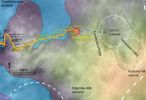
ZN-SOL343-Spirit_travmap_GeoDEM_2-A350R1.jpgThe path of Spirit up to Sol 343205 visiteCaption NASA originale:"As NASA's Mars Exploration Rover Spirit continues to explore the "Columbia Hills" within Gusaev Crater, scientists are planning to take a closer look for layered rocks in a steep valley straight ahead before directing the rover to turn south toward the summit of "Husband Hill." Two of the geologic formations the six-wheeled robotic geologist has discovered during 2004 are shown here. One is labeled "Columbia Hills material," representing bedrock of the higher slopes and peaks, and one is labeled "transition zone material," representing rocks that are gradational in character and composition between the hills to the east and the plains to the west. The map also shows Spirit's line of travel through the rover's 344th Sol (Dec. 21, 2004), beginning on the left edge at about the 182nd Sol (July 7, 2004)".Dic 29, 2004
|
|

Huygens-IMG001254-br500.jpgThe "Huygens Probe" - detail mgnf139 visiteCaption NASA originale: "The European Space Agency's Huygens Probe appears shining as it coasts away from Cassini in this close-up of an image taken on Dec. 26, 2004, just two days after it successfully detached from the Cassini spacecraft.
Shown here side-by-side is a close-up of the Huygens probe. The image on the left shows the relative size of the probe. The bright spots in both images are probably due to light reflecting off the blanketing material that covers the probe".Dic 29, 2004
|
|

Huygens-IMG001253-br500.jpgThe "Huygens Probe", "camera artifacts" and 4 "known" stars86 visiteShown in white boxes are known stars; the probe is the brightest item on the lower right. The other dots are artifacts of the camera. Although only a few pixels across, this image is helping navigators reconstruct the probe's trajectory and pinpoint its position relative to Cassini. This information so far shows that the probe and Cassini are right on the mark and well within the predicted trajectory accuracy. This information is important to help establish the required geometry between the probe and the orbiter for radio communications during the probe descent on January 14. The Huygens probe, built and managed by ESA, will remain dormant until the onboard timer wakes it up just before the probe reaches Titan's upper atmosphere. Then it will begin a dramatic plunge through Titan's murky atmosphere, tasting its chemical makeup and composition as it descends to touch down on its surface. The data gathered during this 2,5 hours descent will be transmitted from the probe to the Cassini orbiter. Afterward, Cassini will point its antenna to Earth and relay the data through NASA's Deep Space Network to JPL and on to the European Space Agency's Space Operations Center in Darmstadt, Germany, which serves as the operations center for the Huygens probe mission.
Dic 29, 2004
|
|

NGC-6293-6.jpgNGC 6293 - The Helix Nebula (HD)80 visite"...Il progresso della vera Scienza si realizza, come la Storia dimostra ampiamente, attraverso salti intuitivi...La Verità, si badi bene, non è sempre dimostrabile..."
Edgar Allan Poe - "Eureka"Dic 29, 2004
|
|
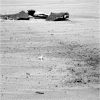
OPP-SOL329-1P157387164EFF40A3P2360L7M1.jpgThe Heat-Shield and its surroundings (6)90 visiteUn enorme quantitativo di scintillanti frammenti dello Scudo Termico, di ogni forma e dimensione, giacciono sparpagliati in ogni direzione nel raggio di qualche decina di metri. Le immagini sono davvero interessanti e stimolano una riflessione: in fondo, ciò che stiamo "guardando ed immortalando", adesso, non è nient'altro che un mucchio di rottami. E allora permetteteci una battuta: che l'opera di "littering" di Marte ad opera dell'Uomo fosse già iniziata?!?...Dic 28, 2004
|
|

OPP-SOL329-1P157386994EFF40A3P2360L7M1.jpgThe Heat-Shield and its surroundings (5)56 visitenessun commentoDic 28, 2004
|
|
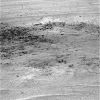
OPP-SOL329-1P157386825EFF40A3P2360L7M1.jpgThe Heat-Shield and its surroundings (4)66 visitenessun commentoDic 28, 2004
|
|
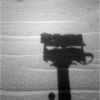
OPP-SOL328-1P157314510EFF40A3P2360L7M1.jpgThe Heat-Shield and its surroundings (3)66 visiteL'ombra della "testa" di Opportunity si proietta maestosamente sul suolo di Marte che, come potete vedere chiaramente, è quasi totalmente ed uniformemente ricoperto (almeno in questa zona) dalle enigmatiche "sferule" - ovvero i famosissimi "Martian berries'"....Dic 28, 2004
|
|

OPP-SOL328-1P157306731EFF40A3P2360L2M1.jpgThe Heat-Shield and its surroundings (2)79 visiteIl "cratere" da impatto prodottosi a seguito dell'urto dello Scudo con il Suolo Marziano. Così, ad occhio, sembrano vedersi delle aree "scure" che assomigliano a delle bruciature (ma potrebbe anche trattarsi di un'illusione causata dal particolare filtro-colore usato). Voi che ne dite?!?Dic 28, 2004
|
|
| 25353 immagini su 2113 pagina(e) |
 |
|
|
|
|
1892 | |
|
|
|
|





