| Ultimi arrivi |

OPP-SOL032-PIA05484-LUNEXIT_STYLE.jpgSkyline, with Endurance Crater in the distance - Sol 32 (Absolute Natural Colors; credits for the additional process. and color.: Dr Paolo C. Fienga - Lunexit Team)174 visitenessun commentoMareKromiumSet 27, 2011
|
|

OPP-SOL032-PIA05484-NASA_STYLE.jpgSkyline, with Endurance Crater in the distance - Sol 32 (Approx. True Colors; credits for the additional process. and color.: Dr Paolo C. Fienga - Lunexit Team)171 visiteCaption NASA:"This image taken by the Mars Exploration Rover Opportunity's PanCam shows the Eastern Plains that stretch beyond the small Crater where the Rover Landed. In the distance, the Rim of a larger Crater dubbed "Endurance" can be seen. This mosaic was taken on the 32nd Martian Day, or Sol, of the Rover's mission and spans 20° of the Local Horizon. It was taken while Opportunity was parked at the North end of the Outcrop, in front of the rock region dubbed "El Capitan", and facing East.
The features seen at the horizon are the near and far rims of "Endurance," the largest crater within about 6 Km (approx. 4 miles) of the Lander. Using orbital data from the Mars Orbiter Camera on NASA's Mars Global Surveyor Spacecraft, scientists estimated the crater to be approx. 160 meters (175 yards) in diameter, and about 720 meters (half a mile) away from the Lander. The highest point visible on Endurance is the highest point on the far Inner Wall of the Crater; the Sun is illuminating the inside of the Wall itself.ù
Between the location where the image was taken at "El Capitan" and "Endurance" are the flat, smooth Meridiani Plains, which scientists believe are blanketed in the Iron-bearing mineral called Hematite. The dark horizontal feature near the bottom of the picture is a small, approx. 5-meter (16-feet) Crater, only 50 meters (164 feet) from Opportunity's present position. When the Rover leaves the Crater some 2 to 3 weeks from now, Endurance will be the destinations".MareKromiumSet 27, 2011
|
|

Hills-Zephyria_Region-PIA07859-00.jpgFlow Features and Hills in Zephyria Planum (Absolute Natural Colors; credits for the additional process. and color.: Dr Paolo C. Fienga - Lunexit Team) 276 visiteCaption NASA originale:"This MGS-MOC image shows a Plain covered by Flow Material that surrounded and banked against 3 older, rounded Hills in the Zephyria Region. Although some investigators have proposed that the Flows covering Plains in this Region are the remains of an ice-covered lake, others have found considerable evidence, including small Volcanoes, to suggest that the Flows are Volcanic. The textures on these Flows resemble that of some of the Lava Flows in the Tharsis Region of Mars".
Location near: 2,7° South Lat. and 195,7° West Long.
Image width: ~3 Km (~1,9 mi)
Illumination from: lower left
Season: Southern WinterMareKromiumSet 27, 2011
|
|

Flow_Features-Zephyria_Planum-PIA03066.jpgFlow Features in Zephyria Planum (Absolute Natural Colors; credits for the additional process. and color.: Dr Paolo C. Fienga - Lunexit Team) 246 visiteOriginal caption:"This MGS-MOC image shows the broken, platy texture of Flow Surfaces in the Zephyria Region of Mars. Some investigators have suggested that these materials represent the remains of an ice-covered lake; others suggest that these are the Surfaces of hardened Lava that - when it was erupting - was very hot and fluid. Although not illustrated here, a key piece of evidence against the ice-covered lake hypothesis is that there are some small Craters formed on these Surfaces, and some of them have Boulders in their Ejecta Blanket. The Boulders indicate that the material is rock-solid".
Location near: 5,3° North Lat. and 208,6° West Long.
Image width: width: ~3 Km (~1,9 mi)
Illumination from: lower left
Season: Northern AutumnMareKromiumSet 27, 2011
|
|

Flow_Features-Zephyria_Planum.jpgFlow Features in Zephyria Planum (Absolute Natural Colors; credits for the additional process. and color.: Dr Paolo C. Fienga - Lunexit Team) 253 visiteOriginal caption:"This MGS-MOC image shows the solidified remains of Flows — probably Lava, but possibly Mud — in the Zephyria Region of Mars, south of Cerberus Fossae".
Location near: 5,2° North Lat. and 203,6° West Long.
Image width: ~3 Km (~1,9 mi)
Illumination from: lower left
Season: Northern AutumnMareKromiumSet 27, 2011
|
|

Utopia_Planitia-PIA07839.jpgPolygons in Utopia Planitia (Absolute Natural Colors; credits for the additional process. and color.: Dr Paolo C. Fienga - Lunexit Team)237 visiteCaption NASA originale:"This MGS-MOC image shows a typical view of Polygon-cracked and Pitted Surfaces unique to Western Utopia Planitia. No other place on Mars has this appearance. Some Mars scientists have speculated that ground ice may be responsible for these landforms".
Location near: 42,3° North Lat. and 275,6° West Long.
Image width: ~3 Km (~1,9 mi)
Illumination from: lower left
Season: Northern SummerMareKromiumSet 27, 2011
|
|

Aeolian_Featueres-Windstreaks-PIA14783-PCF-LXTT.jpgWindstreaks in Syrtis Major Planum (Absolute Natural Colors; credits for the additional process. and color.: Dr Paolo C. Fienga - Lunexit Team)149 visiteOrbit Number: 42965;
Latitude: 7,5511° North;
Longitude: 69,5825° East;
Instrument: VIS;
Captured: August, 22nd, 2011.MareKromiumSet 24, 2011
|
|

Rhea-PIA14574-PCF-LXTT.jpgRhea in the Saturnshine (Enhanced Absolute Natural Colors; credits for the additional process. and color: Dr Paolo C. Fienga - Lunexit Team)144 visiteCaption NASA:"Southern Terrain on Saturn's moon Rhea is dimly illuminated by Saturnshine in this Cassini Spacecraft view of the dark side of the moon. The Spacecraft's camera is looking toward the night side of Rhea, but sunlight reflected off the day side of immense Saturn is bright enough to illuminate the Craters seen here. This view is centered on Terrain located at about 23° South Latitude and 315° West Longitude. A few background stars are visible.
The image was taken in Visible Light with the Cassini Spacecraft wide-angle camera on Aug. 1, 2011. The view was obtained at a distance of approx. 6000 Km (such as about 3700 miles) from Rhea and at a Sun-Rhea-Spacecraft, or Phase, Angle of 113°. Scale in the original image was 800 meters (2600 feet) per pixel. The image was contrast enhanced and magnified by a factor of 1.5 to enhance the visibility of the surface features".MareKromiumSet 24, 2011
|
|

SOL706-2N189046444EFFAL00P0775R0M1-PCF-LXTT.jpgJust like Waves... - Sol 706 (Absolute Natural Colors; credits for the additional process. and color.: Dr Paolo C. Fienga - Lunexit Team)116 visitenessun commentoMareKromiumSet 24, 2011
|
|

OPP-SOL033-ElCapitan-PCF-LXTT.jpgEl Capitan - Sol 33 (Natural Colors; credits for the additional process. and color.: Dr Paolo C. Fienga - Lunexit Team)205 visitenessun commentoMareKromiumSet 24, 2011
|
|
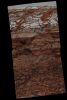
OPP-SOL173-B_P2401_L257_ANC-B173R1_br2-PCF-LXTT.jpgFeatures of the Inner Rim of Endurance Crater - Sol 173 (Enhanced Natural Colors; credits for the additional process. and color.: Dr Paolo C. Fienga - Lunar Explorer Italia)163 visitenessun commentoMareKromiumSet 24, 2011
|
|
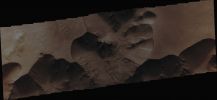
Juventae_Chasma-PIA14785-PCF-LXTT.jpgFeatures of Juventae Chasma (Absolute Natural Colors; credits for the additional process. and color.: Dr Paolo C. Fienga - Lunexit Team) 146 visiteOrbit Number: 43008;
Latitude: 4,849° South;
Longitude: 296,607° East;
Instrument: VIS;
Captured: August, 25th, 2011;
Mars Local Time (M.L.T.): 12:46 (Early Afternoon)
MareKromiumSet 24, 2011
|
|
| 25353 immagini su 2113 pagina(e) |
 |
|
|
|
|
175 | |
|
|
|
|





