| Ultimi arrivi |

0009-Artemis_One-Far_Side_of_the_Moon.jpgThe bright and yet dark side of the Moon...99 visiteNASA officials say Artemis 1 mission teams are "giddy" after witnessing how well their Orion spacecraft has been performing so far on its way towards Lunar Orbit.
Artemis 1 launched at 01:47 EST (06:47 GMT) on Nov. 16, blasting off from Kennedy Space Center in Florida in a spectacular display of the sheer power of NASA's Space Launch System (SLS) rocket. The Orion spacecraft reached Earth orbit shortly after, and then at 87 minutes after launch performed a so-called Trans Lunar Injection burn to send it hurtling towards the moon. On Monday (Nov. 21), Orion performed another burn to send the Spacecraft close enough to the Lunar Surface to leverage (---> use, take advantage of) the Moon's Gravity to pull the Spacecraft around the Moon itself into a distant retrograde orbit.
After collecting data from that propulsive maneuver, NASA Officials held a briefing Monday evening (Nov. 21) to discuss Orion's powered flyby of the Moon. Judd Frieling, flight director at NASA's Johnson Space Center, said Orion Mission Team Members are "giddy" (to have a sensation of whirling and then a tendency to fall; synonym: dizzy) with the current performance they are seeing from the spacecraft after the flyby, which saw the Spacecraft come within about 80 miles of the Lunar Surface.MareKromiumNov 28, 2022
|
|

0008-Artemis_One-photo1669033801.jpegWhat a "Couple"!118 visitenessun commentoMareKromiumNov 22, 2022
|
|
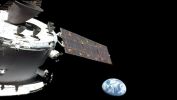
0005-Artemis_One.jpgLook at Us!101 visitenessun commentoMareKromiumNov 22, 2022
|
|

0006-Artemis_One-photo1669025926.jpegHello Moon!100 visitenessun commentoMareKromiumNov 22, 2022
|
|

0001-Artemis_One-52503823645_68f1fc0f28_o.jpgLift-off: back to the Moon?!?114 visiteThe most powerful rocket in the World, carrying the Orion Spacecraft, goes on the Artemis I flight test, Wednesday, Nov. 16, 2022, from Launch Complex 39B at NASA’s Kennedy Space Center in Florida at 1:47 a.m. EST.MareKromiumNov 22, 2022
|
|

0002-Artemis_One.jpgThe Artemis Mission130 visiteFrame auto-esplicativo.MareKromiumNov 22, 2022
|
|

0003-Artemis_One.jpgLook! The Moon, again...116 visiteOn Nov. 20, 2022, such as the fifth day of the 25,5-day Artemis I mission, a camera mounted on the tip of one of Orion’s solar array wings captured this footage of the Spacecraft and the Moon as it continued to grow nearer to our neighbor. The Spacecraft entered the lunar sphere of influence at 2:09 p.m. EST, making the Moon, instead of Earth, the main gravitational force acting on it. Orion completed its first fly-by on the morning of Nov. 21, 2022.MareKromiumNov 22, 2022
|
|
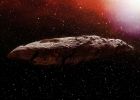
Comet_Oumuamua-3.jpgMore questions...93 visiteDopo 5 anni dalla sua comparsa nel nostro sistema solare Oumuamua rimane uno degli argomenti che più accendono la fantasia di ricercatori e appassionati di vita extraterrestre. Avi Loeb, celebre astrofisico di Harvard, continua a senza demordere ad affermare che quello strano asteroide interstellare non è altro che un oggetto costruito da qualche civiltà aliena. In lingua hawaiana Oumuamua significa "messaggero che arriva da lontano" e in effetti stiamo ancora capendo da dove provenga, tentando di analizzarne la natura grazie ai dati registrati dai nostri telescopi, prima che scomparisse di nuovo nella galassia.
L'idea di Loeb su questo oggetto è stata subito radicale e non in linea con il tipo di ricerca fatta dalla comunità scientifica: secondo lui era una vela a propulsione leggera prodotta dagli alieni. "Gli scienziati del mainstream dovrebbero stanziare fondi per trovare il prossimo oggetto simile a Oumuamua e identificare oltre ogni ragionevole dubbio la sua natura", ha scritto Loeb.
L'astrofisico da circa un anno ha fondato il Progetto Galileo che utilizzerà i dati per elevare la ricerca di tecnologia extraterrestre da osservazioni aneddotiche e leggende a ricerca scientifica sistematica.
MareKromiumNov 22, 2022
|
|
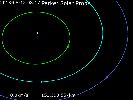
Parker_Solar_Probe_trajectory.gifThe Parker Solar Probe's Trajectory93 visiteInteressante.MareKromiumNov 16, 2022
|
|

SOL0144-Perseverance.pngThe VERY BEST image from Perseverance: Dark Night over Mars! - Sol 144109 visiteCarina. Almeno è "corretta ed onesta" (ergo venuta malissimo).
Caption NASA Originale:"NASA's Mars Perseverance rover acquired this image of the area in back of it using its onboard Rear Right Hazard Avoidance Camera. This image was acquired on July 16, 2021 (Sol 144) at the local mean solar time of 19:12:12".MareKromiumNov 14, 2022
|
|

SOL0316-Perseverance.pngWhat a COLOR!!! - Sol 31694 visiteCaption NASA Originale:"NASA's Mars Perseverance rover acquired this image of the area in back of it using its onboard Rear Right Hazard Avoidance Camera. This image was acquired on Jan. 9, 2022 (Sol 316) at the Local Mean Solar Time of 14:54:30".MareKromiumNov 14, 2022
|
|

SOL0405-Perseverance.pngUp-Sun - Sol 40572 visiteCaption NASA Originale:"NASA's Mars Perseverance Rover acquired this image of the area in back of it using its onboard Rear Right Hazard Avoidance Camera. This image was acquired on April 10, 2022 (Sol 405) at the Local Mean Solar Time of 15:51:23".MareKromiumNov 14, 2022
|
|
| 25353 immagini su 2113 pagina(e) |
 |
|
|
|
|
17 | |
|
|
|
|





