| Ultimi arrivi |
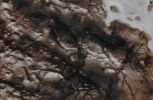
Chaotic_Terrain-Aram_Chaos-PIA02175-01.jpgFeatures of Aram Chaos (Enhanced Absolute Natural Colors; credits for the additional process. and color.: Dr Paolo C. Fienga - Lunexit Team) 163 visiteCaption NASA:"This image of part of Aram Chaos shows two different surface textures with distinctly different brightnesses. The lighter layer appears to be on top (therefore younger) than the darker surface".
Image information: VIS instrument;
Latitude: 2,1° North;
Longitude: 338,7° East;
Resolution: 17 meter/pixel.
MareKromiumOtt 25, 2011
|
|
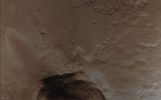
Craters-Unnamed_Crater_in_Arabia_Terra-PIA08473-01.jpgUnnamed Crater with "Pale" Windstreak in Arabia Terra (Absolute Natural Colors; credits for the additional process. and color.: Dr Paolo C. Fienga - Lunexit Team)163 visiteImage information: VIS instrument;
Latitude: 12,1° North;
Longitude: 3,7° East;
Resolution: 18 meter/pixel.MareKromiumOtt 25, 2011
|
|
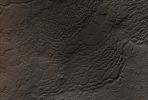
Chaotic_Terrain-Avernus_Chaos-PIA08719-01.jpgFeatures of Avernus Chaos (Enhanced Absolute Natural Colors; credits for the additional process. and color.: Dr Paolo C. Fienga - Lunexit Team) 160 visiteImage information: VIS instrument;
Latitude: 1,3° South;
Longitude: 173,4° East;
Resolution: 18 meter/pixel.MareKromiumOtt 25, 2011
|
|

ESP_023327_2065_RED_abrowse-PCF-LXTT-00.jpgDark Dust Devil Tracks on colourful Dunes (CTX Frame - Absolute Natural Colors; credits for the additional process. and color.: Dr Paolo C. Fienga - Lunexit Team)164 visiteMars Local Time: 14:09 (Early Afternoon)
Coord. (centered): 26,1° North Lat. and 57,0° East Long.
Spacecraft altitude: 304,8 Km (such as about 190,5 miles)
Original image scale range: 30,5 cm/pixel (with 1 x 1 binning) so objects ~ 91 cm across are resolved
Map projected scale: 25 cm/pixel
Map projection: EQUIRECTANGULAR
Emission Angle: 20,6°
Phase Angle: 36,0°
Solar Incidence Angle: 49° (meaning that the Sun is about 41° above the Local Horizon)
Solar Longitude: 330,5° (Northern Winter)
Credits: NASA/JPL/University of Arizona
Additional process. and coloring: Dr Paolo C. Fienga - Lunar Explorer Italia
Caption NASA:"Dust Devils leave Tracks behind them that create the beautiful swirling patterns visible in the EDM n.2 (approximately 0,5 Km, or about 0,3 miles across) and in many other images of Dust-covered Terrain. Suction created by the air rotating in a whirlwind removes a thin layer of light-colored Dust from the Martian Surface, leaving behind dark lines in the Dust Devil's path. That's what usually happens. In this case, however, there is an unusual Streak that appears brighter at one end (see EDM n.1 - approximately 0,6 Km or just about 0,4 miles across, with North is roughly upwards).
The bright Streak could be a deposit of light-colored Material that the Dust Devil dropped for some reason: maybe the Dust Devil died out right at this spot. Or it could be that at this particular location, the underlying dune is brighter than the dust on top of it, so when the dust devil removed the surface layer, a brighter layer below was revealed. Or there could be some other explanation we haven't even thought of yet!
Numerous small Slope Streaks are also visible in this image; for example, on the left side of the EDM n.2, indicated by the white arrow. These are thought to occur when a thin layer of Dust Avalanches downhill, revealing darker material beneath. Over time, these Streaks, like the DDTs, slowly brighten to match their surroundings, as Dust is deposited from the Atmosphere to cover them".MareKromiumOtt 25, 2011
|
|

ESP_023327_2065_RED_abrowse-PCF-LXTT-02.jpgDark Dust Devil Tracks on colourful Dunes (EDM n.1 - Enhanced Absolute Natural Colors; credits for the additional process. and color.: Dr Paolo C. Fienga - Lunexit Team)186 visiteMars Local Time: 14:09 (Early Afternoon)
Coord. (centered): 26,1° North Lat. and 57,0° East Long.
Spacecraft altitude: 304,8 Km (such as about 190,5 miles)
Original image scale range: 30,5 cm/pixel (with 1 x 1 binning) so objects ~ 91 cm across are resolved
Map projected scale: 25 cm/pixel
Map projection: EQUIRECTANGULAR
Emission Angle: 20,6°
Phase Angle: 36,0°
Solar Incidence Angle: 49° (meaning that the Sun is about 41° above the Local Horizon)
Solar Longitude: 330,5° (Northern Winter)
Credits: NASA/JPL/University of Arizona
Additional process. and coloring: Dr Paolo C. Fienga - Lunar Explorer ItaliaMareKromiumOtt 25, 2011
|
|

ESP_023327_2065_RED_abrowse-PCF-LXTT-01.jpgDark Dust Devil Tracks on colourful Dunes (EDM n.2 - Enhanced Absolute Natural Colors; credits for the additional process. and color.: Dr Paolo C. Fienga - Lunexit Team)185 visiteMars Local Time: 14:09 (Early Afternoon)
Coord. (centered): 26,1° North Lat. and 57,0° East Long.
Spacecraft altitude: 304,8 Km (such as about 190,5 miles)
Original image scale range: 30,5 cm/pixel (with 1 x 1 binning) so objects ~ 91 cm across are resolved
Map projected scale: 25 cm/pixel
Map projection: EQUIRECTANGULAR
Emission Angle: 20,6°
Phase Angle: 36,0°
Solar Incidence Angle: 49° (meaning that the Sun is about 41° above the Local Horizon)
Solar Longitude: 330,5° (Northern Winter)
Credits: NASA/JPL/University of Arizona
Additional process. and coloring: Dr Paolo C. Fienga - Lunar Explorer ItaliaMareKromiumOtt 25, 2011
|
|
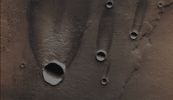
Aeolian_Features-Windstreaks-PIA08422-01.jpgBeautiful Windstreaks (Absolute Natural Colors; credits for the additional process. and color.: Dr Paolo C. Fienga - Lunexit Team)158 visiteCaption NASA originale:"This group of Windstreaks is located on Lava Flows, West of Arsia Mons".
Image information: VIS instrument;
Latitude: 11,0° South;
Longitude: 219,5° East;
Resolution: 18 meter/pixel.
MareKromiumOtt 25, 2011
|
|
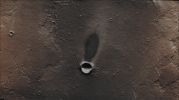
Aeolian_Features-Windstreaks-PIA08489-01.jpgBeautiful Windstreak (Absolute Natural Colors; credits for the additional process. and color.: Dr Paolo C. Fienga - Lunexit Team)171 visiteImage information: VIS instrument;
Latitude: 9,0° South;
Longitude: 224,4° East;
Resolution: 18 meter/pixel.MareKromiumOtt 25, 2011
|
|
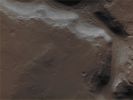
Channels-Auqakuh_Vallis-PIA08465-01.jpgFeatures of Auqakuh Vallis (Absolute Natural Colors; credits for the additional process. and color.: Dr Paolo C. Fienga - Lunexit Team) 138 visiteImage information: VIS instrument;
Latitude: 31,0° North;
Longitude: 60,6° East;
Resolution: 19 meter/pixel.MareKromiumOtt 25, 2011
|
|
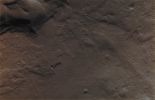
Channels-Auqakuh_Vallis-PIA08465-03.jpgFeatures of Auqakuh Vallis (Absolute Natural Colors; credits for the additional process. and color.: Dr Paolo C. Fienga - Lunexit Team) 137 visiteMareKromiumOtt 25, 2011
|
|

Aeolian_Features-Yardangs-20080111a.jpgAshes and Sulphur all over Apollinaris Patera (Extremely Enhanced Natural Colors; credits for the additional process. and color.: Dr Paolo C. Fienga - Lunexit Team) 162 visiteSe, per questo frame, la NASA sottolinea, per altro giustamente, l'aspetto legato ai "segni del vento" lasciati nei pressi dell'antico vulcano noto come Apollinaris Patera, noi preferiamo enfatizzare il "senso" di questa colorizzazione (forse un pò psichedelica, ma non fantasiosa).
Ricordate le istantanee Apollo 17 che ritraevano, nei pressi del Cratere noto come "Shorty", delle sabbie e detriti arancio/rossastri e che tanto stupirono la Comunità Scientifica? Ebbene, quel "bizzarro" colore della superficie lunare era solo l'evidenza di una remota attività vulcanica o di un, forse più recente, outgassing. Qualunque fosse l'origine del fenomeno, tuttavia, la sua causa venne chiarita attraverso l'analisi dei campioni riportati a Terra.
Per ricordare:"...On Earth, orange or rust-colored rocks and soil around volcanic vents are often the result of literal rusting of iron by volcanic water vapor. If this was the cause of the orange soil at Shorty then, small amounts of volcanic gasses might still be present (on the Moon)...".
Ed anche su Marte, ovviamente. Le "parole magiche", poi (e soprattutto per Marte), sono "ruggine causata da vapore acqueo". Ora la domanda è ovvia: perchè continuare a soffermarsi sulla tracce di "Aeolian Activities" quando c'è qualcosa - a nostro parere - di molto più intrigante da indagare?
Qualcosa che se, sulla Luna, poteva avere senso solo se riferita ad un remoto passato, su Marte potrebbe significare moltissimo in proiezione attuale e futura? Pensateci bene: il fenomeno del "rusting" (e quindi dei colori rosso/arancio accesi, sia sulla Luna, sia sulla Terra e sia su Marte o altrove nel Sistema Solare) si risolve nell'ossidazione di elementi ferrosi (iron-based and iron-rich elements) a causa della presenza di acqua (in qualche forma).
Perchè quindi ignorare il vapore acqueo (con la possibile "cappa di umidità" in perenne sospensione, come sostiene l'Amico Matteo Fagone) e parlare solo di "venti", di "yardangs", di "layers" e di tante altre cose certamente importanti e meravigliose, ma mai tanto importanti e meravigliose quanto l'eventuale - ed attuale - presenza di acqua sul Pianeta "Arrugginito"?
Ecco: alla fine, ben più di Cydonia e dei possibili "Artifacts Marziani", è questo il VERO "mistero"...MareKromiumOtt 25, 2011
|
|

OPP-SOL2732-1-PCF-LXTT.jpgRocky Outcrop near Endeavour's Crater Inner Rim - Sol 2732 (Enhanced Absolute Natural Colors; credits for the additional process. and color.: Dr Gianluigi Barca - Lunexit Team)184 visitenessun commentoMareKromiumOtt 22, 2011
|
|
| 25353 immagini su 2113 pagina(e) |
 |
|
|
|
|
162 | |
|
|
|
|





