| Ultimi arrivi |
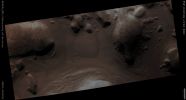
PSP_010536_2190_red-PCF-LXTT.jpgFlow-like Features in Nilosyrtis Region (Enhanced Absolute Natural Colors; credits for the additional process. and color.: Dr Paolo C. Fienga - Lunexit Team) 174 visiteMars Local Time: 15:23 (Early Afternoon)
Coord. (centered): 38,5° North Lat. and 61,7° East Long.
Spacecraft altitude: 309,4 Km (such as about 193,4 miles)
Original image scale range: 31 cm/pixel (with 1 x 1 binning) so objects ~ 93 cm across are resolved
Map projected scale: 25 cm/pixel
Map projection: EQUIRECTANGULAR
Emission Angle: 19,0°
Phase Angle: 70,4°
Solar Incidence Angle: 51° (meaning that the Sun is about 39° above the Local Horizon)
Solar Longitude: 147,2° (Northern Summer)
Credits: NASA/JPL/University of Arizona
Additional process. and coloring: Dr Paolo C. Fienga - Lunar Explorer Italia MareKromiumNov 16, 2011
|
|
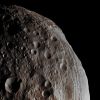
072-Vesta-Striations-PIA14678-PCF-LXTT.jpgStriations on Vesta (Absolute Natural Colors; credits for the additional process. and color.: Drr Gianluigi Barca and Paolo C. Fienga - Lunexit Team)182 visitenessun commentoMareKromiumNov 16, 2011
|
|

SOL040-PCF-LXTT.jpgHorizon - Sol 40 (Absolute Natural Colors; credits for the additional process. and color.: Dr Paolo C. Fienga - Lunexit Team)172 visitenessun commentoMareKromiumNov 16, 2011
|
|
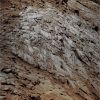
SOL1520--2-GB-PCF-LXTT.jpgRockland - Sol 1520 (Natural Colors; credits for the additional process. and color.: Drr Gianluigi Barca and Paolo C. Fienga - Lunexit Team)177 visitenessun commentoMareKromiumNov 16, 2011
|
|

087-Craters-Unnamed_Craters-PIA14974.jpgUnnamed Craters in the Northern Regions (Absolute Natural Colors; credits for the additional process. and color.: Dr Paolo C. Fienga - Lunexit Team)239 visitenessun commentoMareKromiumNov 16, 2011
|
|
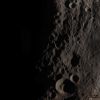
074-Vesta-PIA14776.jpgNight and Day on 4-Vesta (Absolute Natural Colors; credits for the additional process. and color.: Dr Paolo C. Fienga - Lunexit Team)187 visitenessun commentoMareKromiumNov 16, 2011
|
|

088-Craters-Unnamed_Crater-PIA15044-PCF-LXTT-1.jpgUnnamed Crater in Floronia Quadrant (Absolute Natural Colors; credits for the additional process. and color.: Dr Paolo C. Fienga - Lunexit Team)190 visiteThis Dawn FC (framing camera) image is dominated by an approx. 20 Km-wide, young, fresh Unnamed Impact Crater. Surrounding this Unnamed Crater is its Ejecta Blanket, which is a covering of small particles that were thrown out during the impact that formed it and the Ejecta Blanket is the cause of the smooth Surface visible all around the Crater itself. This Ejecta Blanket buried many older, degraded craters, but some of them can be seen poking through the Blanket. Old and degraded craters are less clear or not visible directly next to the Unnamed Crater dominating the frame and this suggests that its Ejecta Blanket is very thick and fit to bury almost all the other (relatively small) impact craters located next to the bigger one.
There are also several distinctive Chains of small Craters running obliquely across the image on top of the Ejecta Blanket. They were not buried by the Ejecta Blanket and this means that they must be younger than it. These Crater Chains likely formed due to Secondary Impacts, when material thrown out of previous impacts re-impacted Vesta. Similarly, material ejected from the Unnamed approx. 20 Km-wide Crater has fallen back into the Crater itself and created several Pit-like features on its Floor.
This image is in Vesta's Floronia Quadrangle and the center latitude and longitude of the image is 32,5° North and 1,2° East. NASA's Dawn Spacecraft obtained this image with its framing camera on October 24th, 2011. This image was taken through the camera's clear filter. The distance to the Surface of 4-Vesta is 662 Km and the image has a resolution of about 62 meters per pixel. This image was acquired during the HAMO (High Altitude Mapping Orbit) phase of the mission.MareKromiumNov 16, 2011
|
|

070-Vesta-PIA14973.jpgVesta's Northern and Equatorial Regions (Absolute Natural Colors; credits for the additional process. and color.: Dr Paolo C. Fienga - Lunexit Team)226 visitenessun commentoMareKromiumNov 16, 2011
|
|
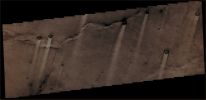
Aeolian_Features-Windstreaks-PIA14994-PCF-LXTT.jpgWindstreaks in Syrtis Planum (Enhanced Absolute Natural Colors; credits for the additional process. and color.: Dr Paolo C. Fienga - Lunexit Team) 142 visiteOrbit Number: 43327
Latitude: 8,5516° North
Longitude: 68,7871° East
Instrument: VIS
Captured: September, 20th, 2011
Mars Local Time: 20:53 (Evening Hours)
MareKromiumNov 16, 2011
|
|

A_-_The_Sun_-_Sunspots_-_Friedman.jpgFeatures of the Sun (picture taken in H-Alpha - False Colors)134 visiteTaken just last week (second week of November 2011), the Sun was captured sporting numerous interesting features including one of the larger Sunspot Groups yet recorded: AR 1339 visible on the image right. Only last year, the Sun was emerging from an unusually quiet Solar Minimum that lasted for years. The above image was recorded in a single color of light called Hydrogen Alpha, inverted, and false colored. Spicules cover much of the Sun's face. The gradual brightening towards the Sun's edges is caused by increased absorption of relatively cool solar gas and called limb darkening. Just over the Sun's edges, several scintillating Prominences protrude, while Prominences on the Sun's face are seen as light streaks. Possibly the most visually interesting of all are the magnetically tangled active regions containing cool Sunspots. As our Sun's Magnetic Field winds toward Solar Maximum over the next few years, increased activity will likely create times when the Sun's face is even more complex.MareKromiumNov 15, 2011
|
|

Tethys-PIA14581-PCF-LXTT-1.jpgTethys (Sx: False b/w - credits for the additional process.: Dr Paolo C. Fienga - Lunexit Team - Dx: Original NASA b/w RAW Frame)251 visitenessun commentoMareKromiumNov 15, 2011
|
|

Tethys-PIA14581-PCF-LXTT-0.jpgTethys (False b/w - credits for the additional process.: Dr Paolo C. Fienga - Lunexit Team)199 visiteCaption NASA:"Saturn's moon Tethys shows off its tortured Surface in this Cassini Spacecraft image. On the top left of the image there is huge Odysseus Crater. On the bottom right, instead, there is Ithaca Chasma: a series of Scarps that run North-to-South across the moon for more than 620 miles (approx. 1000 Km). North on Tethys is up and rotated 25° to the right. This view looks toward the area between the Leading Hemisphere and Saturn-facing side of Tethys.
The image was taken in Visible Green Light with the Cassini Spacecraft narrow-angle camera on Sept. 14, 2011. The view was acquired at a distance of approximately 178.000 miles (approx. 287.000 Km) from Tethys and at a Sun-Tethys-Spacecraft, or Phase, Angle of 11°. Image scale is about 1 mile (1,6 Km) per pixel". MareKromiumNov 15, 2011
|
|
| 25353 immagini su 2113 pagina(e) |
 |
|
|
|
|
150 | |
|
|
|
|





