| Ultimi arrivi |

080-Craters-Tuccia_Crater-TQ-PIA15081-PCF-LXTT.jpgTuccia Crater (Absolute Natural Colors; credits for the additional process. and color.: Drr Gianluigi Barca and Paolo C. Fienga - Lunexit Team)162 visiteThis Dawn FC (framing camera) image is dominated by bright Rayed Craters of different sizes. The most prominent bright Rayed Crater is the approximately 8 Km diameter crater in roughly the center of the image. This Crater is named Tuccia and the Quadrangle in which it is located is named after it. Towards the bottom of the image its bright rays extend for over 10 Km but towards the top the Rays are much less extensive. Tuccia Crater has a smaller, fresher, younger Crater on its Rim which also seems to have bright rays emanating from it. It is clear that this smaller Crater is younger because it overprints the larger one and has a fresher, sharper Rim than Tuccia's. Slightly above these Craters is a much smaller, roughly 2 Km diameter, bright Rayed Crater. To the left of this Crater there is a patch of bright material that is associated with Craters that are only a few pixels in diameter. There is also a good example of the Hummocky (---> wavy/undulating) Terrain of Vesta's South Polar Region (visible at the bottom left of the frame). Tuccia Crater has been emplaced onto this Hummocky Terrain.
This image is in Vesta's Tuccia Quadrangle and the center Latitude and Longitude of the image is 38,8° South and 200,2° East. NASA's Dawn Spacecraft obtained this image with its framing camera on October 17th 2011. This image was taken through the camera's clear filter. The distance to the Surface of Vesta is about 702 Km and the image has a resolution of about 70 meters per pixel. This image was acquired during the HAMO (High Altitude Mapping Orbit) phase of the mission.MareKromiumNov 21, 2011
|
|

081-Craters-Sextilia_Crater-PIA15085-PCF-LXTT.jpgSextilia Crater and Surroundings (Absolute Natural Colors; credits for the additonal process. and color.: Dr Paolo C. Fienga - Lunar Explorer Italia)163 visiteThis Dawn FC (framing camera) image is centered on the Sextilia Crater in Vesta's Southern Hemisphere. Craters on Vesta are named after Vestal virgins, priestesses of the Roman goddess Vesta. The Sextilia Crater is a large, approximately 15 Km diameter and distinctive Crater, therefore its name was used to name the whole Quadrangle in which it is located. Sextilia Crater is distinctive because it has a fresh, sharp Rim which is also scalloped in shape. It also contains Rocky Outcrops of both bright and dark material. These originate along its Rim and sides and slump towards the center of the Crater. There are some especially large slumps of material on the right side of it. Surrounding Sextilia Crater is the Hummocky (---> wavy/undulating) Terrain of Vesta's Southern Hemisphere and some dark and bright Rayed Craters.
This image is in Vesta's Sextilia Quadrangle and the center Latitude and Longitude of the image is 39,5° South and 155,7° East. NASA's Dawn Spacecraft obtained this image with its framing camera on October 10th 2011. This image was taken through the camera's clear filter. The distance to the surface of Vesta is approx. 702 Km and the image has a resolution of about 70 meters per pixel. This image was acquired during the HAMO (High Altitude Mapping Orbit) phase of the mission.MareKromiumNov 21, 2011
|
|

PSP_008011_1975_RED_abrowse-00-PCF-LXTT.jpgFresh and Rayed Unnamed Crater in Tharsis Region (CTX Frame - Absolute Natural Colors; credits for the additional process. and color.: Dr Paolo C. Fienga - Lunexit Team) 150 visiteThis image shows a small Rayed Impact Crater, about 160 mt (530 feet) in diameter, in the Tharsis Region. Relatively recent impacts form Rays of Ejecta that spray out radially from the Crater. In addition to relatively fine material, large boulders and smaller secondary craters are visible in the rays surrounding this crater. Secondary Craters are recognized by their shallow depths (in comparison to Primary Impact Craters), irregular shapes, and appearance in Clusters and Linear Chains.
Mars Local Time: 15:02 (Early Afternoon)
Coord. (centered): 17,4° North Lat. and 248,8° East Long.
Spacecraft altitude: 274,1 Km (such as about 171,3 miles)
Original image scale range: 27,4 cm/pixel (with 1 x 1 binning) so objects ~ 82 cm across are resolved
Map projected scale: 25 cm/pixel
Map projection: EQUIRECTANGULAR
Emission Angle: 0,2°
Sun-Mars-Spacecraft (or "Phase") Angle: 42,8°
Solar Incidence Angle: 43° (meaning that the Sun is about 47° above the Local Horizon)
Solar Longitude: 57,4° (Northern Spring)
Credits: NASA/JPL/University of Arizona
Additional process. and coloring: Dr Paolo C. Fienga - Lunar Explorer ItaliaMareKromiumNov 21, 2011
|
|
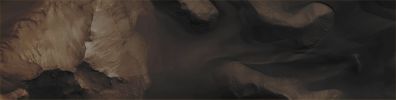
ESP_024294_1765_RED_abrowse-PCF-LXTT-00.jpgFeatures of Juventae Chasma (Absolute Natural Colors; credits for the additional process. and color.: Dr Paolo C. Fienga - Lunexit Team) 192 visiteMars Local Time: 14:22 (Early Afternoon)
Coord. (centered): 3,6° South Lat. and 298,8° East Long.
Spacecraft altitude: 268,2 Km (such as about 167,6 miles)
Original image scale range: 53,7 cm/pixel (with 2 x 2 binning) so objects ~ 1 mt and 61 cm across are resolved
Map projected scale: 50 cm/pixel
Map projection: EQUIRECTANGULAR
Emission Angle: 0,0°
Sun-Mars-Spacecraft (or "Phase") Angle: 36,5°
Solar Incidence Angle: 37° (meaning that the Sun is about 53° above the Local Horizon)
Solar Longitude: 9,3° (Northern Spring)
Credits: NASA/JPL/University of Arizona
Additional process. and coloring: Dr Paolo C. Fienga - Lunar Explorer ItaliaMareKromiumNov 20, 2011
|
|
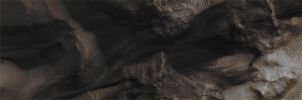
ESP_024294_1765_RED_abrowse-PCF-LXTT-01.jpgFeatures of Juventae Chasma (Absolute Natural Colors; credits for the additional process. and color.: Dr Paolo C. Fienga - Lunexit Team) 194 visiteMars Local Time: 14:22 (Early Afternoon)
Coord. (centered): 3,6° South Lat. and 298,8° East Long.
Spacecraft altitude: 268,2 Km (such as about 167,6 miles)
Original image scale range: 53,7 cm/pixel (with 2 x 2 binning) so objects ~ 1 mt and 61 cm across are resolved
Map projected scale: 50 cm/pixel
Map projection: EQUIRECTANGULAR
Emission Angle: 0,0°
Sun-Mars-Spacecraft (or "Phase") Angle: 36,5°
Solar Incidence Angle: 37° (meaning that the Sun is about 53° above the Local Horizon)
Solar Longitude: 9,3° (Northern Spring)
Credits: NASA/JPL/University of Arizona
Additional process. and coloring: Dr Paolo C. Fienga - Lunar Explorer ItaliaMareKromiumNov 20, 2011
|
|
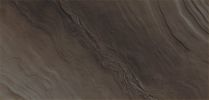
ESP_024249_1405_RED_abrowse-PCF-LXTT-01.jpgFeatures of Harmakhis Vallis (Absolute Natural Colors; credits for the additional process. and color.: Dr Paolo C. Fienga - Lunexit Team) 186 visiteMars Local Time: 14:30 (Early Afternoon)
Coord. (centered): 39,3° South Lat. and 92,1° East Long.
Spacecraft altitude: 256,8 Km (such as about 160,5 miles)
Original image scale range: 51,4 cm/pixel (with 2 x 2 binning) so objects ~ 1 mt and 54 cm across are resolved
Map projected scale: 50 cm/pixel
Map projection: EQUIRECTANGULAR
Emission Angle: 1,4°
Sun-Mars-Spacecraft (or "Phase") Angle: 54,1°
Solar Incidence Angle: 55° (meaning that the Sun is about 35° above the Local Horizon)
Solar Longitude: 7,6° (Northern Spring)
Credits: NASA/JPL/University of Arizona
Additional process. and coloring: Dr Paolo C. Fienga - Lunar Explorer ItaliaMareKromiumNov 20, 2011
|
|
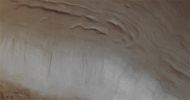
ESP_024249_1405_RED_abrowse-PCF-LXTT-00.jpgFeatures of Harmakhis Vallis (Absolute Natural Colors; credits for the additional process. and color.: Dr Paolo C. Fienga - Lunexit Team) 193 visiteMars Local Time: 14:30 (Early Afternoon)
Coord. (centered): 39,3° South Lat. and 92,1° East Long.
Spacecraft altitude: 256,8 Km (such as about 160,5 miles)
Original image scale range: 51,4 cm/pixel (with 2 x 2 binning) so objects ~ 1 mt and 54 cm across are resolved
Map projected scale: 50 cm/pixel
Map projection: EQUIRECTANGULAR
Emission Angle: 1,4°
Sun-Mars-Spacecraft (or "Phase") Angle: 54,1°
Solar Incidence Angle: 55° (meaning that the Sun is about 35° above the Local Horizon)
Solar Longitude: 7,6° (Northern Spring)
Credits: NASA/JPL/University of Arizona
Additional process. and coloring: Dr Paolo C. Fienga - Lunar Explorer ItaliaMareKromiumNov 20, 2011
|
|
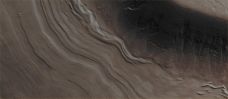
ESP_024249_1405_RED_abrowse-PCF-LXTT-02.jpgFeatures of Harmakhis Vallis (Absolute Natural Colors; credits for the additional process. and color.: Dr Paolo C. Fienga - Lunexit Team) 190 visiteMars Local Time: 14:30 (Early Afternoon)
Coord. (centered): 39,3° South Lat. and 92,1° East Long.
Spacecraft altitude: 256,8 Km (such as about 160,5 miles)
Original image scale range: 51,4 cm/pixel (with 2 x 2 binning) so objects ~ 1 mt and 54 cm across are resolved
Map projected scale: 50 cm/pixel
Map projection: EQUIRECTANGULAR
Emission Angle: 1,4°
Sun-Mars-Spacecraft (or "Phase") Angle: 54,1°
Solar Incidence Angle: 55° (meaning that the Sun is about 35° above the Local Horizon)
Solar Longitude: 7,6° (Northern Spring)
Credits: NASA/JPL/University of Arizona
Additional process. and coloring: Dr Paolo C. Fienga - Lunar Explorer ItaliaMareKromiumNov 20, 2011
|
|
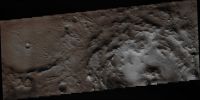
Craters-Unnamed_Crater_with_Dark_Slope_Streaks-PIA14997-PCF-LXTT.jpgOld and Highly Degraded Unnamed Northern Crater (Enhanced and Sharpened Absolute Natural Colors; credits for the additional process. and color.: Dr Paolo C. Fienga - Lunexit Team)215 visiteOrbit Number: 43578
Latitude: 21,5399° North
Longitude: 31,9211° East
Instrument: VIS
Captured: October, 11th, 2011
Mars Local Time (M.L.T.): 12:39 (Early Afternoon)
MareKromiumNov 20, 2011
|
|

Craters-Brashear_Crater-PIA14996-PCF-LXTT.jpgDunefield in Brashear Crater (Sharpened Absolute Natural Colors; credits for the additional process. and color.: Dr Paolo C. Fienga - Lunexit Team)207 visiteOrbit Number: 43459
Latitude: 53,313° South
Longitude: 240,286° East
Instrument: VIS
Captured: October, 1st, 2011
Mars Local Time (M.L.T.): 16:00 (Middle Afternoon)
MareKromiumNov 20, 2011
|
|
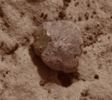
Unknown_Lifeform-MF-PCF-LXTT.jpgUnknown Lifeform (Enhanced Natural Colors; credits for the additional process. and color.: Drr Marco Faccin and Paolo C. Fienga - Lunexit Team)299 visitenessun commentoMareKromiumNov 20, 2011
|
|

Dunes-PIA14876.gifMoving Rippled Patch of Sand in Becquerel Crater (a GIF-Movie by NASA/JPL-Caltech/Univ. of Ariz./JHUAPL)195 visitenessun commentoMareKromiumNov 19, 2011
|
|
| 25353 immagini su 2113 pagina(e) |
 |
|
|
|
|
147 | |
|
|
|
|





