| Ultimi arrivi |

ESP_024060_1205-PCF-LXTT.jpgSouthern Dunefield (Absolute Natural Colors; credits for the additonal process. and color.: Dr Paolo C. Fienga - Lunar Explorer Italia)254 visiteMars Local Time: 14:45 (Early Afternoon)
Coord. (centered): 59,1° South Lat. and 218,0° East Long.
Spacecraft altitude: 264,9 Km (such as about 165,6 miles)
Original image scale range: 26,5 cm/pixel (with 1 x 1 binning) so objects ~ 80 cm across are resolved
Map projected scale: 25 cm/pixel
Map projection: EQUIRECTANGULAR
Emission Angle: 20,3°
Sun-Mars-Spacecraft (or "Phase") Angle: 57,0°
Solar Incidence Angle: 67° (meaning that the Sun is about 23° above the Local Horizon)
Solar Longitude: 0,3° (Northern Spring)
Credits: NASA/JPL/University of Arizona
Additional process. and coloring: Dr Paolo C. Fienga - Lunar Explorer ItaliaMareKromiumNov 22, 2011
|
|
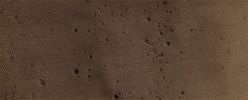
ESP_023817_1800_RED_abrowse-PCF-LXTT.jpgEquatorial Surface Features (Absolute Natural Colors; credits for the additional process. and color.: Dr Paolo C. Fienga - Lunexit Team)197 visiteMars Local Time: 14:10 (Early Afternoon)
Coord. (centered): 0,1° North Lat. and - 0,1° East Long.
Spacecraft altitude: 270,5 Km (such as about 169,1 miles)
Original image scale range: 54,1 cm/pixel (with 2 x 2 binning) so objects ~ 1 mt and 62 cm across are resolved
Map projected scale: 50 cm/pixel
Map projection: EQUIRECTANGULAR
Emission Angle: 5,1°
Sun-Mars-Spacecraft (or "Phase") Angle: 37,9°
Solar Incidence Angle: 33° (meaning that the Sun is about 57° above the Local Horizon)
Solar Longitude: 350,7° (Northern Winter)
Credits: NASA/JPL/University of Arizona
Additional process. and coloring: Dr Paolo C. Fienga - Lunar Explorer ItaliaMareKromiumNov 22, 2011
|
|

ZZ-Mercury-Craters-Unnamed_Crater_with_Hollows-PIA15069-PCF-LXTT.jpgUnnamed Crater with "Hollows" in Caloris Basin (Absolute Natural Colors; credits for the additional process. and color.: Dr Paolo C. Fienga - Lunexit Team)218 visiteThis stunning, and as of yet Unnamed, Crater lies within the Caloris Basin. Its fFoor provides another example of the beautiful "Hollows" found on Mercury and has an etched appearance similar to that found in the Crater Tyagaraja. This image was acquired as a high-resolution targeted observation. Targeted observations are images of a small area on Mercury's Surface at resolutions much higher than the 250-meter/pixel (820 feet/pixel) morphology base map or the 1-kilometer/pixel (0,6 miles/pixel) color base map. It is not possible to cover all of Mercury's Surface at this high resolution during MESSENGER's one-year mission, but several areas of high scientific interest are generally imaged in this mode each week.
Date acquired: October, 28th, 2011
Image Mission Elapsed Time (MET): 228326267
Image ID: 943690
Instrument: Narrow Angle Camera (NAC) of the Mercury Dual Imaging System (MDIS)
Center Latitude: 38,44° North
Center Longitude: 175,6° East
Resolution: 42 meters/pixel
Scale: this Unnamed Crater is approximately 38 Km (about 24 miles) across
Solar Incidence Angle: 76,1° (meaning that the Sun, at the time the picture was taken, was about 13,9° above the Local Horizon)
Emission Angle: 40,0°
Sun-Mercury-MESSENGER (or "Phase") Angle: 116,1°MareKromiumNov 22, 2011
|
|

Craters-Matara_Crater-PIA14998-PCF-LXTT.jpgDunefield inside Matara Crater (Enhanced Absolute Natural Colors; credits for the additional process. and color.: Dr Paolo C. Fienga - Lunexit Team)209 visiteOrbit Number: 43591
Latitude: 49,6011° South
Longitude: 34,7014° East
Instrument: VIS
Captured: October, 12th, 2011
Mars Local Time (M.L.T.): 12:04 (Early Afternoon)
MareKromiumNov 22, 2011
|
|

Hyperion-PIA14583-PCF-LXTT.jpgHyperion (Absolute Natural Colors; credits for the additional process. and color.: Dr Paolo C. Fienga - Lunexit Team)217 visiteCaption NASA:The Cassini Spacecraft looks at Saturn's highly irregular moon Hyperion in this view taken from the Spacecraft's during the Fly-By that occurred on August, 25th, 2011. Hyperion (approx. 168 miles, or about 270 Km across) has an irregular shape, and it tumbles through its orbit: that is, it does not spin at a constant rate or in a constant orientation. (A standard reference latitude-longitude system has not yet been devised for this moon)
Images such as this one extend previous coverage and allow a better inventory of the Surface Features, the satellite's shape and changes in its spin.
The image was taken with the Cassini Spacecraft narrow-angle camera using a combination of spectral filters sensitive to wavelengths of Polarized Green Light centered at 617 and 568 nanometers. The view was obtained at a distance of approx. 36.000 miles (such as about 58.000 Km) from Hyperion and at a Phase Angle of 43° degrees. Image scale is 1145 feet (349 meters) per pixel".
MareKromiumNov 22, 2011
|
|

ZZ-Mercury-Volcanic_Regions-PIA10942-PCF-LXTT.jpgMercurian Volcano (Enhanced Absolute Natural Colors; credits for the additional process. and color.: Dr Paolo C. Fienga - Lunexit Team)202 visiteAs reported in the July 4th, 2008 issue of Science Magazine, Volcanoes have been discovered on Mercury’s Surface from images acquired during MESSENGER’s first Mercury Fly-By. This image shows the largest feature identified as a Volcano in the upper center of the scene. The Volcano has a central kidney-shaped depression, which is the Vent, and a broad smooth Dome surrounding the Vent. The Volcano is located just inside the Rim of the Caloris Impact Basin. The Rim of the Basin is marked with Hills and Mountains, as visible in this image. The role of Volcanism in Mercury’s history had been previously debated, but MESSENGER’s discovery of the first identified Volcanoes on Mercury’s Surface shows that Volcanism was active in the distant past on the innermost Planet.
Date Acquired: January 14, 2008
Image Mission Elapsed Time (MET:108826877
Instrument: Narrow Angle Camera (NAC) of the Mercury Dual Imaging System (MDIS)
Resolution: 270 meters/pixel (0,17 miles/pixel)
Scale: this image is about 270 Km across (approx. 170 miles)
Spacecraft Altitude: 10.500 Km (approx. 6500 miles)MareKromiumNov 22, 2011
|
|

ZZ-Mercury-Volcanic_feature-Collapse_Pit-PIA13468-PCF-LXTT.jpgCollapse Pit-Chain inside Picasso Crater (Absolute Natural Colors; credits for the additional process. and color.: Dr Paolo C. Fienga - Lunexit Team)191 visiteThe Crater pictured in the center of this image was recently named Picasso, in honor of the Spanish painter and sculptor Pablo Picasso (1881-1973). This Crater, first imaged during MESSENGER's third Mercury Fly-By, has drawn scientific attention because of the large, arc-shaped Pit-Chain located on the Eastern side of its Floor. Similar Pits have been discovered on the Floors of several other Mercurian Craters, such as Beckett and Gibran. These Pits are postulated to have formed when subsurface magma subsided or drained, causing the surface to collapse into the resulting void. If this interpretation is correct, Pit-Floor Craters - such as Picasso - provide evidence of shallow magmatic activity in Mercury's history.
Date Acquired: September 29, 2009
Instrument: Narrow Angle Camera (NAC) of the Mercury Dual Imaging System (MDIS)
Resolution: 500 meters/pixel (0,31 miles/pixel)
Scale: the diameter of Picasso is roughly 133 Km (about 83 miles)
Projection: This image is a portion of the NAC approach mosaic from Mercury Fly-By n. 3. It is shown in a simple cylindrical map projection.MareKromiumNov 22, 2011
|
|

Titan-PIA07542-PCF-LXTT.jpgTitan (Absolute Natural Colors; credits for the additional process. and color.: Dr Paolo C. Fienga - Lunexit Team)167 visitenessun commentoMareKromiumNov 21, 2011
|
|
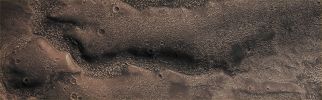
ESP_024216_1430_RED_abrowse-PCF-LXTT-00.jpgExtremely Degraded Unnamed Channel in Thaumasia Region (Absolute Natural Colors; credits for the additional process. and color.: Dr Paolo C. Fienga - Lunexit Team)193 visiteMars Local Time: 14:28 (Early Afternoon)
Coord. (centered): 36,5° South Lat. and 272,4° East Long.
Spacecraft altitude: 246,8 Km (such as about 154,3 miles)
Original image scale range: 49,4 cm/pixel (with 2 x 2 binning) so objects ~ 1 mt and 48 cm across are resolved
Map projected scale: 50 cm/pixel
Map projection: EQUIRECTANGULAR
Emission Angle: 0,3°
Sun-Mars-Spacecraft (or "Phase") Angle: 52,4°
Solar Incidence Angle: 52° (meaning that the Sun is about 38° above the Local Horizon)
Solar Longitude: 6,3° (Northern Spring)
Credits: NASA/JPL/University of Arizona
Additional process. and coloring: Dr Paolo C. Fienga - Lunar Explorer ItaliaMareKromiumNov 21, 2011
|
|
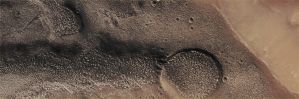
ESP_024216_1430_RED_abrowse-PCF-LXTT-01.jpgExtremely Degraded Unnamed Channel in Thaumasia Region (Absolute Natural Colors; credits for the additional process. and color.: Dr Paolo C. Fienga - Lunexit Team)199 visiteMars Local Time: 14:28 (Early Afternoon)
Coord. (centered): 36,5° South Lat. and 272,4° East Long.
Spacecraft altitude: 246,8 Km (such as about 154,3 miles)
Original image scale range: 49,4 cm/pixel (with 2 x 2 binning) so objects ~ 1 mt and 48 cm across are resolved
Map projected scale: 50 cm/pixel
Map projection: EQUIRECTANGULAR
Emission Angle: 0,3°
Sun-Mars-Spacecraft (or "Phase") Angle: 52,4°
Solar Incidence Angle: 52° (meaning that the Sun is about 38° above the Local Horizon)
Solar Longitude: 6,3° (Northern Spring)
Credits: NASA/JPL/University of Arizona
Additional process. and coloring: Dr Paolo C. Fienga - Lunar Explorer ItaliaMareKromiumNov 21, 2011
|
|

PSP_008011_1975_RED_abrowse-01-PCF-LXTT.jpgFresh and Rayed Unnamed Crater in Tharsis Region (EDM n.1 - Absolute Natural Colors; credits for the additional process. and color.: Dr Paolo C. Fienga - Lunexit Team) 143 visiteMars Local Time: 15:02 (Early Afternoon)
Coord. (centered): 17,4° North Lat. and 248,8° East Long.
Spacecraft altitude: 274,1 Km (such as about 171,3 miles)
Original image scale range: 27,4 cm/pixel (with 1 x 1 binning) so objects ~ 82 cm across are resolved
Map projected scale: 25 cm/pixel
Map projection: EQUIRECTANGULAR
Emission Angle: 0,2°
Sun-Mars-Spacecraft (or "Phase") Angle: 42,8°
Solar Incidence Angle: 43° (meaning that the Sun is about 47° above the Local Horizon)
Solar Longitude: 57,4° (Northern Spring)
Credits: NASA/JPL/University of Arizona
Additional process. and coloring: Dr Paolo C. Fienga - Lunar Explorer ItaliaMareKromiumNov 21, 2011
|
|

PSP_008011_1975_RED_abrowse-02-PCF-LXTT.jpgFresh and Rayed Unnamed Crater in Tharsis Region (EDM n.2 - Absolute Natural Colors; credits for the additional process. and color.: Dr Paolo C. Fienga - Lunexit Team) 193 visiteMars Local Time: 15:02 (Early Afternoon)
Coord. (centered): 17,4° North Lat. and 248,8° East Long.
Spacecraft altitude: 274,1 Km (such as about 171,3 miles)
Original image scale range: 27,4 cm/pixel (with 1 x 1 binning) so objects ~ 82 cm across are resolved
Map projected scale: 25 cm/pixel
Map projection: EQUIRECTANGULAR
Emission Angle: 0,2°
Sun-Mars-Spacecraft (or "Phase") Angle: 42,8°
Solar Incidence Angle: 43° (meaning that the Sun is about 47° above the Local Horizon)
Solar Longitude: 57,4° (Northern Spring)
Credits: NASA/JPL/University of Arizona
Additional process. and coloring: Dr Paolo C. Fienga - Lunar Explorer ItaliaMareKromiumNov 21, 2011
|
|
| 25353 immagini su 2113 pagina(e) |
 |
|
|
|
|
146 | |
|
|
|
|





