| Ultimi arrivi |

Titan_and_Saturn-PIA14909.jpgTitan and Saturn (Natural Colors; credits: NASA/JPL-Caltech/Space Science Institute)98 visiteCaption NASA:"The colorful globe of Saturn's largest moon, Titan, passes in front of the Planet and its Rings in this True Color snapshot from NASA's Cassini Spacecraft.
The North Polar "Hood" can be seen on Titan and appears as a detached layer at its top. This view looks toward the Northern, sunlit side of the Rings from just above the Ring-Plane.
Images taken using red, green and blue spectral filters were combined to create this Natural Color view. The image was obtained with the Cassini Spacecraft narrow-angle camera on May 21, 2011, at a distance of approx. 1,4 MMs (about 2,3 MKM) from Titan. Image scale is roughly 9 miles (apèprox. 14 Km) per pixel on Titan".MareKromiumGen 01, 2012
|
|

Titan_and_Dione-PIA14910.jpgTitan and Dione (Natural Colors; credits: NASA/JPL-Caltech/Space Science Institute)105 visiteCaption NASA:"Saturn's third-largest moon, Dione, can be seen through the Haze of the Ringed-Planet's largest moon, Titan, in this Cassini Spacecraft's view of the two, just posing before Saturn and its Rings. The North Polar "Hood" of Titan can be seen appearing as a detached layer at its top
This view looks toward the sides of Titan and Dione that are facing away from Saturn. North is up on both moons. This view looks toward the Northern, sunlit side of the Rings from just above the Ring-Plane.
Images taken using red, green and blue spectral filters were combined to create this Natural Color view. The images were obtained with the Cassini Spacecraft narrow-angle camera on May 21, 2011, at a distance of approx. 1,4 MMs (such as about 2,3 MKM) from Titan and approx. 2 MMs (such as about 3,2 MKM) from Dione. Image scale is roughly 9 miles (about 14 Km) per pixel on Titan and roughly 12 miles (approx. 19 Km) on Dione".MareKromiumGen 01, 2012
|
|

Titan_and_Tethys-PIA14911.jpgTitan and Tethys (Natural Colors; credits: NASA/JPL-Caltech/Space Science Institute)102 visiteCaption NASA:"Saturn's moon Tethys, with its stark white Icy Surface, peeps out from behind the larger, hazy, colorful Titan in this view of the two moons obtained by NASA's Cassini Spacecraft. Saturn's Rings lie between the two Celestial Bodies.
Ithaca Chasma, a long series of Scarps or Cliffs on Tethys, can be seen faintly running North-South.
This view looks toward the side of Titan that is facing away from Saturn and the side of Tethys that is facing Saturn. This view looks toward the Northern, sunlit side of the Rings from just above the Ring-Plane. Images taken using red, green and blue spectral filters were combined to create this Natural Color view. The images were acquired with the Cassini Spacecraft narrow-angle camera on May 21, 2011, at a distance of approx. 1,4 MMs (about 2,3 MKM) from Titan and approx. 2,4 MMs (such as about 3,8 MKM) from Tethys. Image scale is roughly 9 miles (approx. 14 Km) per pixel on Titan and roughly 18 miles (approx. 27 Km) per pixel on Tethys".MareKromiumGen 01, 2012
|
|

Titan_and_Dione-PIA14912.jpgTitan and Dione (Natural Colors; credits: NASA/JPL-Caltech/Space Science Institute)142 visiteCaption NASA:"Saturn's largest moon, Titan, appears deceptively small paired here with Dione, Saturn's third-largest moon, in this view from NASA's Cassini Spacecraft. Titan (which is approx. 3200 miles or about 5150 Km across) is much farther from the Spacecraft than Dione (that, on its side, is approx. 698 miles or about 1123 KM across) is in this view. The view was captured at a distance of approx. 684.000 miles (such as about 1,1 MKM) from Titan but only about 85.000 miles (such as approx. 136.000 Km) from Dione.
Titan appears in its True Colors, but it has been brightened by a factor of about 1,6 relative to Dione. This view looks toward the Saturn-facing side of Titan and the area between the Saturn-facing side and Leading Hemisphere of Dione. North is up on both moons.
Images taken using red, green and blue spectral filters were combined to create this Natural Color view. The images were obtained with the Cassini Spacecraft wide-angle camera on Nov. 6, 2011. Scale in the original image was roughly 5 miles (such as approx. 8 Km) per pixel on Dione and roughly 41 miles (about 66 Km) per pixel on Titan. The image has been magnified by a factor of 1,5 and contrast-enhanced to aid visibility".MareKromiumGen 01, 2012
|
|

ZZ-Mercury-Rupes-PIA15219-PCF-LXTT.jpgCliffs on the Rim of Eminescu Crater (Enhanced and Sharpened Natural Colors; credits for the additional process. and color.: Dr Paolo C. Fienga - Lunexit Team)143 visiteThis oblique view shows a portion of the Rim of the crater Eminescu. The angle of this image provides a great perspective for viewing the spectacular Cliffs that formed as material slumped from the Crater Rim into the Crater Interior, as well as small ponds of impact melt perched on the Rim.
This image was acquired as a high-resolution targeted observation. Targeted observations are images of a small area on Mercury's Surface at resolutions much higher than the 250-meter/pixel (820 feet/pixel) morphology base map or the 1-Km/pixel (0,6 miles/pixel) color base map. It is not possible to cover all of Mercury's Surface at this high resolution during MESSENGER's one-year mission, but several areas of high scientific interest are generally imaged in this mode each week.
Date acquired: December, 05th, 2011
Image Mission Elapsed Time (MET): 231611014
Image ID: 1099316
Instrument: Narrow Angle Camera (NAC) of the Mercury Dual Imaging System (MDIS)
Center Latitude: 9,8° North
Center Longitude: 115,5° East
Resolution: 34 meters/pixel
Scale: the scene is approximately 35 km (about 22 miles)
Solar Incidence Angle: 65,1° (meaning that the Sun was about 24,9° above the Local Horizon when the picture was taken)
Emission Angle: 60,1°
Sun-Mercury-MESSENGER (or "Phase") Angle: 125,3°MareKromiumDic 31, 2011
|
|

Titan-PIA14913-1.jpgThe South Polar Atmosphere of Titan (EDM - Natural Colors; credits: NASA/JPL-Caltech/Space Science Institute)151 visitenessun commentoMareKromiumDic 30, 2011
|
|

Titan-PIA14913-0.jpgThe South Polar Atmosphere of Titan (CTX Frame - Natural Colors; credits: NASA/JPL-Caltech/Space Science Institute)133 visiteCaption NASA:"These views from NASA's Cassini Spacecraft look toward the South Polar Regions of Saturn's largest moon, Titan, and show a "Depression" within the moon's Orange and Blue Haze Layers visible near the South Pole. The EDM (close-up) view of these features was captured with the narrow-angle camera.
Titan's High Altitude Haze Layer appears Blue here whereas the Main Atmospheric Haze is orange. The difference in color could be due to particle size of the Haze. The Blue Haze likely consists of smaller particles than the ones forming the Orange Haze. The "Depressed" or "Attenuated" Layer appears in the Transition Area between the Orange and Blue Hazes.
Images taken using red, green and blue spectral filters were combined to create this Natural Color view. The images were obtained on Sept. 11, 2011 at a distance of approximately 83.000 miles (about 134.000 Km) from Titan. Image scale is 2581 feet (787 meters) per pixel".MareKromiumDic 30, 2011
|
|

ZZ-Mercury-Craters-Unnamed_Crater_with_bright_Rays-PIA15204-PCF-LXTT.jpgBright Rayed Crater (Enhanced Natural Colors; credits for the additional process. and color.: Dr Paolo C. Fienga - Lunar Explorer Italia)133 visiteThe Ejecta of this (relatively, of course) "fresh" approx. 20-Km Impact Crater swept the Surface, leaving beautiful bright Rays. Crater Rays fade with time as smaller impacts mix them into the surrounding Soil while Particles from the Solar Wind change the Surface's Chemistry. Given a little time (perhaps a million years or so), this Unnamed Crater will look like the other similar-sized Craters in the frame.
Date acquired: November, 17th, 2011
Image Mission Elapsed Time (MET): 230018573
Image ID: 1023529
Instrument: Narrow Angle Camera (NAC) of the Mercury Dual Imaging System (MDIS)
Center Latitude: 51,0° South
Center Longitude: 175,1° East
Resolution: 221 meters/pixel
Scale: the Rayed Crater is approximately 20 Km (about 12 miles) in diameter
Solar Incidence Angle: 53,1° (meaning that the Sun is about 36,9° above the Local Horizon)
Emission Angle: 37,8°
Sun-Mercury-MESSENGER (or "Phase") Angle: 78,6°MareKromiumDic 30, 2011
|
|
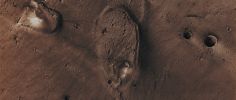
PSP_009709_2155_red-PCF-LXTT-1.jpgMesa in Acidalia Planitia Region (Absolute Natural Colors; credits for the additional process. and color.: Dr Paolo C. Fienga - Lunexit Team)208 visiteMars Local Time: 15:22 (early afternoon)
Coord. (centered): 35,3° North Lat. and 322,3° East Long.
Spacecraft altitude: 293,7 Km (such as about 183,5 miles)
Original image scale range: 29,4 cm/pixel (with 1 x 1 binning) so objects ~ 58,8 cm across are resolved (with 2 x 2 binning)
Map projected scale: 25 cm/pixel
Map projection: EQUIRECTANGULAR
Emission Angle: 0,3°
Phase Angle: 45,7°
Solar Incidence Angle: 46° (meaning that the Sun is about 44° above the Local Horizon)
Solar Longitude: 116,1° (Northern Summer)
Credits: NASA/JPL/University of Arizona
Additional process. and coloring: Lunar Explorer ItaliaMareKromiumDic 30, 2011
|
|

Enceladus-PIA14588-PCF-LXTT.jpgCrescent Enceladus (Absolute Natural Colors; credits for the additional process. and color.: Dr Paolo C. Fienga - Lunexit Team)220 visiteCaption NASA:"The Cassini Spacecraft looks at a brightly illuminated Enceladus and examines the Surface of its Leading Hemisphere. North on Enceladus is up and rotated 21° to the right.
The image was taken in Visible Light with the Cassini Spacecraft narrow-angle camera on Nov. 6, 2011. The view was obtained at a distance of approx. 67.700 miles (such as about 109.000 Km) from Enceladus and at a Phase Angle of 21°. Image scale is 2130 feet (649 meters) per pixel".MareKromiumDic 30, 2011
|
|

OPP-SOL523-1F174620698EFF56HGP1214L0M1-PCF-LXTT.jpgMovin' on! - Sol 523 (Natural Colors; credits for the additional process. and color.: Dr Paolo C. Fienga - Lunexit Team)198 visitenessun commentoMareKromiumDic 28, 2011
|
|
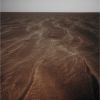
OPP-SOL378-1N161750166EFF4300P0705L0M1-PCF-LXTT.jpgSandy and Dusty Waves - Sol 378 (Natural Colors; credits for the additional process. and color.: Elisabetta Bonora and Marco Faccin - Lunexit Team)191 visitenessun commentoMareKromiumDic 28, 2011
|
|
| 25353 immagini su 2113 pagina(e) |
 |
|
|
|
|
127 | |
|
|
|
|





