| |
| Ultimi arrivi |

Mars-Possible_Volcanic_Phenomenon-20-March-2012-04.jpgPossible Multiple Meteor Strike or Massive Volcanic Phenomenon on Mars (credits: Wayne Jaeschke)101 visitenessun commentoMareKromiumApr 11, 2012
|
|

Mars-Possible_Volcanic_Phenomenon-20-March-2012-05.jpgPossible Massive Volcanic Phenomenon on Mars (credits: Wayne Jaeschke)77 visitenessun commentoMareKromiumApr 11, 2012
|
|

Mars-Possible_Volcanic_Phenomenon-20-March-2012-02.jpgPossible Multiple Meteor Strike or Massive Volcanic Phenomenon on Mars (credits: Wayne Jaeschke)95 visitenessun commentoMareKromiumApr 11, 2012
|
|

Mars-Possible_Volcanic_Phenomenon-20-March-2012-03.gifPossible Multiple Meteor Strike or Massive Volcanic Phenomenon on Mars (GIF-Movie - credits: Wayne Jaeschke)82 visiteL'Evento ripreso dall'Astrofotografo Wayne Jaeschke nella notte del 20 Marzo 2012 ha un che di sicuramente epocale, quale che ne sia stata la causa.
Ma vediamo di capire qualcosa e, nel contempo, cerchiamo di operare qualche speculazione informata. Allora: sicuramente non si tratta di formazioni nuvolose. La loro configurazione e direzionalità, infatti, esclude questa possibilità. Le nuvole, in quanto tali, seguono il movimento del Pianeta a cui si riferiscono (cioè assecondano movimenti, di massima, longitudinali), e quindi si posizionano, rispetto ad un Osservatore, come parallele o semi-parallele rispetto al Piano dell'Orizzonte osservato (tutto questo anche nell'eventualità che si osservino nuvole sospinte da correnti a getto oppure di nuvole in super-rotazione - cioè che viaggiano più veloci della velocità orbitale del pianeta di riferimento).
Le formazioni osservate in questo frangente, in realtà, sono dei "Pillars" che sembrano estendersi a raggio rispetto ad un punto superficiale ivi non visibile. Le nubi colonnari, tuttavia (Pillar-like Clouds) oltre ad essere un evento più unico che raro, su Marte non si sono - che si sappia - mai osservate. Abbiamo, invece, dei fenomeni di Dust & Smoke Pillars ripresi dalla ormai defunta Sonda Mars Global Surveyor i quali, dal nostro Gruppo di Ricerca Lunexit, così come da altri Ricercatori e Scienziati più quotati, vennero interpretate come evidenze di Attività Vulcanica Residuale (perché erano colonne, tutto sommato, piccole).
In questo caso, si deve innanzitutto notare la straordinaria somiglianza fra l'Evento Marziano ed il famoso Evento Lunare Anomalo ripreso dall'Amico (fotografo professionista) milanese, Alessandro della Torre. In quel caso, la NASA, dopo aver abbozzato vari tentativi di risposta, concluse dicendo che, in buona sostanza, "dato che non poteva trattarsi di nessun fenomeno conosciuto, evidentemente era un fenomeno non accaduto", con ciò escludendo qualsiasi ipotesi esotica oppure idonea a determinare oscillazioni perigliose delle conoscenze scientifiche attualmente consolidate (quotiamo:"...non può essere un evento vulcanico perché la Luna è geologicamente defunta...") oppure pericolose derive emozionali/catastrofiste (quotiamo ancora:"...non può essere un impatto meteorico perché altrimenti, date le dimensioni dell'evento, ce ne saremmo accorti da soli...").
E' evidente che lo stile di ragionamento (ma in questo caso dire "ragionamento" è dire una parola grossa...) della NASA non è condivisibile ed è pure, permetteteci, parecchio arrogante ed oscurantista. Per cui lo accantoniamo. Che cosa è accaduto su Marte?
Premesso che la Verità Assoluta ci sarà difficile scoprirla (se mai la scopriremo), diciamo questo: la configurazione dell'Anomalia ci fa più che ragionevolmente pensare ad un Fenomeno Meteorico di vaste proporzioni. Se così fosse, dato che le coordinate approssimative dell'Evento sono stimabili (anzi: le abbiamo, e l'Evento si è verificato su Acidalia Planitia), ci basterebbe puntare gli occhi di almeno una delle Sonde Automatiche in orbita attorno a Marte su Acidalia e cercare un nuovo (o più di uno...), freschissimo/i, cratere da impatto.
Qualora si fosse trattato, invece, di un Evento Vulcanico (ma NON Residuale, a giudicare dalle dimensioni del medesimo!), non ci sarebbe (stato) difficile dare un'occhiata, sempre usando una delle Sonde che abbiamo "in loco", alla Regione di Acidalia (e anche Tharsis, tanto per sicurezza), e quindi verificare lo status dei Vulcani colà presenti.
Da non trascurare, tuttavia, il dato (a nostro parere evidente) secondo cui i fortissimi venti che spazzano costantemente l'Atmosfera Marziana avrebbero comunque dissipato i fumi ed i vapori piuttosto alla svelta, qualora si fosse effettivamente trattato di un Evento Vulcanico di tipo Esplosivo (ed ancorchè di grande portata); più tempo, invece, gli sarebbe occorso per dissipare le polveri innalzate a seguito di un eventuale Impatto Meteorico (per di più plurimo, a giudicare dalla forma e direzionalità dei Pillars). In ogni caso, per vedere il Fenomeno "ancora in corso", gli occhi elettronici delle SOnde che abbiamo in loco, avrebbero dovuto operare rapidamente; diciamo nelle 24/36 ore dalla scoperta. Il che, a quanto pare - ahinoi!... - non è stato fatto (per motivi che proprio non riusciamo a comprendere).
Non abbiamo altri elementi fra le mani e quindi ci fermiamo. La nostra "Ipotesi Preferita"? Un Impatto Meteorico plurimo (una cometa o una mini-formazione di detriti spaziali).
Ed ai Posteri l'Ardua Sentenza!...MareKromiumApr 11, 2012
|
|

ZZ-Mercury-Natural_Satellite-Caduceus-PIA15542.jpgNOT ALONE!213 visiteCaption NASA:"This discovery image provides the first evidence that Mercury has a small natural satellite or moon. Visible as a small bright spot in an image taken yesterday by the Mercury Dual Imaging System (MDIS) Wide Angle Camera (WAC), the moon is approximately 70 meters (230 feet) in diameter and orbits Mercury at a mean distance of 14.300 Km (such as 8890 miles). A proposal to name the moon "Caduceus", after the staff carried by the Roman god Mercury, has been submitted by the MESSENGER team to the International Astronomical Union, the body responsible for assigning names to celestial objects.
This discovery presents an unprecedented opportunity for a return of samples from the Mercury System, as Project Scientist Nat MacRulf explains. "We have yet to identify a sample from Mercury in any of the meteorite collections we have here on Earth. Such a sample would give us critical insight into the chemical composition of Mercury and the timing of crustal formation on that body, leading to a better understanding of how the planet formed and evolved. If we could obtain a sample of Caduceus, it would enhance the scientific return of the MESSENGER mission beyond our wildest dreams!"
Work on designing a scenario for sample return is already underway. MESSENGER Project Manager Burt Panini held an emergency meeting with the MESSENGER mission operations and navigation teams yesterday evening to determine if the spacecraft could be targeted toward the diminutive moon. After an intensive discussion, a unanimous decision was taken to abandon the orbit-correction maneuvers that had been planned for later this month to place the spacecraft in an eight-hour orbit. Instead, the new plan is to use the remaining propellant to crash MESSENGER into Caduceus. "Our detailed analysis tells us that if we act now, and with the right trajectory, MESSENGER will impart just enough momentum to the moon to break it free of Mercury's Gravity well and set it on an Earth-crossing trajectory suitable for recovery as a Mercury meteorite", said Panini.
This action will form the basis of a new request to NASA by the MESSENGER team for an extended extended mission, tentatively called "MESSENGER Infinitesimally Nudging Caduceus", or MIN-C for short. Once MIN-C is approved by NASA, the Spacecraft will be targeted for a collision trajectory. If Caduceus is successfully released from the pull of Mercury and placed on a course to reach Earth, we can expect the moon to arrive at Earth by 2014. "The risk to the public is reassuringly small", offers MESSENGER mission design lead Adam McJames. "We have designed a trajectory that will bring the moon to Earth at a remote location on the Wilkes Land ice sheet in Antarctica. This trajectory will avoid all population centers and will put the moon's impact site within reach for retrieval by the scientific staff at the U.S.-operated McMurdo Station".
If successful, MESSENGER's extended extended MIN-C mission will mark the first instance of the documented arrival to Earth of material from the Mercury system. Moreover, it will serve as the basis for a new Discovery-class mission proposal currently in development by the Applied Psychics Laboratory for a Mercury lander mission for in situ X-ray analysis of surface composition. That mission is to be named the Hermean On-surface Analysis with X-rays.
Date acquired: March 31, 2012
Image Mission Elapsed Time (MET): 131766564
Image ID: 6418
Instrument: Wide Angle Camera (WAC) of the Mercury Dual Imaging System (MDIS)
Center Latitude: 38,15° North
Center Longitude: 66,18° East
Resolution: 410 meters/pixel (0,25 miles/pixel) in the lower left corner of the image
Scale: the large crater in the center of the image (Copland) is about 210 Km (such as approx. 130 miles) in diameter.
Spacecraft Altitude: 16.200 Km (10.070 miles)
Incidence Angle: 69,1°
Emission Angle: 80,8°
Phase Angle: 138,2°MareKromiumApr 08, 2012
|
|

Titan-PIA14602.jpgTitan (Natural Colors; credits: NASA/JPL-Caltech/Space Science Institute)99 visiteCaption NASA:"Titan's Atmosphere makes Saturn's largest moon look like a 'fuzzy orange ball' in this Natural Color view from the Cassini Spacecraft. Titan's North Polar Hood is visible at the top of the image, and a faint blueish Haze also can be detected above the South Pole at the bottom of this view. Recent Cassini images suggest Titan's North Polar Vortex, or 'Hood', is beginning to flip from North to South (see PIA14913). This view looks toward the Anti-Saturn Side of Titan. North is up.
Images taken using red, green and blue spectral filters were combined to create this Natural Color view. The images were obtained with the Cassini Spacecraft wide-angle camera on Jan. 30, 2012 at a distance of approximately 119.000 miles (about 191.000 Km) from Titan. Image scale is roughly 7 miles (about 11 Km) per pixel".MareKromiumApr 08, 2012
|
|

OPP-SOL2471-1P347544960EFFB0X1P2370R2M2-IT-LXTT-00.jpgSmoke Emission or just a Camera Artifact? - Sol 2471 (CTX Frame - credits for the research: Ivana Tognoloni - Lunexit Team)121 visiteDalla nostra Amica e Senior Partner, Ivana Tognoloni, un ennesimo spunto di riflessione: la chiazza biancastra, e con pixellatura anomala rispetto al resto (rectius: alla quasi totalità) del frame, è un nuovo tipo di artefatto fotografico (---> camera artifact) oppure potrebbe (e sottolineiamo POTREBBE) trattarsi dell'evidenza di un fenomeno reale di un qualche tipo (eventualmente un fenomeno vulcanico - i.e.: emissione di fumi/vapori - oppure la conseguenza di un recentissimo impatto meteorico - e la texture della parte bassa del frame, proprio al di sotto della chiazza chiara sembrerebbe confermarlo)?MareKromiumApr 08, 2012
|
|
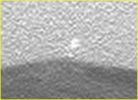
OPP-SOL2471-1P347544960EFFB0X1P2370R2M2-IT-LXTT-01.jpgSmoke Emission or just a Camera Artifact? - Sol 2471 (EDM - credits for the research: Ivana Tognoloni - Lunexit Team)94 visiteIn effetti, come questo EDM mostra in maniera abbastanza eloquente, la sensazione è che "qualcosa" (probabilmente fumi/vapori o magari una colonna di polvere di colore chiaro) effettivamente si solleva dal suolo e poi si va a stagliare contro il Cielo dell'orizzonte lontano. Ma la qualità del frame, oltretutto sgranato dalla magnificazione, non ci permette di dire nulla di definitivo, ahimè, come (quasi) sempre. Un Grande Complimento ed un Bentornato sulle nostre pagine (oltre agli Auguri di una Pasqua serena) alla nostra Amica e Senior Partner, Ivana Tognoloni!MareKromiumApr 08, 2012
|
|

OPP-SOL2906-GB-LXTT-00.jpgA "Postcard" from Greeley Haven n. 1 - Sol 2906 (Natural Colors; credits for the additional process. and color.: Dr Gianluigi Barca - Lunexit Team)76 visitenessun commentoMareKromiumApr 08, 2012
|
|
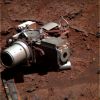
OPP-SOL2906-GB-LXTT-01.jpgA "Postcard" from Greeley Haven n. 2 - Sol 2906 (Natural Colors; credits for the additional process. and color.: Dr Gianluigi Barca - Lunexit Team)82 visitenessun commentoMareKromiumApr 08, 2012
|
|

ESP_025914_2540_RED-PCF-LXTT-00.jpgClouds over Vastitas Borealis (CTX Frame - Absolute Natural Colors; credits for the additional process. and color.: Dr Paolo C. Fienga - Lunexit Team)100 visiteMars Local Time: 14:20 (early afternoon)
Coord. (centered): 73,9° North Lat. and 334,7° East Long.
Spacecraft altitude: 318,4 Km (such as about 199,0 miles)
Original image scale range: 31,9 cm/pixel (with 1 x 1 binning) so objects ~ 96 cm across are resolved
Map projected scale: 25 cm/pixel
Map projection: POLAR STEREOGRAPHIC
Emission Angle: 4,6°
Sun - Mars - MRO (or "Phase") Angle: 58,0°
Solar Incidence Angle: 54° (meaning that the Sun is about 36° above the Local Horizon)
Solar Longitude: 66,6° (Northern Spring)
Credits: NASA/JPL/University of Arizona
Additional process. and coloring: Lunar Explorer ItaliaMareKromiumMar 30, 2012
|
|

ESP_025914_2540_RED-PCF-LXTT-01.jpgClouds over Vastitas Borealis (EDM - Absolute Natural Colors; credits for the additional process. and color.: Dr Paolo C. Fienga - Lunexit Team)121 visiteMars Local Time: 14:20 (early afternoon)
Coord. (centered): 73,9° North Lat. and 334,7° East Long.
Spacecraft altitude: 318,4 Km (such as about 199,0 miles)
Original image scale range: 31,9 cm/pixel (with 1 x 1 binning) so objects ~ 96 cm across are resolved
Map projected scale: 25 cm/pixel
Map projection: POLAR STEREOGRAPHIC
Emission Angle: 4,6°
Sun - Mars - MRO (or "Phase") Angle: 58,0°
Solar Incidence Angle: 54° (meaning that the Sun is about 36° above the Local Horizon)
Solar Longitude: 66,6° (Northern Spring)
Credits: NASA/JPL/University of Arizona
Additional process. and coloring: Lunar Explorer ItaliaMareKromiumMar 30, 2012
|
|
| 25353 immagini su 2113 pagina(e) |
 |
|
|
|
|
113 | |
|
|
|
|
|
|





