| |
| Ultimi arrivi |

Rhea-PIA14605-PCF-LXTT-IPF.jpgRhea (Absolute Natural Colors; credits for the additional process. and color.: Elisabetta Bonora and Marco Faccin - Lunar Explorer Italia)187 visiteCaption NASA:"Cassini looks over the heavily Cratered Surface of Rhea during the Spacecraft's Fly-By of this Saturnian moon that occurred on March 10, 2012. This view is centered on Terrain located at about 58° North Latitude and 84° West Longitude.
This image was taken in visible light with the Cassini spacecraft narrow-angle camera. The view was obtained at a distance of approximately 27.000 miles (such as about 43.000 Km) from Rhea and at a Sun-Rhea-Spacecraft, or Phase, Angle of 67°. Image scale is 827 feet (252 meters) per pixel".MareKromiumApr 26, 2012
|
|

Clouds-Vastitas_Borealis_Region-PIA15567-PCF-LXTT-IPF.jpgSpringtime's Storm-Front over Vastitas Borealis (Absolute Natural Colors; credits for the additional process. and color.: Dr Paolo C. Fienga - Lunexit Team)190 visiteOrbit Number: 45266
Latitude: 75,313° North
Longitude: 330,479° East
Instrument: VIS
Captured: February, 27th, 2012
Mars Local Solar Time: 10:49 (Late Morning Hours)MareKromiumApr 26, 2012
|
|

Lutetia-05-CTX-EDM-PCF-LXTT-IPF.jpgAsteroid 21-Lutetia (CTX Frame and EDM - Absolute Natural Colors; credits for the additional process. and color.: Dr Paolo C. Fienga - Lunexit Team)155 visite21 Lutetia is a relatively large Main-Belt Asteroid, measuring about 100 Km in diameter (approx. 120 km along its Major Axis). It was discovered in the AD 1852 by the French-German Astronomer Hermann Goldschmidt, and is named after Lutetia, such as the Latin name of the city that stood where Paris was later built. The Asteroid 21 Lutetia has an irregular shape and is heavily cratered, with the largest Impact Crater reaching about 45 Km in diameter.
The Surface of this Asteroid is geologically heterogeneous and it is intersected by a system of Grooves and Scarps, which are thought to be the external manifestation of deep, internal, Fractures; it also possess an high Average Density, which could have meant that is (likely) made of Iron and Nickel rich Rock (even though, as we shall better see later on, this - however logical - claim, is still unproven). The ESA - Rosetta Probe passed as close as about 3162 Km (approx. 1965 miles) from 21 Lutetia in July 2010 and, at the time of Rosetta's Fly-By, it was the largest Asteroid ever visited by a Spacecraft (that, until the NASA - Dawn Spaceraft arrived at 4 Vesta, in July 2011).
The composition of 21 Lutetia has puzzled astronomers for some time, and that is because, while classified among the M-type Asteroids, most of which are Metallic (better yet: rich of Metallic Minerals/Elements), 21 Lutetia must be one of the so-called Anomalous Members of this classification, since it does not display much evidence of Metallic Minerals on its Surface. As a matter of fact, after most part of the data received from the Rosetta Probe were analyzed, several indications of a NON-Metallic Surface of this Asteroid were found, like, for instance, a flat, Low Frequency Spectrum (similar to that of Carbonaceous Chondrites and C-type Asteroids - which is, of course, deeply different from the one of the so-called Metallic Meteorites, such as those Meteorites which are logically believed to derive from a Metallic - such as, we repeat, Iron and Nickel-rich - Celestial Body), a low Radar Albedo (unlike the high Albedoes of Strongly Metallic Asteroids, like 16 Psyche), evidence of Hydrated Materials on its Surface, abundant Silicates, and a thicker layer of Regolith than most of the other known (as far as their composition is concerned) Asteroids.MareKromiumApr 26, 2012
|
|

Saturn_and_Friends-EB-MF-LXTT.jpgSaturn and some "Friends" (Natural Colors; credits for the additional process. and color.: Elisabetta Bonora and Marco Faccin - Lunexit Team)164 visitenessun commentoMareKromiumApr 23, 2012
|
|

Janus-MF-EB-LXTT.jpgJanus (RAW Natural Colors; credits for the additional process. and color.: Elisabetta Bonora and Marco Faccin - Lunexit Team)151 visiteJanus - apparently, and according to our Readers, one of the most interesting Celestial Bodies that we have shown and talked about on our APOD in the past - is one of the so-called "Inner Natural Satellites" of the Giant Gas-Planet Saturn; it is also called and known, sometimes, as Saturn X, and it occupies (better yet: shares) the same orbit as the Saturnian Inner Minor moon Epimetheus. This (now we know NOT infrequent) circumstance, however caused, in the past, some confusion to many astronomers which, at the time of Janus' discovery - and according to their different observations - assumed that there should have been only one Celestial Body in the orbit where Janus was spotted.
For a long time, in fact, the Astronomical Community struggled to figure out what was going on, until they realized that what they were trying to solve, was (let us use this expression) an "impossible equation": in other words, they were trying to reconcile (so-called "reductio ad unum") different observations of different and distinct Objects, on the wrong assumption that what they all were looking at, was just a single Celestial Body.
The discovery of Janus is attributed to its first observer, such as the French Astronomer Audouin Dollfus, who spotted Janus on December 15, 1966. The newly discovered Object was given the temporary designation of "S/1966 S 2". Previously, though, another Astronomer (Jean Texereau) had also photographed the very same Celestial Body (to be exact, on October 29, 1966), but without realizing the discovery! On December 18 of the same year, then, Richard Walker made a similar observation which is now credited as the discovery of Epimetheus.
Twelve years later, in October 1978, Stephen M. Larson and John W. Fountain finally realized that the 1966 observations would have been better explained by assuming that they were relative NOT to one, BUT to two distinct Objects (as we said, Janus and Epimetheus), sharing very similar (or perhaps the same, as we know now) orbits. Finally, in the AD 1980, the NASA - Voyager 1 Spacecraft confirmed that this "controversial moon" was, in fact, a couple of co-orbital Celestial Bodies.
Afterwards, Janus was observed on other occasions and given different provisional designations. It was observed, for instance, by the NASA - Pioneer 11 Probe when it passed near Saturn on September 1st, 1979. Janus was also observed by Dan Pascu on February 19, 1980 (and then provisionally designed as "S/1980 S 1") and then by John W. Fountain (once again), Stephen M. Larson (again), Harold J. Reitsema and Bradford A. Smith on the 23rd (and, this time, the observed object was, always provisionally, recorded as "S/1980 S 2").
All these Scientists, in a way and in the end, should therefore share, to various degrees, the title of Discoverer of Janus, but this "fair dispute", so far (and as far as we know), has not been solved.
As far as the physical characteristics of Janus are concerned, we can say that this relatively small moon (whose dimensions are approx. 203 × 185 × 153 Km) is extensively cratered, and a few of these craters are more than 30 Km across. The Janian Surface, as we already wrote in the past, appears to be older than Prometheus' one, but younger than Pandora's. Furthermore, if you consideri its oval (or, if you prefer, its "non-spherical") shape, its (very) low Density and relatively high Albedo, it seems logic to conclude, for the time being, that Janus should just be a porous and icy "rubble pile" (such as the final result of a cloud of Cosmic Debris that have coalesced under the influence of gravity).
The so-called Rubble Piles-type Celestial Bodies have a low density because there are, we believe, large cavities between the various "chunks" - such as fragments - of rocky material that made them up; Rubble Piles may also form when an Asteroid or a moon (which may originally be monolithic - such as "one single piece of rock") is smashed by an impact, and the shattered pieces left over by the impact, in time, fall back together, primarily due to self-gravitation (---> mutual attraction). In other words: a Celestial Body like Janus is formed, in our opinion, by a mass of different materials that cohered over time (we repeat: something like a "cloud" of Cosmic Debris - rocks, boulders, dust etc. - which, in time, due to a mutual gravitational attraction, got together until they became one - yet extremely fragile - Celestial Body).
In the light of the above considerations and assumptions, we, as IPF, believe that Janus can reasonably be assimilated, for instance (and among others), to Asteroid 25143 Itokawa or 433 Eros.MareKromiumApr 23, 2012
|
|
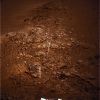
OPP-SOL2910-2912-EB-MF-LXTT-IPF.jpgSemi-buried Rocky Outcrop at "Greeley Haven" - Sol 2910 (Enhanced and Darkened Natural Colors; credits for the additional process. and color.: Elisabetta Bonora and Marco Faccin - Lunexit Team)113 visitenessun commentoMareKromiumApr 18, 2012
|
|
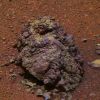
OPP-SOL2695-EB-MF-LXTT.jpgExtremely unusually-looking and Colourful Erratic Boulder - Sol 2695 (Absolute Natural Colors; credits for the additional process. and color.: Elisabetta Bonora and Marco Faccin - Lunexit Team)125 visitenessun commentoMareKromiumApr 18, 2012
|
|
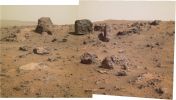
OPP-SOL2699-EB-MF-LXTT.jpgBouldery Skyline - Sol 2699 (Saturated Natural Colors; credits for the additional process. and color.: Elisabetta Bonora and Marco Faccin - Lunar Explorer Italia)168 visitenessun commentoMareKromiumApr 18, 2012
|
|
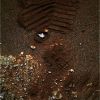
OPP-SOL2900-EB-MF-LXTT.jpgBright and Colourful Pebbles - Sol 2900 (Enhanced and Darkened Natural Colors; credits for the additional process. and color.: Elisabetta Bonora and Marco Faccin - Lunar Explorer Italia)104 visitenessun commentoMareKromiumApr 18, 2012
|
|
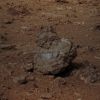
OPP-SOL2696-MF-EB-LXTT-PCF-LXTT-1.jpgErratic Boulder at Greeley Haven - Sol 2696 (Absolute Natural Colors; credits for the additional process. and color.: Elisabetta Bonora and Marco Faccin - Lunexit Team)102 visitenessun commentoMareKromiumApr 18, 2012
|
|
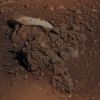
OPP-SOL2696-MF-EB-PCF-LXTT-2.jpgRocky Outcrop at Greeley Haven - Sol 2696 (Absolute Natural Colors; credits for the additional process. and color.: Elisabetta Bonora and Marco Faccin - Lunar Explorer Italia)107 visitenessun commentoMareKromiumApr 18, 2012
|
|
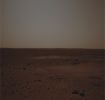
SOL006-2N126908858ESF0205P1513R0M1.jpgHorizon - Sol 6 (Absolute Natural Colors; credits for the additional process. and color.: Dr Paolo C. Fienga - Lunexit Team) 142 visitenessun commentoMareKromiumApr 18, 2012
|
|
| 25353 immagini su 2113 pagina(e) |
 |
|
|
|
|
111 | |
|
|
|
|
|
|





