| |
| Ultimi arrivi |

OPP-SOL2929-MF-EB-LXTT-IPF.jpgThe Surface of Meridiani Planum - Sol 2929 (Absolute Natural Colors; credits for the additional process. and color.: Elisabetta Bonora and Marco Faccin - Lunexit Team)100 visitenessun commentoMareKromiumMag 20, 2012
|
|

OPP-SOL2924-MIC-B-MF-EB-LXTT-IPF.jpgMicroscopic View - Sol 2924 (Natural Colors; credits for the additional process. and color.: Elisabetta Bonora and Marco Faccin - Lunexit Team) 94 visitenessun commentoMareKromiumMag 20, 2012
|
|
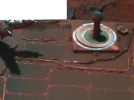
OPP-SOL2939-MF-EB-LXTT-IPF.jpgColors - Sol 2939 (Natural Colors; credits for the additional process. and color.: Elisabetta Bonora and Marco Faccin - Lunexit Team) 122 visitenessun commentoMareKromiumMag 20, 2012
|
|
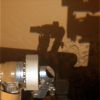
OPP-SOL2955-MF-EB-LXTT.jpgMellow Yellow Vision.... - Sol 2955 (Natural Colors; credits for the additional process. and color.: Elisabetta Bonora and Marco Faccin - Lunexit Team) 95 visitenessun commentoMareKromiumMag 20, 2012
|
|

OPP-SOL2940-MF-EB-LXTT-IPF.jpgWorking at Meridiani Planum - Sol 2940 (Enhanced Natural Colors; credits for the additional process. and color.: Elisabetta Bonora and Marco Faccin - Lunexit Team)116 visitenessun commentoMareKromiumMag 20, 2012
|
|

Helene-PCF-LXTT-IPF.jpgHelene (Absolute Natural Colors; credits for the additional process. and color.: Dr Paolo C. Fienga - Lunexit Team) 127 visiteHelene (one of the many moons of the Giant Gas-Planet Saturn) was discovered by the French Astronomers Pierre Laques and Jean Lecacheux in 1980, from ground-based observations carried out at the "Pic du Midi" Observatory; at first, it was designated S/1980 S 6. Afterwards, in 1988, it was officially named Helene (after Helen of Troy, who was the granddaughter of Cronus - Saturn -, according to Greek mythology).
This small moon (we are talking about a Celestial Body, mostly made of Ice and Rock, which is approx. 30 Km across) is also designated as Saturn XII, a number which it received in 1982, under the designation of Dione B (since Helene is co-orbital with Dione and located in its Leading Lagrangian Point - L4). Helene is one of 4 (four) known so-called "Trojan Moons" of the Saturnian System.
For sake of clarity, please remember that:
A) the Saturnian System contains two sets of Trojan Moons. Both Tethys and Dione have, in fact, two Trojan Moons: Telesto and Calypso, which are located in Tethys' L4 and L5 Lagrangian Points, respectively, and Helene with Polydeuces, which are located in Dione's L4 and L5 Lagrangian Points, respectively;
B) in Astronomy, a co-orbital configuration refers to 2 (two) or more Celestial Objects - such as Asteroids, Moons, or even Planets - that orbit at the same, or very similar, distance from their Parent Object as well as from each other. In other words, they are in a 1:1 (one-to-one) mean Motion Resonance;
C) there are several Classes of co-orbital Objects, depending on their Point of Libration. The most common and best-known Class, is the Trojan, which librate around one of the two stable Lagrangian Points (also known as "Trojan Points"), L4 and L5, 60° ahead of, and behind, the larger Parent Body, respectively. Another class is the so-called "Horseshoe Orbit", in which the Celestial co-Orbital Objects librate around 180° from the larger Parent Body. Objects librating around 0° are called, instead, "Quasi-Satellites".
When two co-Orbital Objects are of similar masses (and thus they exert a non-negligible - i.e.: meaningful - Gravitational Influence on each other) they can even arrive to exchange their orbits. For instance, talking about Janus and Epimetheus, we know that the Timing and Magnitude of their Momenta exchange in such a way that the two moons actually "trade" their orbits, while never getting closer (---> approaching each other) than about 10.000 Km. The exchange takes place about once every 4 years; the last close approaches occurred on January 21, 2006, and in 2010, when Janus' Orbital Radius increased by ~20 Km, while Epimetheus' decreased by ~80 Km. However, Janus' orbit is less affected by the swop, because Janus itself is about 4 times more massive than Epimetheus. As far as it is currently known, this "arrangement" is unique in the Solar System.
As we already said hereabove, Helene was initially observed from Earth in 1980 but, when the NASA - Voyager Probes passed through the Saturnian System, they allowed us to get much closer views of it. Afterwards, the NASA - Cassini Spacecraft, which went into orbit around Saturn in 2004, provided still better views and allowed more in-depth analysis of this moon, including views of its Surface under different lighting conditions. Although conventional Impact Craters and Hills do appear, this image also shows Terrain that looks unusually smooth and streaked. Some of the closest images of Helene to date are from the Cassini Spacecraft's 1800 Km Fly-By that occurred on March 3, 2010, and another very successful imaging sequence which was obtained in June 2011.
There have been many other approaches over the course of the Cassini mission, and future Fly-Bys may yield additional data.This frame has been colorized in Natural Colors (such as the colors that a perfect human eye would actually perceive if someone were onboard the NASA - Cassini Spacecraft and then looked outside, towards the Saturnian moon Helene), by using an original technique created - and, in time, dramatically emproved - by the Lunar Explorer Italia Team.MareKromiumMag 04, 2012
|
|
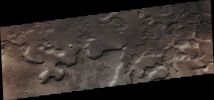
Layers-PIA15561-PCF-LXTT.jpgPossible Layered Fill on the Floor of an Unnamed Crater (Enhanced Absolute Natural Colors; credits for the additional process. and color.: Dr Paolo C. Fienga - Lunexit Team)122 visiteOrbit Number: 45215
Latitude: 2,442° North
Longitude: 343,953° East
Instrument: VIS
Captured: February, 23rd, 2012
Mars Local Solar Time: 06:02 (Early Morning Hours)MareKromiumApr 29, 2012
|
|
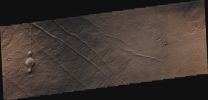
Volcanic_Regions-Tharsis-Collapse_Features-PIA15563.jpgCollapse Features in Tharsis (Absolute Natural Colors; credits for the additional process. and color.: Dr Paolo C. Fienga - Lunexit Team)115 visiteOrbit Number: 45231
Latitude: 7,543° North
Longitude: 243,234° East
Instrument: VIS
Captured: February, 24th, 2012
Mars Local Solar Time: 14:00 (Early Afternoon)MareKromiumApr 29, 2012
|
|

Cerberus_Fossae-PIA15474-PCF-LXTT.jpgFeatures of Cerberus Fossae (Absolute Natural Colors; credits for the additional process. and color.: Dr Paolo C. Fienga - Lunexit Team)116 visiteOrbit Number: 45159
Latitude: 9,351° North
Longitude: 159,905° East
Instrument: VIS
Captured: February, 18th, 2012
Mars Local Solar Time: 15:48 (Middle Afternoon)MareKromiumApr 29, 2012
|
|

Venusian_Surface-Venera_13-07-DPM.jpgTerra Incognita (Additional Credits: Don P. Mitchell - perspective visualization)193 visiteFrame Sx ---> Venera 13; Frame Dx ---> Venera 14MareKromiumApr 28, 2012
|
|

Venusian_Surface-Venera_13-06-DPM-PCF-LXTT-IPF-1.jpgTerra Incognita (Additional Credits: Don P. Mitchell - perspective visualization - and Dr Paolo C. Fienga - Colorization)165 visiteFollowing yesterday's APOD, we have decided to take you once again on the Surface of the Planet Venus (as imaged by the Soviet Lander Venera 13) and we are proud to show you the result of a combined effort: the perspective imaging of the Venusian Surface as seen from the the Lander (a work carried out by the American Researcher Dr Don P. Mitchell) with the Absolute Natural Colorization of the landscape and Sky (this job carried out by the Italian Researcher Dr Paolo C. Fienga). The result, as you can see, is a deeply suggestive (and, maybe, even a little scary...) vision of what has been called by many Scientists and Researchers, "The Venusian Inferno": such as a World that, from every point of view, seems to be completely hostile to the human concept of Life itself.
And here is a brief story of what happened that day, such as March 1st, 1982, when the Descent Module of the Venera 13 Spacecraft landed on Venus, as told us by Dr Don P. Mitchell himself:"...Two optical-mechanical cameras repeatedly scanned 180° or 60° through Clear and Colored Filters and at higher resolution than the Venera 9/10 System. The camera system was developed by Dr A.S. Selivanov's Team at the Institute of Space Device Engineering. The main Spacecraft, flying on a Fly-By Trajectory, remained in radio contact with the Lander for 127 minutes. It relayed the video to Earth as a phase-modulated digital signal, at 9 bits per pixel. The Venera 13 (and Venera 14 too) Lander/s transmitted digital images with a depth of 9 bits and an approximately logarithmic encoding of photometric brightness. Multiple panoramas were scanned by the camera, including some with red, green or blue glass filters in place. The entire transmission was relayed to Earth in real time, and also replayed from digtal tape recordings onboard the Venera 13 Spacecraft. This peculiar tecnique permitted the reconstruction of an almost noiseless version from the multiple transmissions. An accurate conversion of that encoding to linear brightness has also been derived, using calibration information included with the images (to be noted is the improved rendering of shape and details in very dark and very light portions of the image). The original Soviet versions of this frame included a full panorama from Clear-Filter images, and color panoramas from the red, green and blue-filter images. The signal to noise was poorer for the color images, because they were much darker. I (meaning Dr Don P. Mitchell) combined the two types of panoramas by adding the Chroma Signal (in CIE Lab Color Space) from the color images with the luminance from the clear images, thus obtaining simply spectacular results. Furthermore, the Venera 13 panoramas were just spherical projections and therefore they had to be remapped to perspective projections and overlayed (using Adobe Photoshop CS2) to produce views that were good enough to give us a better subjective impression of the Venusian Surface. In the overhead view, notice the subtle shadowing existing around the Lander. The Surface illumination is from the uniformly bright hemisphere of the Sky, but the Lander (as you can better see in the spherical projections) blocks part of the Sky from nearby Ground. In addition to the above, please notice that in this frame the thick yellow-orange color of the Sky is due to Rayleigh Scattering of the Sunlight by the thick Venusian Atmosphere and, possibly, by an additional (still) unknown blue-absorbing Gas Component. Brightness has been normalized. Please remember that the variations in the color of the Surface and Sky that you may certainly notice once you will have compared different color images taken by the different Soviet Venera Class Landers that made it to the Venusian Surface, are due to differing Atmospheric Depths and Opacities, as well as to the differing Sun Angles existing at the different Landing Sites...".
MareKromiumApr 28, 2012
|
|

Volcanoes-Olympus-Olympus_Rupes-PIA15569-PCF-LXTT-IPF.jpgOlympus Rupes (Enhanced and Saturated Absolute Natural Colors; credits for the additional process. and color: Dr Paolo C. Fienga - Lunexit Team)156 visiteThis VIS image shows lava flows that cover the steep embankment called Olympus Rupes on the margin of Olympus Mons.
Orbit Number: 45294
Latitude: 13,9548° North
Longitude: 227,275° East
Instrument: VIS
Captured: February, 29th, 2012
Mars Local Solar Time: 18:02 (Middle Afternoon)
MareKromiumApr 26, 2012
|
|
| 25353 immagini su 2113 pagina(e) |
 |
|
|
|
|
110 | |
|
|
|
|
|
|





